Double Iridium Spark Plug For American Cars Suppliers
information to be updated
Ultra-High Performance Double Iridium Spark Plugs for American Engines This series employs dual iridium electrode technology as its core innovation, featuring optimized heat ranges, gap parameters, and thread specifications tailored for mainstream American powertrains. Engineered to deliver exceptional spark intensity and combustion stability under extreme operating conditions, these plugs ensure ignition efficiency aligns precisely with original equipment specifications.
The dual precious metal configuration—integrating an iridium center electrode with an iridium ground electrode—synergistically enhances ignition performance and corrosion resistance while minimizing electrode degradation. This design achieves significantly improved ignition stability and extends service life to up to 100,000 kilometers. While the initial maintenance investment is higher, the unrivaled longevity and comprehensive scenario adaptability establish these double iridium spark plugs as the ultimate maintenance solution for high-performance American vehicles, outperforming both single-precious-metal and iridium-platinum alternatives.
About Us
Ningbo Zhongxuan Electronic Technology Co., Ltd
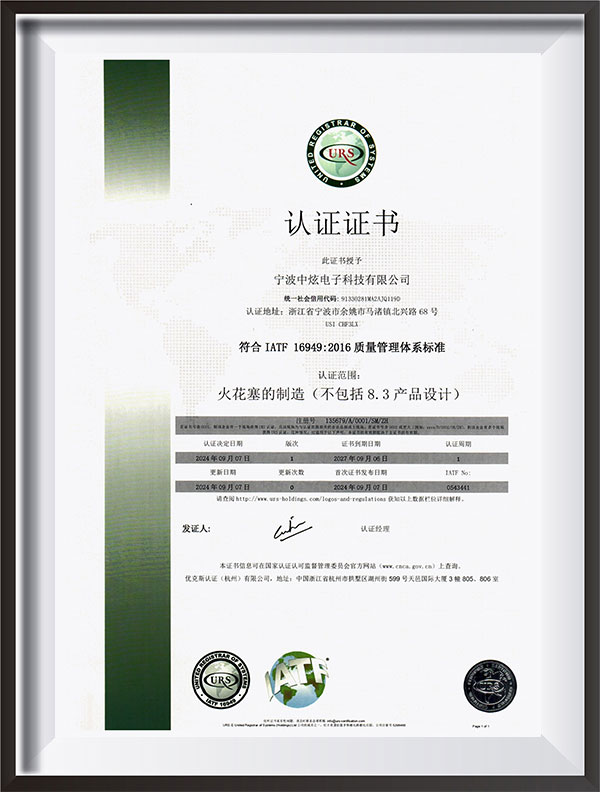
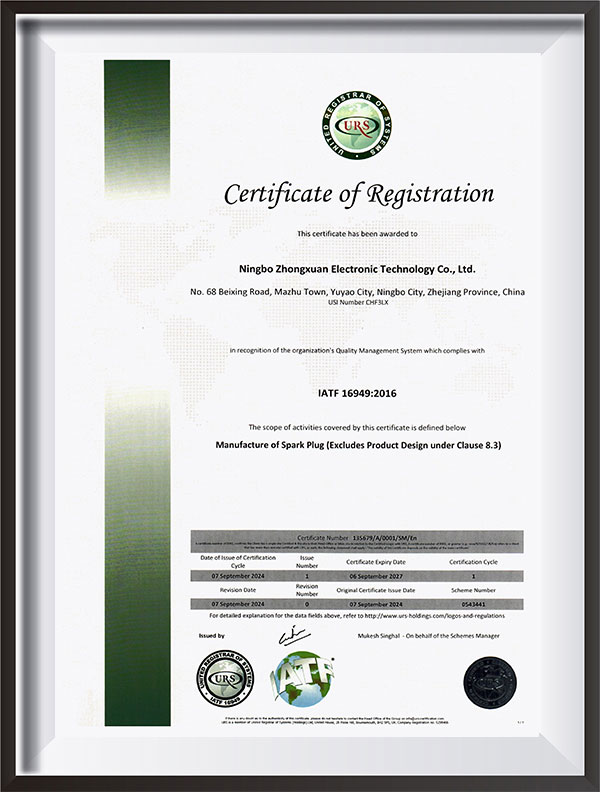
As China OEM Double Iridium Spark Plug For American Cars Suppliers and ODM Double Iridium Spark Plug For American Cars Factory, The company is a high-end automotive spark plug professional manufacturer.The existing standard workshop is more than 12000 square meters, a number of advanced complete automatic production lines, production capacity and production technology has reached the industry leading level. The enterprise has passed the lATF 16949 quality management system standard, lSO9001,and other system certification.
The company has mature Japanese cold sealing technology and galvanizing technology, nickel to ensure superior product performance and exquisite appearance.Also with many years of research and development experience in turbocharged special spark plug technology.
The production of iridium, platinum, double platinum, iridium platinum, double iridium and other precious metal car special type spark plug, over 330 types.Annual output is more than 20,000,000 pcs.The company has more than 90 R&D sales and after-sales personnel. The product quality is constantly improved after years of research and development.
At present, the company has become partner with many domestic auto parts brand chain enterprises, large auto parts dealers, and OEM customization for products with influence brand in China.At the same time, the company cooperate with the world's top three OES company, the products are exported to Germany,Poland.Russia.United States and so on.
If you are comparing a heat range 6 and a heat range 7 spark plug for the same engine, the direct answer is that the 6 is one step hotter and the 7 is one step colder. The 7 keeps the electrode tip roughly 70-100°C cooler at the same engine load, which gives a larger safety margin against pre-ignit...
A spark plug gap that is too small produces a short, weak spark that cannot ignite the air-fuel mixture reliably. In ordinary driving this shows up as a rough idle, hesitation when you press the throttle, a measurable drop in fuel economy, and often a flashing or steady check-engine light with a mi...
Selecting the heat range of a spark plug is not a performance upgrade. It is a combustion tuning decision that affects engine reliability. The heat range controls how quickly the firing tip sheds heat into the cylinder head, and the correct heat range keeps that tip between 500°C and 800°C (932°F t...
Please feel free to leave a message and we will reply to you soon.
Industry knowledge
For American vehicles—whether naturally aspirated V8 muscle cars or modern turbocharged four-cylinders—ignition quality directly determines how cleanly and completely combustion happens inside each cylinder. The double iridium spark plug for American cars sits at the top of the aftermarket ignition hierarchy, putting iridium on both the center and ground electrodes to deliver consistently stronger sparks, lower electrode wear, and longer maintenance intervals than any single-precious-metal alternative. This category covers a broad spectrum of applications across mainstream American powertrains, from full-size trucks to performance sedans, matching OEM heat ranges, gap parameters, and thread specifications so every plug seats and fires exactly as the engine management system expects.
Why Both Electrodes Matter: The Core Principle Behind Double Iridium
Standard iridium plugs place precious metal only on the center electrode while leaving the ground electrode in nickel alloy. That asymmetry matters because every arc causes erosion on both contact points simultaneously. Over time the nickel ground electrode wears faster, widens the gap unevenly, and forces the ignition coil to work harder to maintain the same voltage threshold.
A double iridium design eliminates that weak link. Iridium has a melting point of approximately 2,447°C—among the highest of any commercially used electrode material—and outperforms nickel in corrosion resistance under the acidic combustion byproducts present in both gasoline and ethanol-blended fuels common across the US market. Because both tips wear at a matched, extremely slow rate, gap growth stays within tolerance for up to 100,000 km under normal driving conditions (source: product technical data, NINGBO ZHONGXUAN ELECTRONIC TECHNOLOGY CO., LTD).
Relative Electrode Wear Rate by Plug Type (Lower = Better)
Approximate relative wear rates; illustrative comparison based on material property benchmarks.
What Makes American Powertrains Different — And Why It Affects Plug Selection
American engines have historically favored larger displacement, higher cylinder temperatures, and in more recent generations, direct injection combined with turbocharging. Each factor changes what a spark plug endures:
Large V6 and V8 engines typically run longer spark plug bore depths and specific thread pitches not shared with European or Asian platforms.
Modern turbocharged four-cylinders in American vehicles generate elevated cylinder pressures that demand a plug with a fine center electrode tip—0.6 mm or smaller—to maintain reliable arc formation at higher voltages.
Flex-fuel compatibility (E10–E85) in many American trucks and SUVs means plugs must resist oxygen-rich combustion atmospheres that accelerate electrode oxidation.
GDI (Gasoline Direct Injection) engines, now common across American lineups, run cooler plug temperatures and are more susceptible to carbon deposit buildup if plug heat range is mis-specified.
Getting the heat range, reach (thread length), and gap right for each specific American powertrain is not optional—it is the difference between a plug that lasts its rated service life and one that fouls or pre-ignites at 30,000 km.
Manufacturing Behind the Plug: NINGBO ZHONGXUAN ELECTRONIC TECHNOLOGY CO., LTD
NINGBO ZHONGXUAN ELECTRONIC TECHNOLOGY CO., LTD operates as a high-end automotive spark plug professional manufacturer with a standard workshop exceeding 12,000 square meters and multiple advanced fully automatic production lines. The facility's production capacity and process technology have reached an industry-leading level, underpinned by IATF 16949 and ISO 9001 quality management system certifications.
20M+
Annual Output (pcs)
330+
Product Types
90+
R&D & Sales Staff
12,000+
m² Workshop
Two specific manufacturing capabilities define the quality of their double iridium spark plugs for American cars. First, the company uses mature Japanese cold sealing technology—a process that ensures the insulator-to-shell seal maintains integrity under rapid thermal cycling, which is especially relevant for turbocharged American engines where temperatures fluctuate sharply between cold starts and highway loads. Second, advanced galvanizing and nickel-plating techniques protect the shell from corrosion, keeping the plug torque-removable even after extended service intervals in salt-belt states across the US.
The team also carries years of dedicated R&D in turbocharged special spark plug technology. That background is directly applied when calibrating heat range variants for boosted American powertrains—where running a plug that is even one heat step too cold will cause carbon fouling within a few thousand kilometers.
Spark Plug Type Comparison: Where Double Iridium Sits
Comparison of common spark plug types for American car applications
Type
Center Electrode
Ground Electrode
Typical Service Life
Best Fit
Nickel Copper
Nickel
Nickel
~30,000 km
Economy / short interval
Single Iridium
Iridium
Nickel
~60,000 km
Mid-range performance
Iridium-Platinum
Iridium
Platinum
~80,000 km
Extended service
Double Iridium
Iridium
Iridium
Up to 100,000 km
High-performance / turbo
Performance Profile: Double Iridium vs. Alternatives
The radar chart below illustrates how double iridium performs across five key ignition dimensions relative to single iridium and nickel-copper plugs:
Radar chart is illustrative based on material and design characteristics; actual results vary by engine type and operating conditions.
Turbocharged American Engines: A Special Case for Iridium Quality
Over the past decade, a significant share of American passenger vehicles has shifted from large naturally aspirated engines toward downsized turbocharged units. Ford's EcoBoost family, GM's turbocharged four-cylinders, and similar architectures all run higher cylinder pressures than their predecessors. Under boost, the required firing voltage climbs sharply—and a worn or degraded plug gap only makes that worse.
NINGBO ZHONGXUAN ELECTRONIC TECHNOLOGY CO., LTD's years of dedicated R&D in turbocharged special spark plug technology is directly relevant here. Turbocharged applications demand careful heat range calibration: too cold and carbon deposits form; too hot and pre-ignition can damage pistons. Their engineering process involves matching heat range to specific boosted powertrain data rather than applying a one-size adjustment to naturally aspirated specifications.
Required Firing Voltage vs. Gap Increase (Illustrative — Turbocharged Engine)
As the gap widens with wear, required firing voltage rises. Double iridium's minimal wear keeps voltage demand stable across the full service interval.
How to Correctly Select a Double Iridium Plug for an American Vehicle
Plug selection for American cars starts with the vehicle's OEM specification, not a generic iridium upgrade recommendation. Three parameters must match exactly:
Thread Reach & Diameter
American engine blocks span several common thread sizes. Mixing a longer reach plug into a shallow bore causes piston contact damage.
Heat Range
The OEM heat range number must be preserved. Turbocharged engines especially cannot run a colder plug without risking fouling in city traffic.
Electrode Gap
Iridium plugs are factory pre-gapped. Bending an iridium ground electrode risks chipping the tip—accept the factory gap or select the correct gap variant.
With over 330 product types and an annual output exceeding 20 million pieces, NINGBO ZHONGXUAN's catalog covers a wide range of American vehicle applications. Their more than 90 R&D, sales, and after-sales personnel can assist buyers in cross-referencing specific engine codes to the correct plug variant—which matters when purchasing in volume for fleet maintenance or wholesale distribution.
Frequently Asked Questions
Q: Can I install double iridium plugs if my vehicle originally came with copper or nickel plugs?
Generally yes, as long as the physical specifications (thread, reach, heat range) match. Double iridium is a direct upgrade within those constraints. However, if your ignition system uses a distributor-based setup rather than a coil-on-plug design, you should confirm compatibility, as some older distributor systems deliver less consistent voltage that may not fully realize the fine-electrode advantages of iridium.
Q: How does 100,000 km service life translate into real-world maintenance cost?
For a V8 engine with 8 plugs, replacing nickel plugs every 30,000 km means three full sets over 100,000 km. At typical shop labor rates in the US, labor alone for three plug changes on a V8 can exceed the price difference between nickel and double iridium plugs. The upfront premium of double iridium is typically recovered within the first extended service interval when total cost—parts plus labor—is calculated.
Q: Should the gap be adjusted before installing iridium plugs?
No. Iridium center electrode tips have an extremely fine diameter—often around 0.6 mm—and the ground electrode tip is equally small and brittle. Attempting to bend the ground electrode with a gapping tool risks fracturing the precious metal disc from its base weld. Always select the correct pre-gapped variant for your engine specification rather than adjusting an incorrect-gap plug.
Q: Does double iridium actually improve fuel economy noticeably?
The more accurate way to frame this is that double iridium prevents fuel economy from degrading as the plug ages. A worn plug with an enlarged gap creates incomplete combustion cycles, which the ECU partially compensates for by adding fuel. Keeping the gap within specification across 100,000 km preserves the combustion efficiency the engine was calibrated for—rather than guaranteeing a step-change improvement over a brand-new nickel plug. Any improvement versus a degraded plug can be meaningful, but results depend heavily on driving patterns and engine condition.
Q: What manufacturing quality controls differentiate a reliable double iridium plug from a poor one?
The critical quality points are: consistency of the iridium disc weld (a poor weld shears under thermal cycling), accuracy of the cold seal between insulator and shell (a failed seal allows combustion gas bypass), and precision of the pre-set gap (variation beyond 0.05 mm at the factory level causes misfires in tight-tolerance ignition systems). NINGBO ZHONGXUAN ELECTRONIC TECHNOLOGY CO., LTD addresses these through Japanese cold sealing technology, advanced galvanizing, and automatic production lines operating under IATF 16949 and ISO 9001 quality frameworks—resulting in consistent dimensional accuracy across a production run exceeding 20 million pieces annually.



 Español