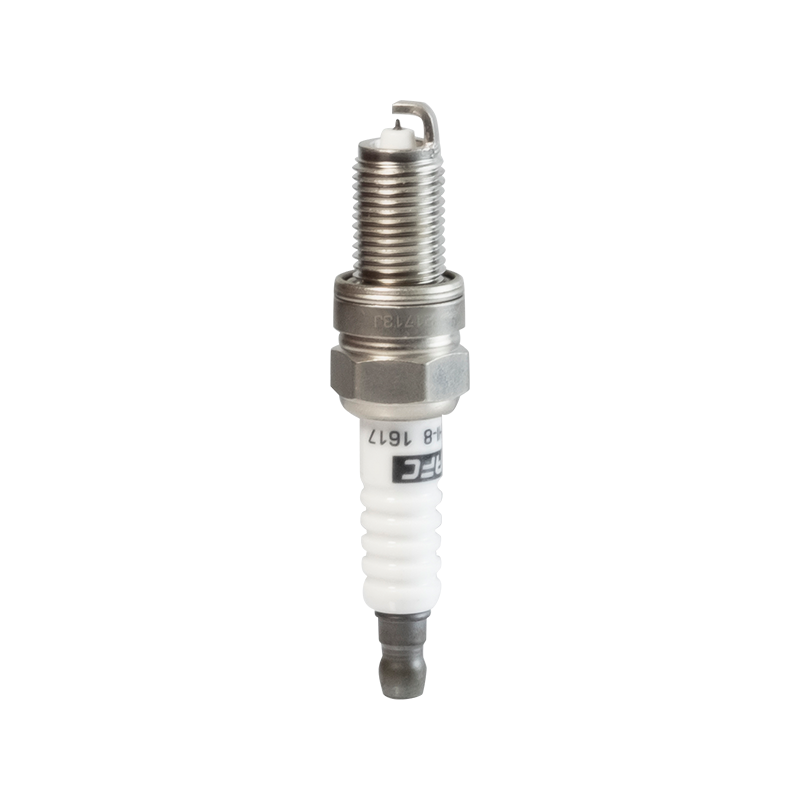
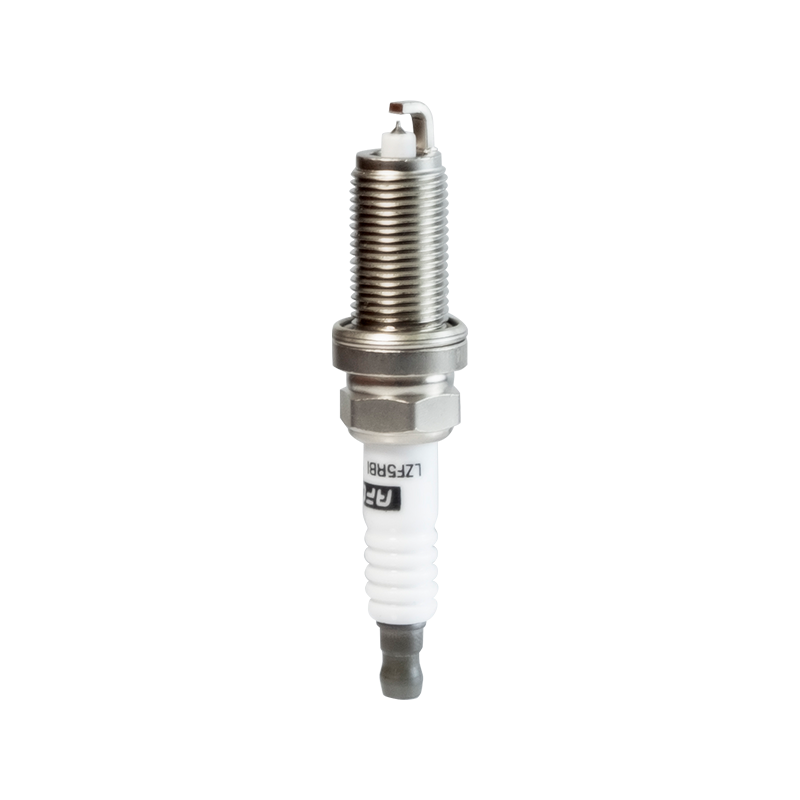
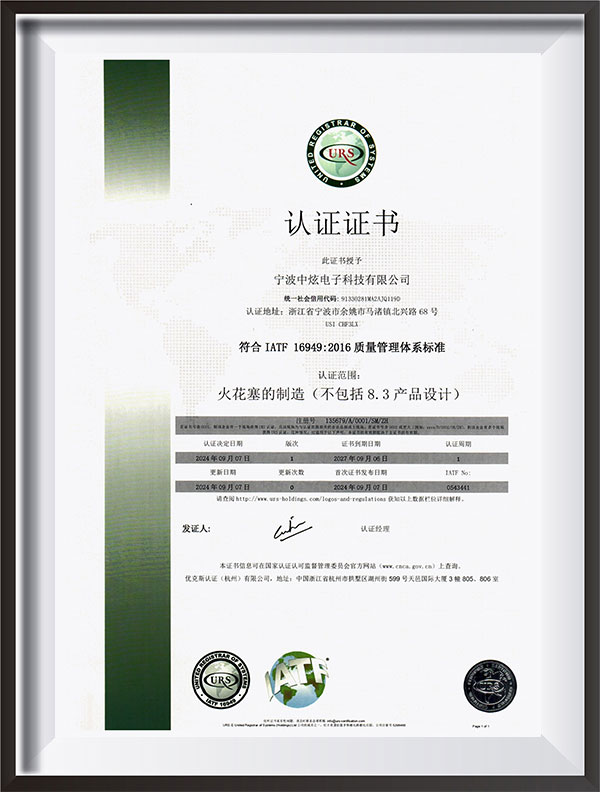
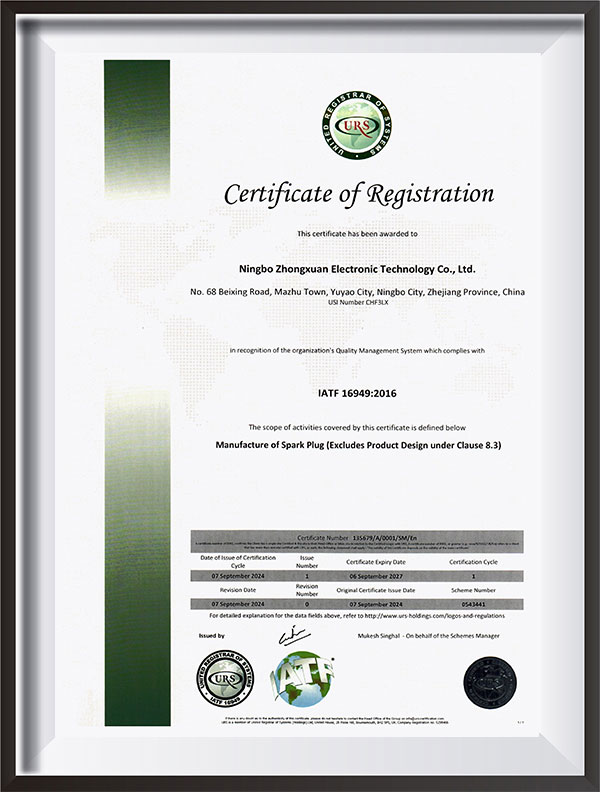
As China OEM Iridium Spark Plug For Other Cars Suppliers and ODM Iridium Spark Plug For Other Cars Factory, The company is a high-end automotive spark plug professional manufacturer.The existing standard workshop is more than 12000 square meters, a number of advanced complete automatic production lines, production capacity and production technology has reached the industry leading level. The enterprise has passed the lATF 16949 quality management system standard, lSO9001,and other system certification.
The company has mature Japanese cold sealing technology and galvanizing technology, nickel to ensure superior product performance and exquisite appearance.Also with many years of research and development experience in turbocharged special spark plug technology.
The production of iridium, platinum, double platinum, iridium platinum, double iridium and other precious metal car special type spark plug, over 330 types.Annual output is more than 20,000,000 pcs.The company has more than 90 R&D sales and after-sales personnel. The product quality is constantly improved after years of research and development.
At present, the company has become partner with many domestic auto parts brand chain enterprises, large auto parts dealers, and OEM customization for products with influence brand in China.At the same time, the company cooperate with the world's top three OES company, the products are exported to Germany,Poland.Russia.United States and so on.
Iridium spark plugs are a practical upgrade, but not because they add horsepower. They deliver a longer service life, more stable firing, and a smaller center electrode that needs less voltage to produce a spark. If the plug matches the engine code, heat rating and gap, an iridium set will usually ...
If you are comparing a heat range 6 and a heat range 7 spark plug for the same engine, the direct answer is that the 6 is one step hotter and the 7 is one step colder. The 7 keeps the electrode tip roughly 70-100°C cooler at the same engine load, which gives a larger safety margin against pre-ignit...
A spark plug gap that is too small produces a short, weak spark that cannot ignite the air-fuel mixture reliably. In ordinary driving this shows up as a rough idle, hesitation when you press the throttle, a measurable drop in fuel economy, and often a flashing or steady check-engine light with a mi...
Please feel free to leave a message and we will reply to you soon.
Industry knowledge
Iridium spark plugs have become the preferred ignition solution for a remarkably wide range of vehicles — from everyday sedans to light commercial trucks and older platforms that were never designed with precious-metal electrodes in mind. The term iridium spark plug for other cars captures exactly this segment: applications that fall outside the flagship OEM fitments but still benefit enormously from the thermal stability and longevity that iridium electrodes deliver. Because the category spans so many engine families — carbureted classics, aging port-injection engines, and budget-tier imports — selecting the right plug requires understanding both the metallurgy behind iridium ignition and the engineering trade-offs that apply to non-mainstream fitments.
Why Iridium Outperforms Conventional Electrodes in Non-Mainstream Engines
Iridium has a melting point of 2,443 °C — roughly 700 °C higher than the nickel alloys used in standard plugs. That thermal headroom matters most in engines that run hotter or leaner than their original calibration intended, which is exactly the situation many "other car" platforms end up in after years of use, aftermarket tuning, or ethanol-blended fuels.
Electrode Material Melting Point Comparison (°C)
Data reference: Engineering Toolbox — Melting Points of Metals
Beyond heat resistance, the fine-wire iridium tip (typically 0.4 mm – 0.6 mm diameter) reduces the voltage required to initiate a spark. In older distributor-based ignition systems — common in the "other cars" segment — this lower firing voltage eases the load on aging coils and caps, meaningfully reducing misfire events without any hardware change to the ignition system itself.
At NINGBO ZHONGXUAN ELECTRONIC TECHNOLOGY CO., LTD, every iridium plug leaves the production line having passed voltage resistance and gap-consistency checks, so the fine-tip geometry stays accurate regardless of whether the fitment is a high-volume platform or a low-run special application.
Cross-Reference and Fitment: The Real Challenge in the "Other Cars" Segment
Thread Reach
Ranges from 12 mm to 26.5 mm across legacy platforms. Using the wrong reach causes pre-ignition or incomplete thread engagement — the most common fitment error in non-OEM applications.
Heat Range
A plug that is too "cold" fouls quickly in low-load urban cycles; too "hot" risks electrode erosion in sustained highway use. For engines without direct OEM iridium equivalents, heat-range mapping from the original copper plug rating is essential.
Electrode Gap
Carbureted engines typically want 0.6–0.8 mm; modern COP systems may specify up to 1.1 mm. Iridium tips should never be regapped with pliers — only a coin-style gapper tool avoids chipping the tip.
The table below illustrates how key parameters shift across common "other car" engine types, giving buyers a quick sanity-check framework before finalising a cross-reference:
Engine Type
Typical Thread Reach
Typical Gap (mm)
Heat Range Note
Carbureted (pre-1990)
12–19 mm
0.6–0.8
Mid-warm range preferred
Port-injection (1990–2005)
19–22 mm
0.8–1.0
Standard OEM equivalent
Budget-tier imports (2005–2015)
19–26.5 mm
0.9–1.1
Verify against copper OEM rating
Light commercial / van
12–19 mm
0.7–0.9
Opt for one step colder if towing
General fitment reference — always confirm against the specific engine code before ordering
Service Life and Real-World Cost Economics
One of the most frequently cited reasons for upgrading "other car" platforms to iridium is the service interval extension. Standard nickel plugs in older engines typically need replacement every 20,000–30,000 km. A quality iridium plug in the same engine can realistically reach 60,000–80,000 km before the gap has worn beyond specification — effectively cutting the number of service events in half over a vehicle's life.
Electrode Gap Wear Over Distance (Illustrative Model)
Illustrative gap-wear model based on published OEM service data; actual wear varies by engine condition
The economics are straightforward. If a mechanic charges $15–$25 per plug in labor, a vehicle with 4 cylinders running nickel plugs costs an extra $60–$100 in labor alone for each extra service event over iridium's lifespan. For fleet operators managing dozens of mixed-platform vehicles — precisely the kind of buyers NINGBO ZHONGXUAN ELECTRONIC TECHNOLOGY CO., LTD works with regularly — this math compounds quickly into a meaningful annual cost saving.
Sourcing Iridium Plugs for Non-Mainstream Fitments: What to Look For
Because low-volume fitments rarely attract the same price competition as mainstream SKUs, buyers often face a choice between high-priced OEM replacements and unverified generic parts with little traceability. The middle path — working directly with an integrated manufacturer — has become the practical standard for importers, workshop chains, and fleet procurement teams.
Sourcing Comparison: OEM Distributor vs Trading Agent vs Direct Manufacturer
Illustrative comparison — relative scores based on typical trade channel characteristics
As an integrated manufacturer and trader, we eliminate the layers that normally inflate per-unit cost in non-mainstream fitments. Production oversight is direct — if a certain electrode alloy ratio or shell coating needs adjusting for a particular application, the factory team can act immediately rather than waiting for a message to filter through a distributor chain. For buyers sourcing iridium spark plug for other cars, that flexibility in small-batch customization (logo, packaging, gap specification) is often the difference between a usable product and one that requires expensive rework.
We encourage all new partners to verify quality through samples before committing to a full order. Standard product samples are available at no charge — you cover only the courier freight. For customized specifications, a sample cost fee may apply, but this is typically offset against your subsequent order value, keeping the overall risk of trialing a new fitment SKU very low.
Frequently Asked Questions
Can iridium plugs be fitted to engines originally specced for copper plugs?
Yes, in most cases. You need to match thread diameter, reach, seat type, and heat range to the copper plug specification. The iridium tip does not require any ignition system modification — the lower firing voltage it demands is handled passively by the finer electrode geometry.
How should iridium spark plugs be installed to avoid tip damage?
Always hand-thread first to avoid cross-threading. Use a torque wrench: tapered-seat plugs typically need 10–15 Nm; gasket-seat plugs range from 20–30 Nm depending on thread size. Never use an impact wrench, and never re-gap the fine-wire iridium tip with conventional plier-style tools.
Is the service life improvement consistent across all "other car" platforms?
The improvement is real but varies. Engines with oil consumption issues, coolant leaks, or excessively rich mixtures will foul any plug faster than the electrode wears. Fixing the underlying engine condition is a prerequisite for realising the full service-life benefit of iridium.
What information is needed to get a correct fitment recommendation?
Provide the engine code (not just the vehicle model), the current plug part number, and whether the engine has been modified. With this information, the factory team at NINGBO ZHONGXUAN ELECTRONIC TECHNOLOGY CO., LTD can confirm or suggest the appropriate iridium equivalent without information being diluted through a middleman.
Can packaging and branding be customised for resellers?
Yes. We offer flexible small-batch customisation covering logo, packaging design, and specification labelling. Because we oversee the production line directly, lead times for custom packaging are typically shorter than what a trading agent could offer, and you communicate directly with the factory at every step.



 Español