
Home / Products / Iridium Spark Plug / Iridium Spark Plug For Korean Cars
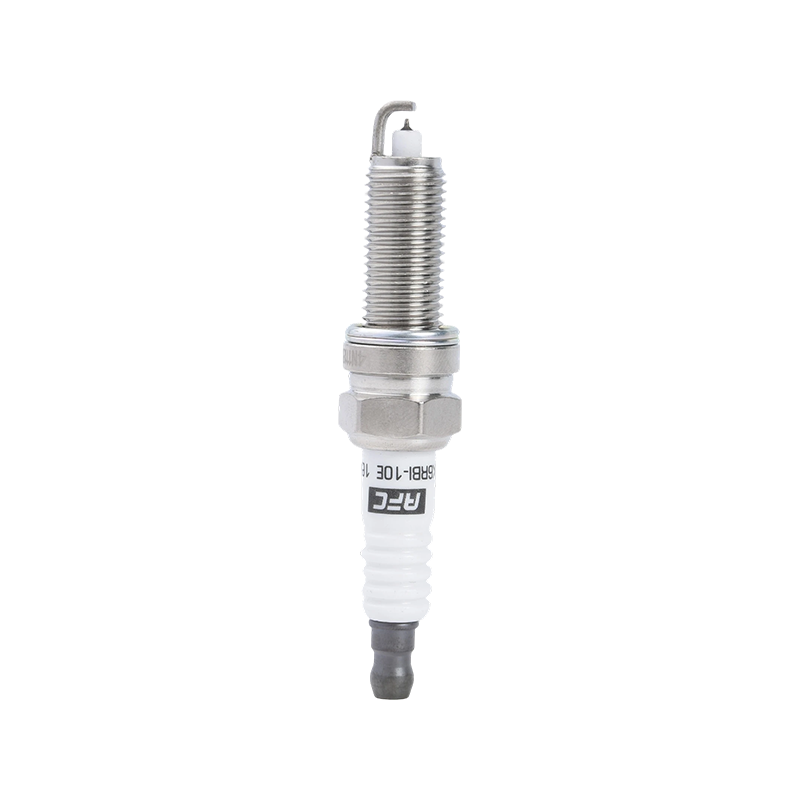
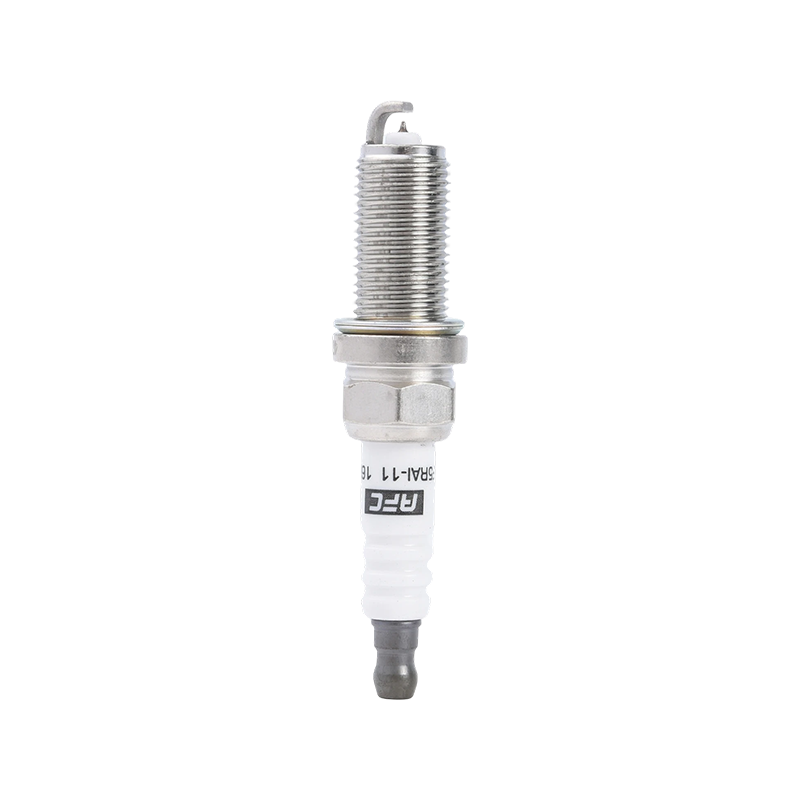
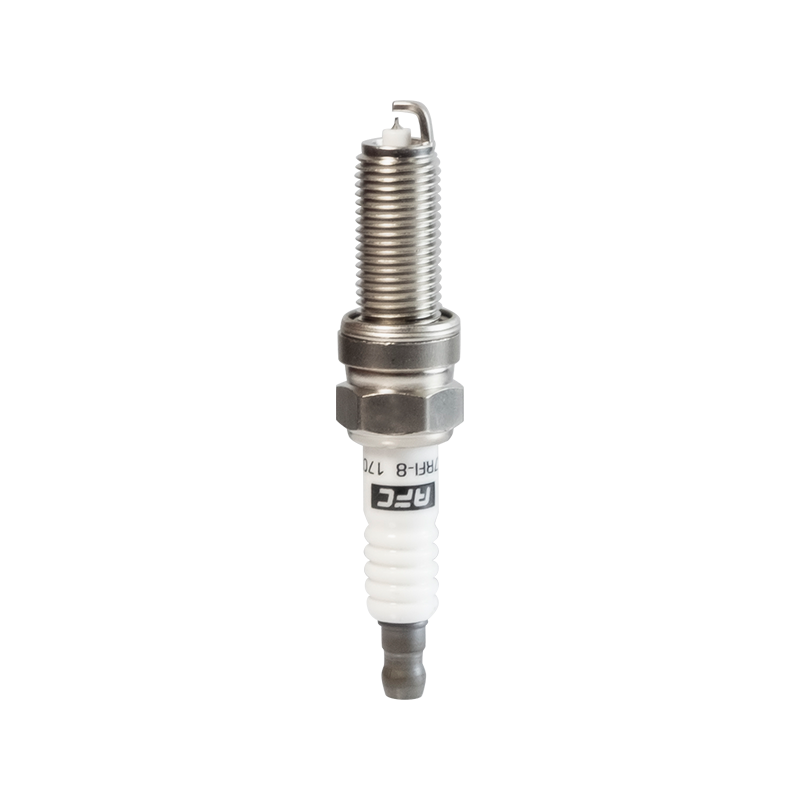
Iridium Spark Plug For Korean Cars Custom
Home | Products | Iridium Spark Plug | Iridium Spark Plug For Korean Cars
About Us
Ningbo Zhongxuan Electronic Technology Co., Ltd
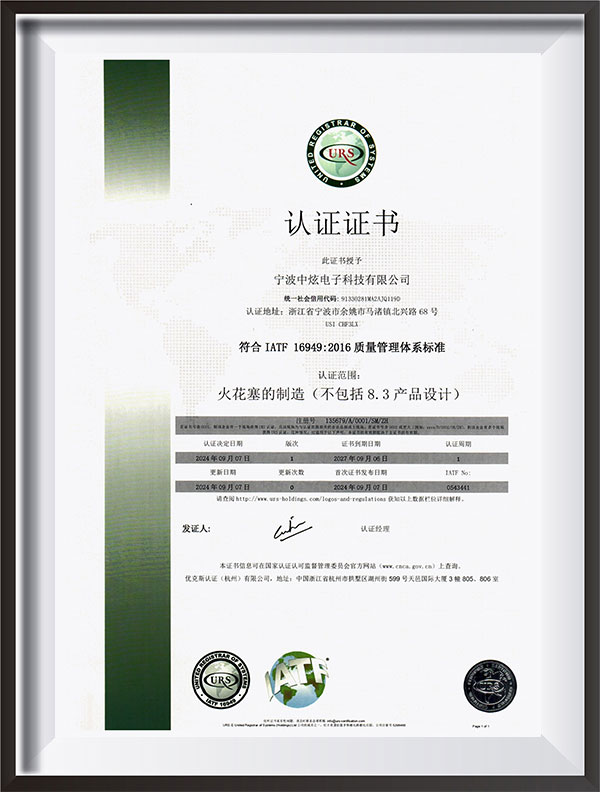
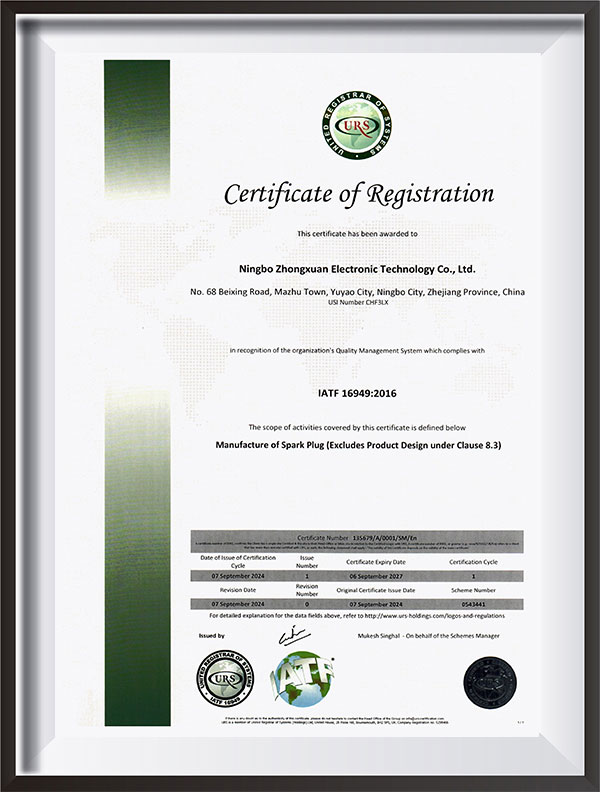
As China OEM Iridium Spark Plug For Korean Cars Suppliers and ODM Iridium Spark Plug For Korean Cars Factory, The company is a high-end automotive spark plug professional manufacturer.The existing standard workshop is more than 12000 square meters, a number of advanced complete automatic production lines, production capacity and production technology has reached the industry leading level. The enterprise has passed the lATF 16949 quality management system standard, lSO9001,and other system certification.
The company has mature Japanese cold sealing technology and galvanizing technology, nickel to ensure superior product performance and exquisite appearance.Also with many years of research and development experience in turbocharged special spark plug technology.
The production of iridium, platinum, double platinum, iridium platinum, double iridium and other precious metal car special type spark plug, over 330 types.Annual output is more than 20,000,000 pcs.The company has more than 90 R&D sales and after-sales personnel. The product quality is constantly improved after years of research and development.
At present, the company has become partner with many domestic auto parts brand chain enterprises, large auto parts dealers, and OEM customization for products with influence brand in China.At the same time, the company cooperate with the world's top three OES company, the products are exported to Germany,Poland.Russia.United States and so on.
Certificate Of Honor
  • Certificate
  • Certificate
News Updates
  • Do You Need Anti-Seize on Spark Plugs? The Short Answer Most modern spark plugs do not need anti-seize compound, because the majority of plugs sold today already carry a factory-applied trivalent zinc or nickel plating that resists corrosion and thread galling on its own. Anti-seize becomes usefu...

    READ MORE
  • Spark Plug Temp Range Explained: The Short Answer First A spark plug temp range, more commonly called the heat range, describes how quickly a spark plug can pull combustion heat away from its firing tip and transfer it into the cylinder head. It is not a measurement of temperature in degrees. It i...

    READ MORE
  • Spark Plug Torque: The Exact Specs You Need Before You Touch a Wrench The correct spark plug torque spec for most passenger car engines is between 10 and 20 ft-lbs (14–27 Nm) when installing into an aluminum cylinder head, and between 20 and 30 ft-lbs (27–40 Nm) for cast iron heads. However, the p...

    READ MORE
Contact Us

Please feel free to leave a message and we will reply to you soon.

Industry knowledge

Korean vehicles — from compact sedans to turbocharged SUVs — have earned a global reputation for tight engineering tolerances and demanding ignition requirements. The iridium spark plug for Korean cars has become the precision answer to those demands: a component engineered around an ultra-fine iridium center electrode that sustains consistent combustion across high-RPM Korean powertrains. Unlike conventional copper or platinum alternatives, iridium-tipped plugs deliver a sharper, more concentrated spark that Korean OEM engineers increasingly specify from the factory — making the aftermarket and OEM iridium segment one of the fastest-moving niches in the global spark plug industry.

Why Korean Engines Push Spark Plugs to the Limit

Modern Korean powertrains — turbocharged GDI units, Atkinson-cycle hybrids, and high-compression naturally aspirated fours — all share one characteristic: they stress the ignition system harder than older engine designs. Cylinder pressures in turbocharged Korean engines can exceed 200 bar during combustion, a condition that strips electrode material faster from conventional plugs.

Iridium's melting point sits at 2,446 °C — roughly 700 °C higher than platinum — which is why the material survives these conditions with minimal electrode wear. The result is stable spark energy maintained over service intervals that Korean automakers often specify at 60,000–100,000 km for iridium plugs, versus 30,000–40,000 km for copper equivalents.

Electrode Material Melting Point Comparison (°C)

Iridium Platinum Nickel Copper 2,446°C 1,768°C 1,455°C 1,085°C

Key Technical Parameters for Korean-Fitment Iridium Plugs

Not every iridium plug suits every Korean engine. Thread pitch, reach, heat range, and electrode geometry must match the cylinder head design precisely. Below are the most common specification parameters buyers and mechanics should verify before installation.

Common iridium spark plug specification parameters for Korean vehicle applications
Parameter Typical Range (Korean OEM) Notes
Thread Size M12 × 1.25 / M14 × 1.25 M14 dominant in GDI engines
Thread Reach 19 mm / 26.5 mm Confirm per engine variant
Iridium Electrode Diameter 0.6 mm – 0.8 mm Finer tip = lower required voltage
Heat Range 5 – 7 (varies by brand scale) Turbocharged engines lean colder
Gap Setting 0.7 mm – 1.1 mm Pre-set from factory; do not re-gap iridium tips
Service Interval 60,000 – 100,000 km Varies by driving conditions

One Rule Most Mechanics Overlook: Never Re-Gap an Iridium Plug

The fine iridium tip — often just 0.6 mm in diameter — fractures under the mechanical stress of a gap tool. Plugs arrive pre-set. Adjusting the gap even 0.1 mm the wrong way can chip the electrode and introduce metal fragments into the combustion chamber.

Turbocharged Korean Engines: A Special Ignition Problem

Turbocharged GDI engines found in Korean crossovers and performance sedans introduced a compounded ignition challenge: boosted intake charge plus direct fuel injection means a leaner, denser air-fuel mixture that requires higher ignition energy to fire reliably. Cold starts at low ambient temperatures compound the difficulty further.

NINGBO ZHONGXUAN ELECTRONIC TECHNOLOGY CO., LTD has spent years developing turbocharged special spark plug technology specifically to address these conditions. Their engineering focuses on maintaining stable arc formation under elevated cylinder pressures while resisting the deposit fouling that turbocharged direct-injection engines generate more readily than port-injected equivalents.

Iridium vs. Copper Plug: Performance Radar

Longevity Ignitability Cold Start Fuel Economy Turbo Durability Iridium Copper

Manufacturing That Backs Up the Claims

In the spark plug industry, the gap between a specification sheet and what actually comes off the production line often matters more than the specification itself. NINGBO ZHONGXUAN ELECTRONIC TECHNOLOGY CO., LTD operates a standard workshop exceeding 12,000 square meters with multiple fully automatic production lines — a scale that allows process control tight enough to hold the sub-millimeter tolerances iridium electrode work requires.

Their adoption of mature Japanese cold sealing technology and galvanizing processes is worth noting in the context of Korean-car fitment: Korean OEMs have historically drawn heavily from Japanese manufacturing process standards, so plugs produced with similar process discipline tend to integrate more reliably into those vehicles' ignition systems. The nickel-plated shell finish also guards against the thread corrosion that Korean car owners in northern climates commonly encounter at high-mileage plug changes.

Production Workshop Size: Industry Context (sq m)

0 5k 10k 15k Small ~3,000 Mid-tier ~7,000 Zhongxuan 12,000+

Process Capabilities That Translate Directly to Product Quality

  • Fully automatic production lines reduce human handling variance on iridium tip welding — the most failure-prone assembly step
  • Cold sealing technology borrowed from Japanese process tradition ensures the ceramic insulator-to-shell joint remains gas-tight under thermal cycling
  • Nickel plating on the shell delivers corrosion resistance appropriate for Korean car service intervals of 60,000 km and beyond
  • Multiple complete automatic lines allow consistent output volume — critical for OEM-tier supply relationships

Electrode Wear Over Service Life: Iridium vs. Conventional

Electrode erosion is the primary degradation mode in all spark plugs. As the center electrode wears, the voltage required to fire the plug increases, leading to misfires and rough running. The chart below illustrates the relative wear trajectory over a 100,000 km service life.

0% 15% 30% 45% 60% 0 25k 50k 75k 100k km Copper (replace at 40k) Iridium Platinum Copper

Illustrative electrode gap growth rate — directional comparison based on published material erosion rates for each electrode type.


Frequently Asked Questions

Can I use a universal iridium plug in my Korean car instead of a vehicle-specific one?

Technically possible in some cases, but not recommended. Korean OEM cylinder head designs specify tight thread reach and heat range tolerances. An incorrect reach can contact the piston at TDC; an incorrect heat range on a turbocharged engine can cause pre-ignition. Always match to the OEM specification for that specific engine code.

Why does my Korean turbocharged engine go through spark plugs faster than the manual suggests?

Several factors accelerate wear: frequent short-distance cold starts that never fully heat the plug, carbon oil deposits from GDI's tendency toward combustion chamber buildup, and sustained high-boost driving. Using a turbocharged-specific iridium plug — designed with a colder heat range and deposit-resistant electrode configuration — addresses most of these conditions. NINGBO ZHONGXUAN's years of research in turbo-specific plug technology is directly relevant here.

Is the appearance of a spark plug — shell finish, insulator color — relevant to quality?

More than most buyers realize. A properly galvanized and nickel-plated shell resists thread corrosion during the plug's long service life. A uniform, crack-free insulator surface indicates controlled ceramic firing temperatures during manufacture. NINGBO ZHONGXUAN's galvanizing and nickel finishing processes are specifically designed to deliver the kind of shell quality Korean car owners notice at the 80,000 km plug change — when a corroded thread can mean a damaged cylinder head.

How important is a cold sealing process in spark plug manufacturing?

Critical. The cold sealing joint between ceramic insulator and metal shell must remain gas-tight across thousands of thermal cycles from cold start to operating temperature. A failed seal lets combustion gases track up the insulator, causing carbon fouling and misfire. Japanese cold sealing technology — the methodology NINGBO ZHONGXUAN has adopted — represents one of the more rigorous manufacturing standards for this joint in the industry.

What happens if I ignore a failing spark plug in a Korean GDI engine?

Misfires in a GDI engine allow raw fuel to enter the exhaust stream and reach the catalytic converter. Korean OEM catalytic converters are not inexpensive components. A single cylinder misfire event, if sustained over a drive cycle, can thermally damage the catalyst — turning a spark plug replacement into a significantly larger repair. The iridium plug's long service life and stable wear curve reduce the likelihood of reaching this failure mode undetected.