


 Español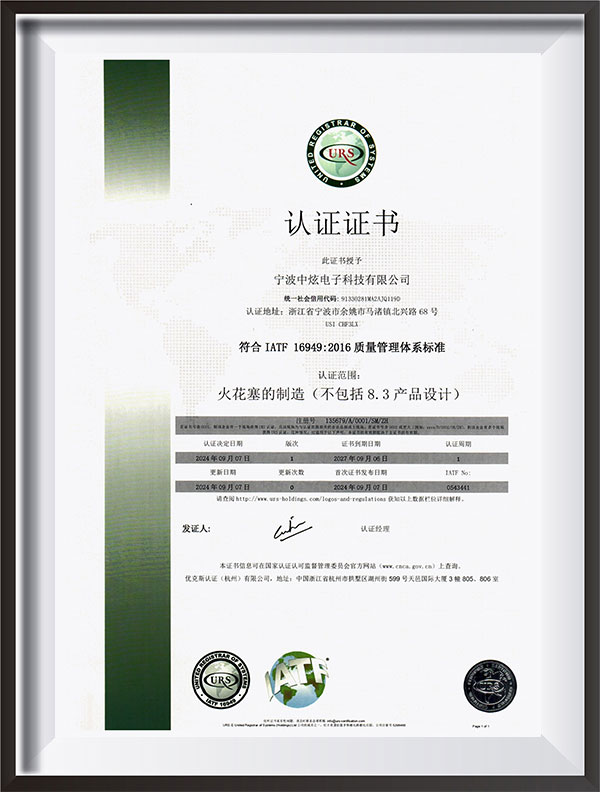
Nickel copper spark plugs remain one of the most widely used ignition components across the global automotive aftermarket, particularly for non-OEM and mixed-fleet vehicle categories often grouped under the broad label of nickel copper spark plugs for other cars. These plugs bridge the gap between economy-grade single-metal electrodes and premium iridium or platinum units, delivering reliable ignitability across a diverse range of naturally aspirated and low-boost engines. Their electrode construction — a nickel alloy outer shell bonded to a copper core — produces heat transfer characteristics that suit everything from aging sedans to light commercial vans operating across wildly different ambient conditions.
How the Copper Core Actually Changes Plug Behavior
The distinction between a pure nickel plug and a nickel-copper plug is not merely material — it changes the plug's thermal profile during combustion. Copper has a thermal conductivity of approximately 385 W/m·K, compared to roughly 90 W/m·K for standard nickel alloys. This contrast means the copper core dissipates combustion heat outward through the shell far more aggressively, which keeps the electrode tip within the optimal operating temperature window — typically cited as 500°C to 950°C — across a wider load range.
For "other car" categories — older platforms, regional-spec vehicles, light-duty fleet transport — this thermal tolerance is practically significant. These engines often lack the precise thermal management of modern OEM platforms, and plug temperature variance is higher. A plug that can self-clean (above 500°C) without pre-igniting (below ~950°C) across variable RPM cycles is genuinely useful, not just a specification checkbox.
Thermal Conductivity Comparison (W/m·K)
Source: Engineering Toolbox – Thermal Conductivity of Metals (reference values)
Electrode Gap and Its Real-World Impact on "Other Cars"
Vehicles classified loosely as "other cars" often share one common challenge: ignition systems that were designed years or decades ago with tolerances that have since widened through wear. The electrode gap — the distance the spark must jump — is one of the most sensitive variables in plug selection.
| Vehicle Category | Typical Gap Range (mm) | Notes |
|---|---|---|
| Economy / Legacy Sedans | 0.7 – 0.9 | Lower coil output systems |
| Light Commercial Vans | 0.8 – 1.1 | Often carbureted or early EFI |
| Mixed Regional Fleet | 0.9 – 1.2 | High variance by market spec |
| Rebuilt / Re-engined Vehicles | 0.6 – 1.0 | Highly dependent on swap spec |
Pre-gapped nickel copper plugs are shipped at a nominal setting, but distributors working across multiple regional markets know that incoming plugs may need re-gapping for local ignition coil output specs. This is a detail that separates knowledgeable aftermarket suppliers from generic catalog sellers.
Nickel Copper vs Other Plug Types: Where It Wins and Where It Doesn't
No plug type is universally better. Nickel copper occupies a specific performance band that happens to overlap well with the "other cars" segment — mixed-age, mixed-spec, price-sensitive fleets where iridium economics don't make sense and bare nickel doesn't perform reliably enough.
The radar shows nickel copper's clear edge in heat tolerance and fit range — both directly relevant to "other cars" compatibility scenarios. Service life is the acknowledged trade-off, typically quoted at 20,000–30,000 km versus 80,000–100,000 km for iridium tipped plugs. For markets where plug replacement is routine maintenance and price per plug matters more than interval, this is a rational trade-off, not a compromise.
Cross-Market Compatibility: What Changes Between Regions
One underappreciated complexity in the nickel copper spark plug category is regional spec variance. Fuel quality, altitude, average ambient temperature, and ignition system generations all interact to affect which plug specification works in a given market. A gap setting and heat range suitable for European urban driving may produce fouling issues in high-altitude Southeast Asian markets with lower-octane fuel blends.
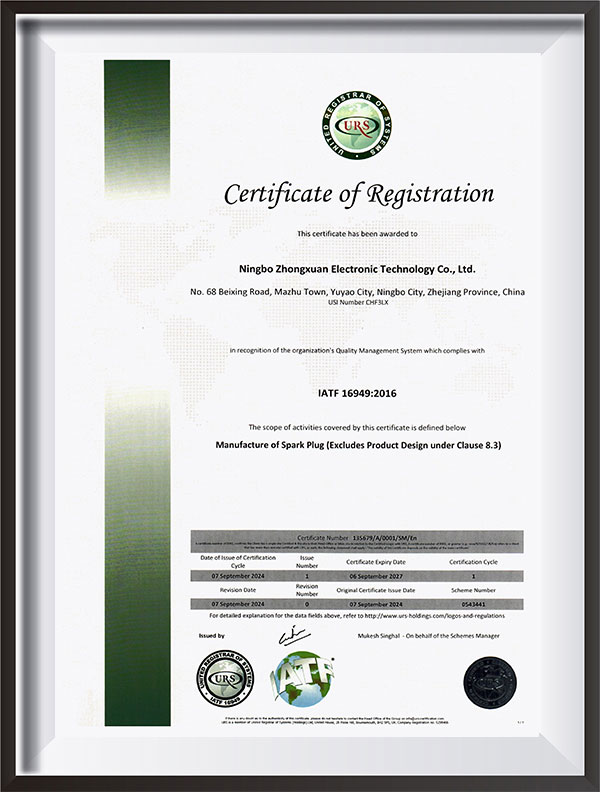
NINGBO ZHONGXUAN ELECTRONIC TECHNOLOGY CO., LTD has exported its spark plug products to over 20 countries and regions spanning Europe, North America, Asia, the Middle East, and South America. That breadth of export experience is genuinely useful context when evaluating a supplier for the "other cars" category, because it implies working familiarity with the spec variance described above — not just manufacturing capacity, but market-specific adaptation knowledge. If you communicate your target country directly, they can provide specific information on product adaptation experience relevant to that market.
Practical Selection Criteria for Buyers and Distributors
Heat Range
Match plug heat range to engine displacement and compression. Undersized heat ranges cause fouling; oversized ones risk pre-ignition. For "other cars," mid-range values (typically 5–7 on common numbering scales) cover most use cases.
Thread Reach
Wrong thread reach is a common installation failure point on legacy engines with non-standard head depths. Always confirm reach in mm, not just thread diameter. Common values: 19mm, 26.5mm.
Electrode Gap
Pre-gapped plugs need verification against the target vehicle's ignition coil voltage output. For older distributor-based systems, narrower gaps (0.7–0.8mm) often produce more reliable spark initiation.
Seat Type
Tapered vs. flat-seat plugs are non-interchangeable without gaskets. Mixed-fleet buyers operating across vehicle makes should confirm seat type per application, not assume uniformity.
Replacement Interval Patterns in Mixed-Fleet Markets
Fleet operators managing older or mixed-spec vehicles typically use mileage-based replacement schedules rather than condition-based monitoring. The data below illustrates typical replacement intervals observed across different market conditions:
European fleet managers tend to run nickel copper plugs closer to their upper service limit, reflecting more consistent fuel quality and highway-dominant duty cycles. In contrast, Middle Eastern and tropical Asian markets often replace plugs more frequently due to high ambient temperatures and fuel variance — both factors that accelerate electrode erosion.
Common Questions About Nickel Copper Spark Plugs for Other Cars
Can I use a nickel copper plug as a direct replacement if my vehicle originally used a platinum plug?
In most cases, yes — provided the heat range, thread pitch, thread reach, and seat type match exactly. The service interval will be shorter (typically 20,000–30,000 km vs. 60,000+ for platinum), but ignition performance in normal driving will be comparable. The copper core's thermal conductivity can actually improve cold-start behavior compared to single-metal platinum in some older ignition systems.
Why do some markets require specific plug certifications? Does NINGBO ZHONGXUAN supply market-specific variants?
Different regions impose different product qualification requirements for aftermarket automotive components. NINGBO ZHONGXUAN ELECTRONIC TECHNOLOGY CO., LTD has exported to over 20 countries spanning Europe, North America, Asia, the Middle East, and South America — which means their supply team is familiar with the qualification landscape across major markets. If you specify your target country, they can provide information on product certifications and adaptation experience for that market specifically.
What are the signs of a nickel copper plug at the end of its service life?
The center electrode develops a rounded profile from erosion — original plugs have a sharp edge, worn ones do not. You may also notice rough idle, harder cold-starts, or a slight decline in fuel economy. Carbon fouling on the insulator nose (black, matte deposits) indicates incomplete combustion and often precedes full plug failure. In mixed-fleet contexts, a visual inspection cycle every 10,000–15,000 km is recommended even if full replacement isn't scheduled.
Is electrode gap re-gapping necessary for plugs pre-gapped at the factory?
Factory pre-gapping is set to a standard value — often 0.8mm or 1.0mm. However, shipping and handling can shift the gap slightly, and target vehicles may require a specific gap outside that nominal. For critical applications or older distributor ignition systems, checking and confirming gap with a wire-type feeler gauge before installation is good practice. Avoid using flat feeler gauges on used plugs with worn electrodes, as the reading will be inaccurate.
How does altitude affect nickel copper plug performance?
At high altitude (above approximately 2,000m), lower air density reduces combustion pressure and temperature. This can push a plug's operating temperature below the self-cleaning threshold, increasing fouling risk. In high-altitude markets — parts of South America, Central Asia, East Africa — a slightly hotter plug heat range is often appropriate. This is exactly the type of regional adaptation guidance that a supplier with genuine multi-market export experience can provide.