


 Español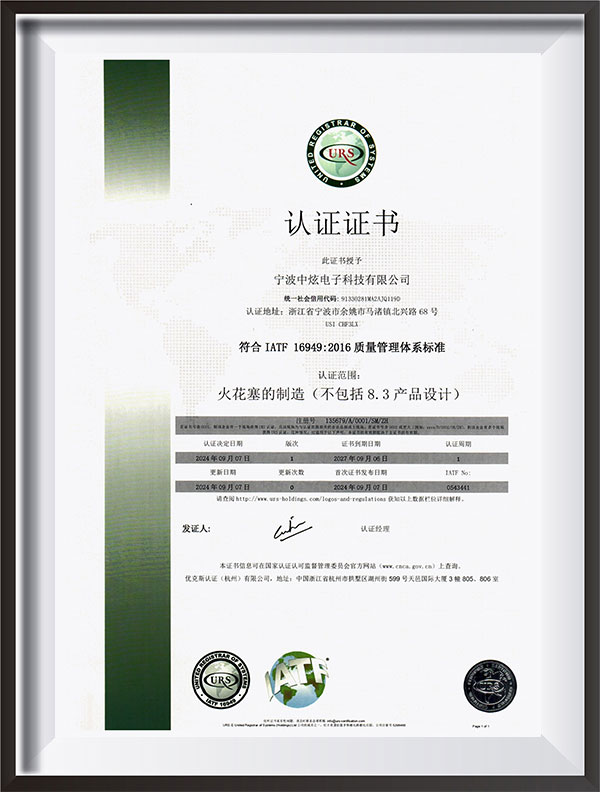
The double iridium spark plug has become a key component in modern ignition systems, particularly as Chinese automakers push into higher-performance and longer-service-life territory. Unlike standard copper or single-platinum plugs, a double iridium spark plug features iridium on both the center and ground electrodes — delivering a more consistent spark, reduced misfires, and intervals that can stretch well beyond 60,000 km in many Chinese passenger vehicles. As Chinese car models diversify across sedans, SUVs, NEV hybrids, and commercial platforms, the demand for application-specific iridium plugs matched to each engine's compression ratio, thread pitch, and heat range has created an increasingly specialized supply chain.
What Actually Changes When Both Electrodes Are Iridium
Single iridium plugs protect only the center electrode. Under sustained high-load driving — common in turbocharged Chinese engines like those in BYD's DM-i hybrid platform or Geely's 2.0T units — the ground electrode wears faster than the center, creating an asymmetric gap that gradually destabilizes combustion. Double iridium eliminates that imbalance. Both tips maintain a fine 0.6–0.8 mm gap geometry throughout their service life.
Electrode Wear Rate Comparison (relative units over 80,000 km)
Lower = less electrode wear. Illustrative comparison based on published iridium hardness data (Vickers hardness ~1,670 HV vs. copper ~100 HV).
Iridium's melting point sits at 2,446 °C — over six times that of copper — which is why the electrode tip survives far longer under the thermal cycling of a direct-injection Chinese engine. For turbocharged platforms running higher cylinder pressures, that resistance to erosion is not a luxury; it's an engineering requirement.
Application Mapping: Chinese Vehicles and Their Plug Requirements
Chinese passenger cars span a wide range of engine architectures — naturally aspirated 1.5L city cars, turbocharged 1.4T and 2.0T family SUVs, and increasingly, plug-in hybrid powertrains where the engine cycles on and off rapidly and places unique thermal demands on the spark plug. Getting the heat range right for each application is where generic "universal" plugs fall short.
Hybrid engines deserve special attention. Because the combustion cycle restarts repeatedly from cold states, carbon fouling risk increases. The fine iridium tip on a double iridium plug reaches ignition temperature faster and self-cleans more effectively than a wider copper tip, making it a practical fit — not just a premium upgrade.
Performance Profile: Double Iridium vs. Alternatives
Choosing the right plug type comes down to weighing five practical factors: ignitability, electrode longevity, fouling resistance, cold-start reliability, and cost per km. The radar below maps each plug type across these dimensions to give a clear comparative picture.
Relative scores across five performance criteria. Cost/km advantage for copper reflects lower upfront price, not total ownership cost.
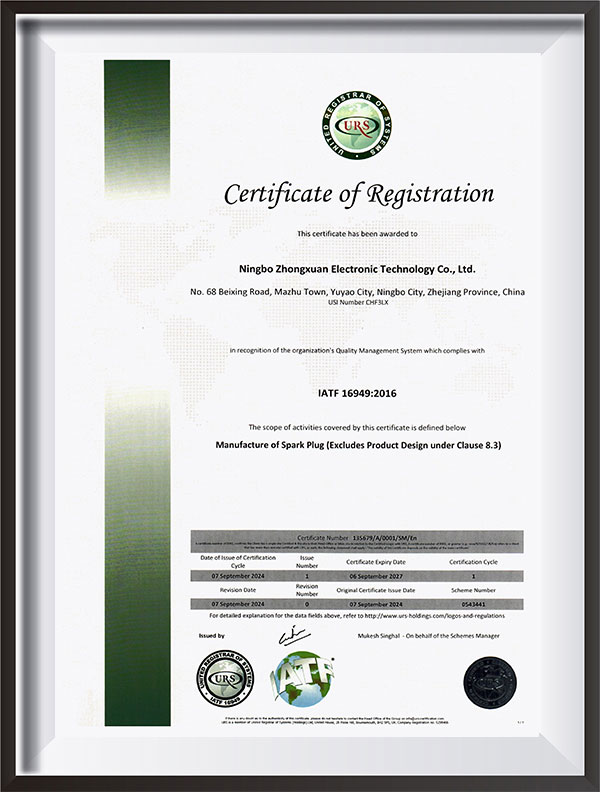
NINGBO ZHONGXUAN ELECTRONIC TECHNOLOGY CO., LTD: Factory-Direct Supply for Chinese Car Fitments
NINGBO ZHONGXUAN ELECTRONIC TECHNOLOGY CO., LTD operates as an integrated manufacturer and trader — a structure that removes the cost layers that typically sit between factory and buyer. When you source double iridium spark plugs for Chinese car fitments through a dedicated manufacturer rather than a trading intermediary, the difference shows up in two places: price and response time.
Cost-Effective Factory Pricing
Eliminating middlemen means the most competitive factory prices reach buyers directly. No markup layers.
Direct Production Line Control
Quality is overseen directly on the production line — fast response and stable output, batch to batch.
Flexible Small-Batch Customization
Logo, packaging, and specification changes handled with flexibility — useful for aftermarket distributors targeting specific Chinese car models.
Direct Technical Communication
Technical or production questions go straight to the factory. No information distortion, faster resolution.
The company runs a fully automated production line with an annual capacity of up to 18 million pieces. For standard double iridium plug models, production and shipment are typically completed within 15–30 days after deposit receipt. Large or customized orders receive a dedicated delivery schedule upfront, and the company treats adherence to that schedule as a contractual commitment.
For buyers who want to verify quality before committing to volume, free samples of standard products are available — you cover courier freight. For customized specifications or special requirements, a sample cost may apply, but that fee is typically deductible from subsequent orders.
Production Scale and Lead Time: What 18 Million Pieces Per Year Means in Practice
An annual output of 18 million spark plugs means roughly 1.5 million pieces per month across the production line. For aftermarket distributors covering Chinese car models in regional markets, that scale translates to the ability to handle seasonal order surges without pushing lead times out. The chart below shows how a hypothetical 500,000-piece order fits within that production window.
Monthly Production Throughput vs. Lead Time Commitment (illustrative)
Illustrative demand curve against fixed production capacity. Real allocation varies by order mix.
For most standard double iridium plug orders covering popular Chinese car models, the 15–30 day window holds even during periods of elevated demand, because automated production lines do not carry the bottlenecks of manual assembly. Buyers placing orders for multiple SKUs across different Chinese fitments can consolidate shipments rather than managing rolling partial deliveries.