Iridium Spark Plugs for Chinese High-Performance Engines Designed specifically for domestic high-performance engines, this series utilizes platinum electrode technology as its core, achieving cost efficiency while precisely reinforcing the easily worn central electrode. Through optimized heat ranges, gap parameters, and thread specifications, these plugs ensure ignition stability closely aligns with original factory combustion standards, balancing both fuel economy and power responsiveness.
Leveraging platinum electrode material, these spark plugs deliver exceptional ignition performance and corrosion resistance. Designed for challenging Chinese urban conditions—including frequent start-stop cycles and short-trip cold starts—the platinum electrodes effectively resist carbon buildup and maintain self-cleaning properties, ensuring consistent spark gap stability and reducing misfire rates. Their corrosion resistance performs exceptionally well in high-temperature, high-humidity environments.
The platinum electrode design minimizes electrode wear, extending the baseline service life to 40,000 kilometers. With their durability and precise ignition characteristics, these spark plugs serve as a premium maintenance solution for Chinese brand vehicles.
About Us
Ningbo Zhongxuan Electronic Technology Co., Ltd
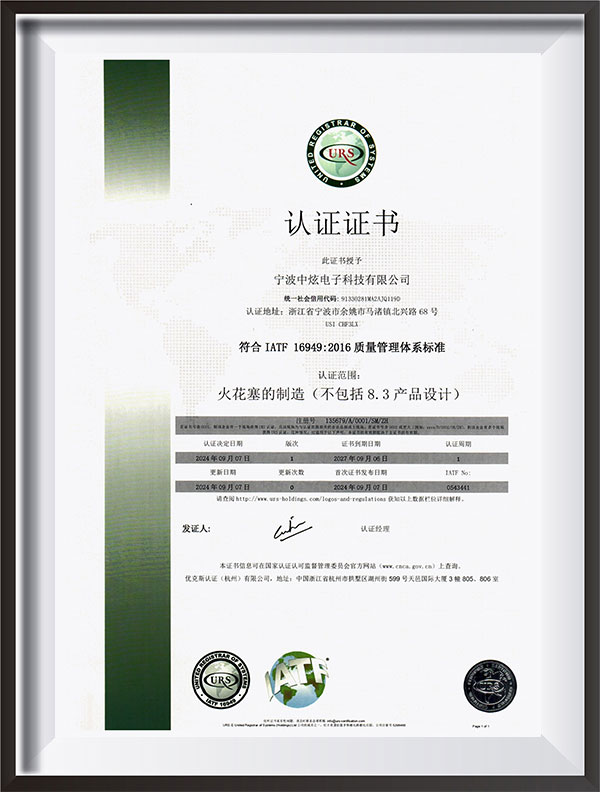
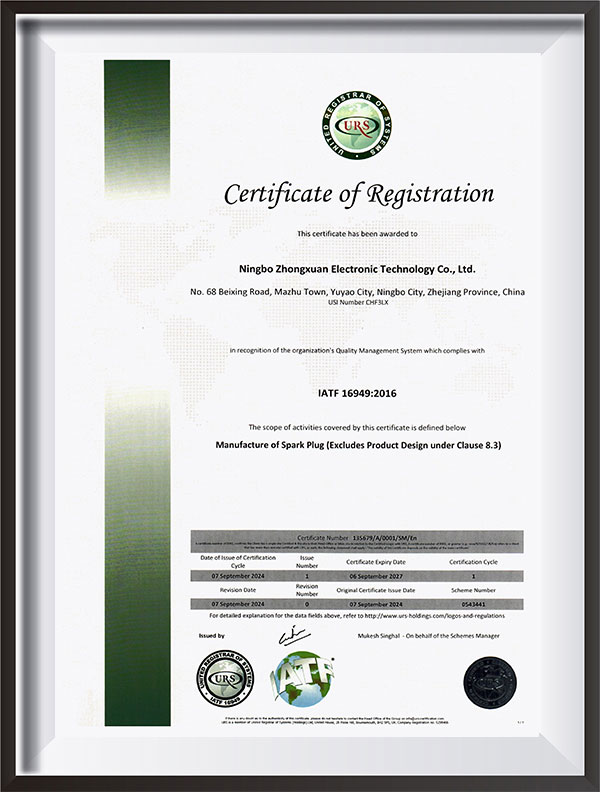
As China OEM Platinum Spark Plug For Chinese Cars Suppliers and ODM Platinum Spark Plug For Chinese Cars Factory, The company is a high-end automotive spark plug professional manufacturer.The existing standard workshop is more than 12000 square meters, a number of advanced complete automatic production lines, production capacity and production technology has reached the industry leading level. The enterprise has passed the lATF 16949 quality management system standard, lSO9001,and other system certification.
The company has mature Japanese cold sealing technology and galvanizing technology, nickel to ensure superior product performance and exquisite appearance.Also with many years of research and development experience in turbocharged special spark plug technology.
The production of iridium, platinum, double platinum, iridium platinum, double iridium and other precious metal car special type spark plug, over 330 types.Annual output is more than 20,000,000 pcs.The company has more than 90 R&D sales and after-sales personnel. The product quality is constantly improved after years of research and development.
At present, the company has become partner with many domestic auto parts brand chain enterprises, large auto parts dealers, and OEM customization for products with influence brand in China.At the same time, the company cooperate with the world's top three OES company, the products are exported to Germany,Poland.Russia.United States and so on.
If you are comparing a heat range 6 and a heat range 7 spark plug for the same engine, the direct answer is that the 6 is one step hotter and the 7 is one step colder. The 7 keeps the electrode tip roughly 70-100°C cooler at the same engine load, which gives a larger safety margin against pre-ignit...
A spark plug gap that is too small produces a short, weak spark that cannot ignite the air-fuel mixture reliably. In ordinary driving this shows up as a rough idle, hesitation when you press the throttle, a measurable drop in fuel economy, and often a flashing or steady check-engine light with a mi...
Selecting the heat range of a spark plug is not a performance upgrade. It is a combustion tuning decision that affects engine reliability. The heat range controls how quickly the firing tip sheds heat into the cylinder head, and the correct heat range keeps that tip between 500°C and 800°C (932°F t...
Please feel free to leave a message and we will reply to you soon.
Industry knowledge
Platinum spark plugs for Chinese cars represent a precision-engineered ignition solution developed specifically around the engine architectures, fuel grades, and operating conditions common across domestically manufactured vehicles in China. Unlike generic aftermarket plugs, a dedicated platinum spark plug for Chinese cars accounts for the wide variance in displacement sizes, turbocharging configurations, and stop-start urban driving cycles that define the real-world use of Chinese brand vehicles — from compact city sedans to mid-size family SUVs running naturally aspirated or turbocharged engines. The platinum center electrode at the heart of these plugs offers a meaningful step up from standard nickel-copper types, bringing longer service life, more stable gap geometry, and consistent ignition energy across a broad heat range.
Why Platinum Electrodes Matter for Chinese Car Engines
Chinese brand vehicles have gone through rapid engine evolution over the past decade. Turbocharged direct-injection engines now account for a growing share of domestically sold models, and these engines place significantly greater thermal and mechanical stress on spark plugs compared to older naturally aspirated designs. Platinum as an electrode material handles this environment well — it is considerably harder than nickel alloy, which means the fine-ground tip maintains its geometry far longer before erosion widens the gap.
A widening electrode gap is one of the most common causes of cold-start misfires and gradual power loss that drivers notice before their first scheduled plug change. Platinum spark plugs can maintain stable gap dimensions up to around 60,000–100,000 km under normal operating conditions, compared to 20,000–30,000 km for standard nickel plugs (Source: automotive parts industry technical references). For the typical Chinese urban driver averaging 15,000–20,000 km per year, this translates to roughly 3–5 years between service intervals rather than replacing plugs every 1–2 years.
Estimated Service Life by Spark Plug Material (km)
Nickel Copper
~20,000 km
Single Platinum
~60,000 km
Double Platinum
~80,000 km
Iridium
~100,000 km
Source: general automotive parts industry technical reference data
Platinum also runs at slightly higher operating temperatures than nickel, which provides a natural self-cleaning effect on the electrode tip — particularly useful during short-trip cold driving where carbon deposits tend to accumulate faster. For Chinese urban vehicles that spend a lot of time in low-speed, stop-and-go traffic with the engine never fully warming up, this anti-fouling characteristic has real practical value.
How Fitment Is Matched to Chinese Car Models
Selecting the right platinum spark plug for a Chinese car is not as simple as choosing any platinum-tipped plug and assuming it will work. Several specifications must align precisely with the engine's design:
Key spark plug fitment parameters for Chinese car engines
Parameter
What It Controls
Common Range for Chinese Cars
Thread Diameter & Pitch
Mechanical sealing in the cylinder head
M14×1.25 / M12×1.25
Thread Reach
Electrode tip position inside combustion chamber
19 mm / 26.5 mm
Heat Range
Operating temperature of the electrode tip
Varies by engine compression & turbo
Electrode Gap
Spark energy and ignition reliability
0.7–1.1 mm
Hex Size
Socket tool compatibility at installation
16 mm / 14 mm
NINGBO ZHONGXUAN ELECTRONIC TECHNOLOGY CO., LTD has developed over 330 types of precious metal spark plugs across its product range, covering iridium, platinum, double platinum, iridium-platinum, and double iridium varieties — ensuring that fitment gaps for Chinese brand vehicles are addressed across a wide spectrum of engine codes and model years. Their annual output exceeds 20,000,000 pieces, a scale that reflects not just production volume but the breadth of vehicle coverage the catalog has accumulated through years of dedicated R&D.
Turbocharged Engine Considerations and Specialized Design
Performance Profile: Platinum Plug vs Nickel Copper Plug
Many Chinese brand vehicles now ship from the factory with turbocharged engines — particularly in the 1.5T and 2.0T displacement range. Turbo engines compress intake air more aggressively, raising combustion chamber temperatures and putting greater thermal stress on the spark plug's firing tip. A plug that works adequately in a naturally aspirated engine may run too hot in a turbo application, leading to pre-ignition risk or accelerated electrode wear.
NINGBO ZHONGXUAN ELECTRONIC TECHNOLOGY CO., LTD has accumulated years of dedicated research and development experience specifically in turbocharged spark plug technology, which informed the heat range calibrations applied to their Chinese car series. This is not a minor distinction — designing a platinum plug that maintains the correct operating temperature window across both highway cruising and urban stop-start conditions in a turbocharged Chinese engine requires more than selecting standard platinum material; it requires careful electrode geometry, insulator length, and core nose design tailored to the specific combustion profile of those engines.
The company operates a workshop of over 12,000 square meters equipped with multiple fully automatic production lines, and has incorporated mature Japanese cold sealing and galvanizing technology. These manufacturing processes — cold sealing in particular — directly affect the gas-tightness and durability of the seal between the metal shell and ceramic insulator, a component that fails prematurely under turbocharged thermal cycling in lower-grade production environments.
Manufacturing Depth Behind the Product
NINGBO ZHONGXUAN — Key Production Figures
Workshop 12,000+ m²
Annual Output 20M+ pcs
Product Types 330+
R&D & Sales 90+ staff
Understanding where and how a platinum spark plug is manufactured matters more than it might seem. The raw platinum tip is only one variable. The quality of the nickel plating on the shell, the precision of the cold-formed metal components, and the integrity of the insulator sintering all affect how a plug performs after 40,000 km of real-world driving. NINGBO ZHONGXUAN applies Japanese-origin cold sealing and galvanizing technology, using nickel in their surface finishing process to ensure both corrosion resistance in the thread area and a refined visual appearance — practical qualities for plugs that need to survive in varying climatic conditions across China's regions.
The company employs more than 90 people across R&D, sales, and after-sales functions, which reflects genuine technical depth. Many aftermarket plug manufacturers in China outsource engineering decisions; a dedicated internal team means fitment data, heat range calibrations, and gap specifications are validated through the company's own testing protocols rather than simply copied from reference charts. This matters especially for newer Chinese car models where factory OEM specifications may not yet be widely documented in third-party databases.
At present, NINGBO ZHONGXUAN has established partnerships with numerous domestic auto parts brand chain enterprises, large auto parts dealers, and provides OEM customization for influential Chinese brands — a supply footprint that gives them consistent feedback on real-vehicle performance across a wide cross-section of Chinese car models.
Choosing Between Single Platinum and Double Platinum for Chinese Cars
Single Platinum
Platinum disc on center electrode only
Works well with coil-pack (DIS) ignition systems
Suitable for most naturally aspirated Chinese engines
Good service life at a moderate price point
Double Platinum
Platinum on both center and ground electrode
Optimized for waste-spark / coil-on-plug systems
Reduced ground electrode erosion in high-load driving
Better suited for newer Chinese turbocharged platforms
The choice between single and double platinum depends largely on the ignition system type in the specific Chinese car engine. Waste-spark systems fire both electrodes during each cycle — which means the ground electrode erodes at the same rate as the center electrode when nickel is used. Double platinum addresses this symmetrically. For Chinese cars equipped with modern coil-on-plug systems, single platinum is generally sufficient because spark is always directed from the center tip.
Frequently Asked Questions
How do I know if my Chinese car needs platinum spark plugs or nickel ones?
Check your vehicle's owner manual for the recommended plug type and replacement interval. If the recommended interval is 60,000 km or longer, the engine is almost certainly designed for platinum or iridium plugs. Most Chinese brand vehicles built after 2015 with turbocharged engines specify platinum as the minimum standard, while some newer models call for iridium-platinum or double iridium types.
Can I install a platinum plug rated for another region's cars in my Chinese brand vehicle?
Technically you can install any plug with matching thread specifications, but heat range and reach must match the engine's design exactly. A plug engineered for a European or Japanese engine platform with the same thread dimensions may carry a different heat range number that causes it to run too hot or too cool in the Chinese engine's combustion environment. This is why fitment databases matched to specific Chinese car models — like those maintained by NINGBO ZHONGXUAN across their 330+ type catalog — are worth using rather than relying on thread size alone.
How does urban stop-start driving in Chinese cities affect platinum plug life?
Frequent short trips, cold starts, and prolonged idling in traffic all promote carbon deposit formation on the electrode tip. Platinum's higher operating temperature provides a natural self-cleaning effect that burns off light carbon fouling more effectively than nickel plugs. That said, extremely short trips where the engine never fully reaches operating temperature will still accelerate deposit buildup compared to highway driving. In those situations, some drivers find it useful to take the car for a longer highway run periodically to thermally clean the plugs.
What is the electrode gap range for platinum spark plugs used in Chinese cars?
Most Chinese car engines specify a gap between 0.7 mm and 1.1 mm, with 0.8 mm being a common target for naturally aspirated 1.5–2.0L engines. Turbocharged engines sometimes specify a slightly tighter gap — around 0.7–0.8 mm — to ensure the spark fires reliably against higher cylinder pressures. Platinum plugs from manufacturers like NINGBO ZHONGXUAN are pre-gapped to the OEM specification for the relevant vehicle application, so no adjustment should be needed at installation under normal circumstances.
What are the typical signs that platinum spark plugs in a Chinese car need replacement?
Common indicators include rougher idling than normal, increased fuel consumption, difficulty starting in cold weather, occasional misfires at low RPM (sometimes felt as a slight shudder), and a check engine light triggered by a misfire code. Because platinum plugs wear more gradually than nickel types, the decline in performance is often subtle. Sticking to the manufacturer-recommended replacement interval — rather than waiting for noticeable symptoms — is the more practical approach, especially as modern engine management systems may compensate for marginal plug performance in ways that mask early wear.



 Español