Platinum Spark Plugs for Japanese Engines Designed specifically for the characteristics of Japanese powertrains, this series utilizes platinum electrode technology as its core, achieving cost control while precisely reinforcing the easily worn center electrode. Through optimized heat ranges, gap parameters, and thread specifications, these plugs ensure ignition stability closely aligns with original factory combustion efficiency standards, balancing both fuel economy and power responsiveness.
Leveraging the precious metal platinum, these spark plugs deliver exceptional ignition performance and corrosion resistance, making them suitable for the sustained high-temperature conditions of high-revving Japanese engines. They perform reliably in congested urban traffic and frequent start-stop scenarios, effectively balancing durability and responsive performance. The platinum electrode design minimizes electrode wear, extending the baseline service life to 40,000 kilometers. With their durability and precise ignition characteristics, these platinum spark plugs serve as a core maintenance solution for high-efficiency Japanese engines.
About Us
Ningbo Zhongxuan Electronic Technology Co., Ltd
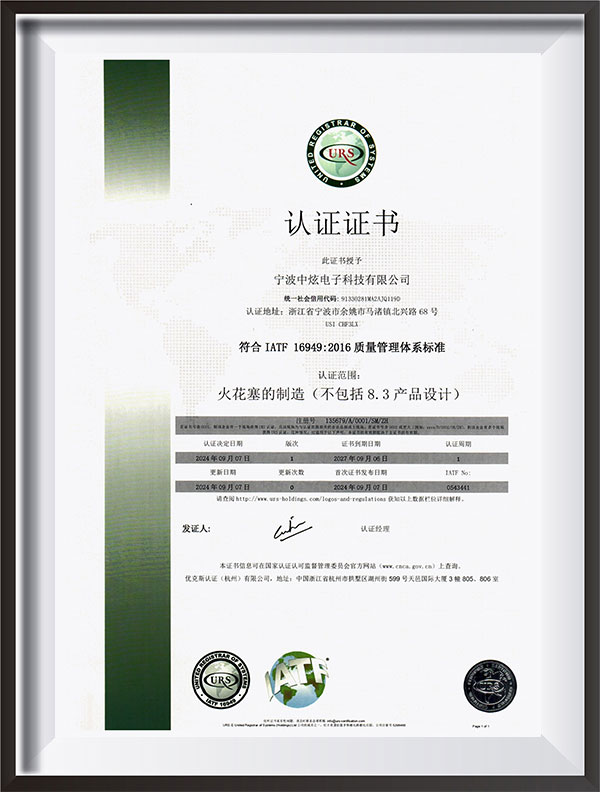
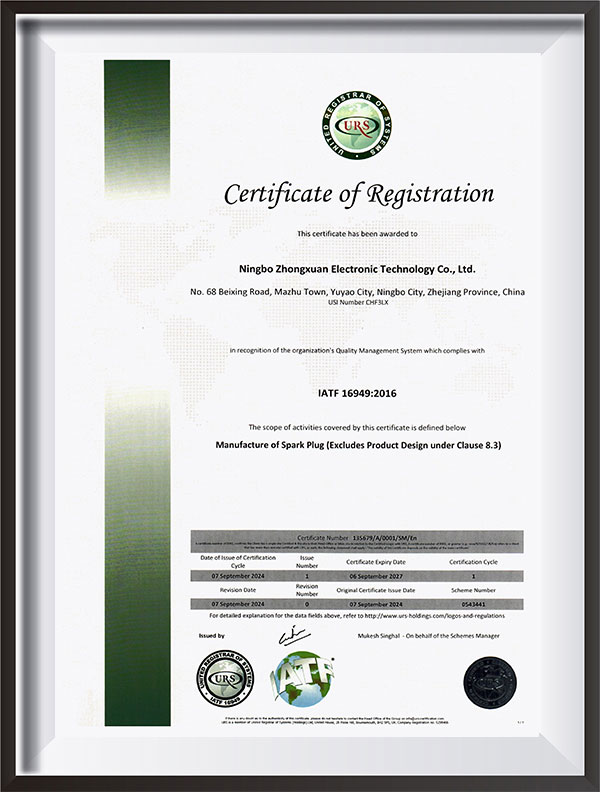
As China OEM Platinum Spark Plug For Japanese Cars Suppliers and ODM Platinum Spark Plug For Japanese Cars Factory, The company is a high-end automotive spark plug professional manufacturer.The existing standard workshop is more than 12000 square meters, a number of advanced complete automatic production lines, production capacity and production technology has reached the industry leading level. The enterprise has passed the lATF 16949 quality management system standard, lSO9001,and other system certification.
The company has mature Japanese cold sealing technology and galvanizing technology, nickel to ensure superior product performance and exquisite appearance.Also with many years of research and development experience in turbocharged special spark plug technology.
The production of iridium, platinum, double platinum, iridium platinum, double iridium and other precious metal car special type spark plug, over 330 types.Annual output is more than 20,000,000 pcs.The company has more than 90 R&D sales and after-sales personnel. The product quality is constantly improved after years of research and development.
At present, the company has become partner with many domestic auto parts brand chain enterprises, large auto parts dealers, and OEM customization for products with influence brand in China.At the same time, the company cooperate with the world's top three OES company, the products are exported to Germany,Poland.Russia.United States and so on.
If you are comparing a heat range 6 and a heat range 7 spark plug for the same engine, the direct answer is that the 6 is one step hotter and the 7 is one step colder. The 7 keeps the electrode tip roughly 70-100°C cooler at the same engine load, which gives a larger safety margin against pre-ignit...
A spark plug gap that is too small produces a short, weak spark that cannot ignite the air-fuel mixture reliably. In ordinary driving this shows up as a rough idle, hesitation when you press the throttle, a measurable drop in fuel economy, and often a flashing or steady check-engine light with a mi...
Selecting the heat range of a spark plug is not a performance upgrade. It is a combustion tuning decision that affects engine reliability. The heat range controls how quickly the firing tip sheds heat into the cylinder head, and the correct heat range keeps that tip between 500°C and 800°C (932°F t...
Please feel free to leave a message and we will reply to you soon.
Industry knowledge
Platinum spark plugs for Japanese cars occupy a well-defined niche in the automotive ignition industry — sitting squarely between basic nickel-copper plugs and premium iridium units. They use a platinum disc welded onto the center electrode (and in double-platinum variants, the ground electrode as well), exploiting the metal's relatively high melting point of around 1,768°C (3,215°F) to resist electrode erosion across extended service intervals. For the wide range of Japanese engine architectures — from compact naturally aspirated units to turbocharged inline-fours — platinum plugs deliver reliable, consistent ignition that aligns closely with OEM combustion calibrations while remaining cost-effective for high-volume maintenance cycles.
Why Platinum Works Well in Japanese Engine Designs
Japanese automakers have long engineered their powertrains around tight ignition tolerances and extended service intervals. Most mid-range Japanese passenger vehicles rolled out of the factory with platinum plugs as standard equipment precisely because the material balances wear resistance and electrode temperature management without requiring the premium cost of iridium.
Platinum generates slightly more heat at the electrode tip compared to copper, which helps burn off carbon deposits — a practical advantage in Japanese engines that see a lot of stop-and-go urban duty cycles. The electrode stays cleaner for longer, which keeps misfires at bay and idle quality stable. According to data published by AutoNation Mobile Service, a properly spec'd single platinum plug can last up to 100,000 miles in suitable engine applications, compared to roughly 20,000–30,000 miles for a standard copper plug.
Typical Service Life Comparison by Plug Type (miles)
For Japanese vehicles originally equipped with platinum plugs from the factory, staying with platinum during routine replacement is the right call. Upgrading to iridium is also safe, but downgrading to copper in a platinum-spec engine is not recommended — it shortens change intervals and can slightly degrade idle quality and fuel efficiency.
Single vs. Double Platinum: What the Difference Means in Practice
Single Platinum
Platinum disc only on the center electrode. Well-suited for standard distributor ignition systems and most naturally aspirated Japanese engines. Cost-effective, widely available, and reliable for everyday commuter duty.
Double Platinum
Platinum on both center and ground electrodes. Designed for waste-spark ignition systems, which fire the plug in both directions. Without platinum on the ground electrode, the reverse spark would wear it away much faster. Common in certain Japanese compact and midsize platforms.
Choosing between the two is not really about performance preference — it is about matching the ignition architecture of the specific engine. Installing a single-platinum plug in a waste-spark system will lead to premature ground electrode wear, even if the center electrode holds up fine.
How Plug Manufacturing Quality Affects Japanese Engine Performance
Japanese car owners tend to be precise about OEM specifications, so manufacturing consistency matters more here than in some other markets. Electrode gap tolerances, thread pitch accuracy, and heat range calibration all need to hit narrow windows. A plug that runs too hot can cause pre-ignition; one that runs too cold fouls quickly with carbon.
NINGBO ZHONGXUAN ELECTRONIC TECHNOLOGY CO., LTD approaches this challenge through a combination of production scale and process control. The company operates a standard workshop of more than 12,000 square meters with multiple fully automatic production lines, which allows both the volume capacity needed for mass supply and the process repeatability that precise ignition components require. The facility's laboratory strictly implements 17 international testing standards, which means each plug batch is validated across a comprehensive set of performance and dimensional parameters before leaving the factory.
One manufacturing detail that is particularly relevant for Japanese car applications is the company's Japanese cold sealing technology and galvanizing technology. Cold sealing is the process that locks the insulator into the metal shell without high-temperature sintering, which helps maintain tight dimensional tolerances at the critical insulator-to-shell junction — a zone that sees repeated thermal cycling every time the engine runs. Nickel plating on the shell provides corrosion resistance and preserves the plug's appearance through extended service.
Turbocharged Japanese Engines: Extra Demands on the Plug
A significant share of newer Japanese performance and utility vehicles use turbocharged engines, and this changes the conversation around spark plug selection. Forced induction raises cylinder pressure, which makes it harder for the spark to jump the electrode gap. The result, if the plug is not spec'd correctly, is misfires under boost — most noticeable at wide-open throttle.
Platinum Plug Performance Profile: NA vs. Turbocharged Applications
Relative suitability scores across five operating dimensions. Platinum performs well in NA applications; boost handling is the primary limitation in turbocharged setups.
NINGBO ZHONGXUAN ELECTRONIC TECHNOLOGY CO., LTD has accumulated many years of research and development experience specifically in turbocharged spark plug technology. This R&D focus means the company's platinum plug variants for turbocharged Japanese engines are engineered with tighter gap specifications and appropriate heat ranges for forced-induction conditions, rather than just carrying over a naturally aspirated design.
Matching Plug Specification to Japanese Engine Type
Getting the heat range and configuration right is more important than brand preference for most buyers. The table below summarizes how different Japanese engine categories typically align with platinum plug specifications.
General guidance only — always verify against vehicle owner's manual
Engine Type
Recommended Variant
Typical Service Interval
Key Consideration
Compact NA (1.3–1.8L)
Single Platinum
60,000–80,000 mi
Match OEM heat range; standard distributor ignition
Midsize NA (2.0–2.5L)
Single or Double Platinum
60,000–100,000 mi
Check ignition type: waste-spark systems need double
Turbocharged (any displacement)
Turbo-spec Platinum
40,000–60,000 mi
Tighter gap required; colder heat range often needed
Hybrid (repeat start-stop)
Double Platinum / Iridium
Per OEM schedule
Frequent cold starts accelerate electrode wear
Scale, Consistency, and What They Mean for Buyers
NINGBO ZHONGXUAN ELECTRONIC TECHNOLOGY CO., LTD — Production Footprint
For buyers sourcing platinum spark plugs for Japanese vehicle fleets or distribution, the production figures above are meaningful beyond just marketing. An annual output of over 20 million pieces across more than 330 product types means that inventory depth for less common Japanese model applications is substantially better than smaller specialized manufacturers can offer. NINGBO ZHONGXUAN's R&D and sales team of more than 90 personnel also provides the after-sales support infrastructure that large-volume buyers typically need when managing multi-SKU procurement across diverse Japanese vehicle platforms.
Frequently Asked Questions
Can I use platinum spark plugs in a Japanese car that originally came with iridium plugs?
No — this is a downgrade and is not recommended. If the engine was calibrated around iridium plugs (smaller electrode diameter, more precise spark geometry), switching to platinum can cause rough idle, slightly reduced fuel efficiency, and in some cases misfires. Always match or upgrade the electrode material to what the manufacturer specified.
How do I know whether my Japanese car needs single or double platinum plugs?
The vehicle owner's manual will specify the plug type. The key technical factor is ignition system architecture: waste-spark systems (common in many Japanese 4-cylinder configurations) fire the plug in both directions and need platinum on both electrodes. If you cannot confirm from the manual, checking the original OEM plug part number will indicate whether a double-platinum design was used at the factory.
Do platinum plugs actually improve fuel economy compared to standard copper plugs?
Not directly in the sense that platinum adds fuel efficiency on its own. What platinum does is maintain a consistent electrode gap over a longer period. A worn copper plug with an eroded, rounded electrode requires more voltage to fire and produces a weaker, less reliable spark — which does hurt combustion efficiency and fuel economy over time. Replacing worn copper plugs with platinum units restores combustion to the intended spec, which gets fuel economy back to baseline. The improvement you feel is recovery, not enhancement.
How does turbocharged operation change platinum plug service life?
Boost pressure compresses the air-fuel mixture in the combustion chamber more tightly, which demands more voltage to jump the electrode gap and subjects the plug tip to higher peak temperatures. This accelerates electrode wear compared to naturally aspirated applications. For turbocharged Japanese engines, service intervals should be shortened to roughly 40,000–60,000 km even with platinum plugs, rather than extending to the 100,000 km figure often cited for standard NA applications.
What is Japanese cold sealing technology and why does it matter for plug quality?
Cold sealing is a manufacturing process used to seal the ceramic insulator into the metal shell at room temperature using mechanical crimping and sealing materials, rather than firing it at high temperatures. This approach maintains tighter dimensional tolerances at the insulator-shell joint, which is important for preventing combustion gas leakage and for keeping the plug's electrical properties stable over time. NINGBO ZHONGXUAN ELECTRONIC TECHNOLOGY CO., LTD has adopted this mature Japanese process specifically to ensure the dimensional precision that Japanese engine OEM specifications demand.



 Español