Double Iridium Spark Plug For German Cars Suppliers
information to be updated
Ultra-High Performance Double Iridium Spark Plugs for German Engines This series features double iridium electrode technology as its core innovation, incorporating optimized heat ranges, gap parameters, and thread specifications to ensure compatibility with mainstream German powertrains. Designed to deliver robust spark intensity and combustion stability under extreme operating conditions, these plugs maintain ignition efficiency in strict accordance with original engineering standards.
The dual precious metal configuration—combining an iridium center electrode with an iridium side electrode—synergistically enhances ignition efficiency and corrosion resistance while minimizing electrode wear. This results in significantly improved ignition stability and an extended service life of up to 100,000 kilometers. Although the initial maintenance cost is higher, the unparalleled lifespan and comprehensive scenario adaptability make these double iridium spark plugs a definitive maintenance solution for high-performance German vehicles, outperforming both single-precious-metal and iridium-platinum alternatives.
About Us
Ningbo Zhongxuan Electronic Technology Co., Ltd
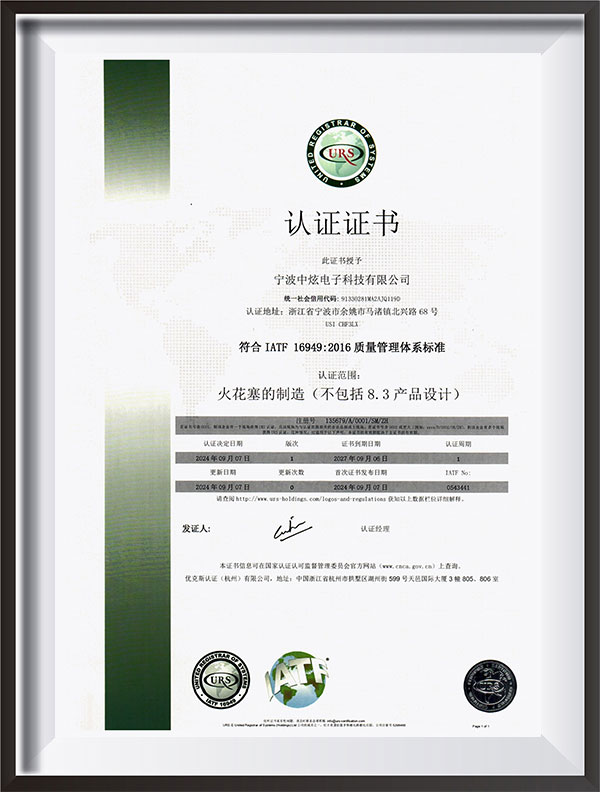
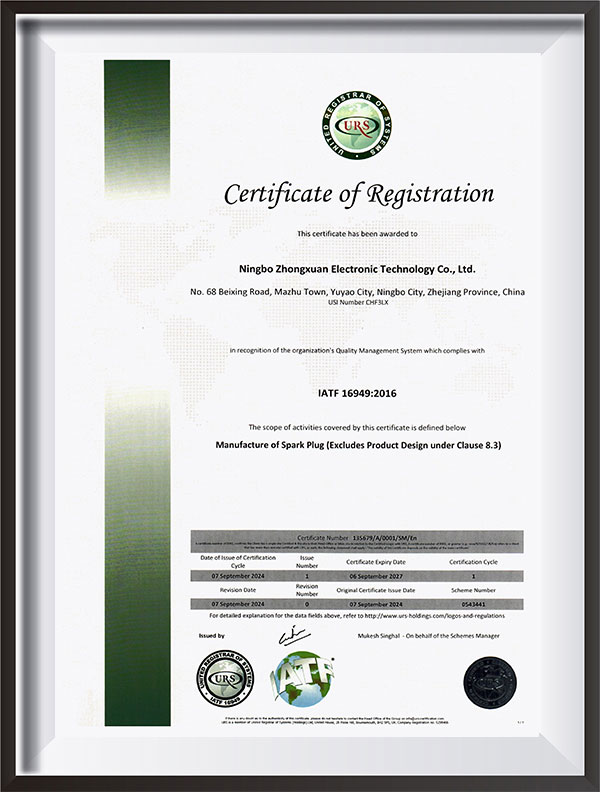
As China OEM Double Iridium Spark Plug For German Cars Suppliers and ODM Double Iridium Spark Plug For German Cars Factory, The company is a high-end automotive spark plug professional manufacturer.The existing standard workshop is more than 12000 square meters, a number of advanced complete automatic production lines, production capacity and production technology has reached the industry leading level. The enterprise has passed the lATF 16949 quality management system standard, lSO9001,and other system certification.
The company has mature Japanese cold sealing technology and galvanizing technology, nickel to ensure superior product performance and exquisite appearance.Also with many years of research and development experience in turbocharged special spark plug technology.
The production of iridium, platinum, double platinum, iridium platinum, double iridium and other precious metal car special type spark plug, over 330 types.Annual output is more than 20,000,000 pcs.The company has more than 90 R&D sales and after-sales personnel. The product quality is constantly improved after years of research and development.
At present, the company has become partner with many domestic auto parts brand chain enterprises, large auto parts dealers, and OEM customization for products with influence brand in China.At the same time, the company cooperate with the world's top three OES company, the products are exported to Germany,Poland.Russia.United States and so on.
If you are comparing a heat range 6 and a heat range 7 spark plug for the same engine, the direct answer is that the 6 is one step hotter and the 7 is one step colder. The 7 keeps the electrode tip roughly 70-100°C cooler at the same engine load, which gives a larger safety margin against pre-ignit...
A spark plug gap that is too small produces a short, weak spark that cannot ignite the air-fuel mixture reliably. In ordinary driving this shows up as a rough idle, hesitation when you press the throttle, a measurable drop in fuel economy, and often a flashing or steady check-engine light with a mi...
Selecting the heat range of a spark plug is not a performance upgrade. It is a combustion tuning decision that affects engine reliability. The heat range controls how quickly the firing tip sheds heat into the cylinder head, and the correct heat range keeps that tip between 500°C and 800°C (932°F t...
Please feel free to leave a message and we will reply to you soon.
Industry knowledge
German-engineered vehicles — from turbocharged inline-sixes to high-compression V8s — place extreme demands on every ignition component. The double iridium spark plug for German cars has become the ignition solution of choice for these powertrains precisely because it puts iridium on both the center and the ground electrode, not just one. That dual-precious-metal design addresses the specific wear patterns German engines generate under sustained high-load driving, making it a meaningful engineering choice rather than a marketing upgrade. This article explores how the double iridium spark plug works inside German engines, why the electrode configuration matters, what to expect across different German marques, and how a manufacturer like NINGBO ZHONGXUAN ELECTRONIC TECHNOLOGY CO., LTD. produces these plugs at volume without sacrificing precision.
Why German Engines Are Harder on Spark Plugs
German automotive engineering is defined by a commitment to high output per liter. Many models use turbocharging combined with direct injection, and compression ratios often run between 10:1 and 12:1 even in turbocharged configurations. That combination generates combustion chamber temperatures and pressures that accelerate electrode erosion on conventional copper plugs within 20,000–30,000 km.
Beyond raw power output, German vehicles frequently run on tightly calibrated ignition timing maps. A spark plug that has worn its gap even 0.1 mm beyond specification can trigger a misfire that the engine control unit detects as a fault. This is why the aftermarket and OEM supply chains for German vehicles moved toward premium electrode materials earlier than most segments.
Estimated Service Life by Spark Plug Type (km)
The Double Iridium Electrode: How It Works
Center Electrode
A fine iridium pin — typically 0.4–0.6 mm in diameter — concentrates the spark into a precise, consistent discharge point. Iridium's melting point of 2,446°C means the center tip resists erosion even under continuous high-load combustion events.
Ground Electrode
The ground (side) electrode receives an iridium chip on its firing face. This is the distinguishing feature of the double iridium design. On a standard plug, the ground electrode is nickel, which wears faster than the center tip and progressively widens the gap over time.
Gap Stability
Because both electrodes resist wear at roughly the same rate, the spark gap remains close to its factory setting for far longer. A stable gap means more consistent ignition timing, which German ECUs depend on for precise fuel delivery and combustion phasing.
In practical terms, a double iridium plug installed in a high-output turbocharged German engine will typically hold its specified gap within tolerance for up to 100,000 km — roughly three to four times the service interval of a standard copper plug in the same application.
Fitment Across Common German Powertrains
Double iridium plugs for German cars are not a one-size-fits-all item. Thread pitch, reach, hex size, heat range, and pre-set gap all vary by engine family. The table below summarizes the principal parameters for representative German engine types:
Key fitment parameters for common German engine families
Engine Family
Thread Size
Reach
Typical Gap (mm)
Service Interval
BMW B48 / N20 (2.0T)
M14 x 1.25
26.5 mm
0.7 – 0.8
60,000 – 100,000 km
Mercedes M274 (2.0T)
M14 x 1.25
26.5 mm
0.7 – 0.9
60,000 – 100,000 km
Audi EA888 Gen 3 (2.0T)
M14 x 1.25
26.5 mm
0.7 – 0.8
60,000 – 100,000 km
VW EA211 (1.4T / 1.5T)
M14 x 1.25
19.0 mm
0.6 – 0.8
60,000 – 100,000 km
One detail that catches people out: turbocharged German engines generally prefer a slightly tighter gap than naturally aspirated equivalents. Higher cylinder pressure compresses the spark arc, so a gap that works fine at low boost can cause intermittent misfires when the turbocharger is fully spooled. Always verify the gap specification for the specific engine, not just the platform family.
Manufacturing Precision Behind the Double Iridium Design
Producing a consistent double iridium spark plug at scale is harder than it looks. Both iridium chips must be laser-welded or resistance-welded with enough heat to achieve a metallurgical bond, but not so much that the surrounding electrode material is compromised. Any micro-crack at the weld interface can cause the chip to detach at operating temperature — a failure that is invisible in static quality inspection but catastrophic in the field.
NINGBO ZHONGXUAN ELECTRONIC TECHNOLOGY CO., LTD. has built its double iridium production capability on a factory footprint of more than 12,000 square meters, equipped with fully automated production lines that handle the entire assembly sequence — from electrode forming through welding, gap setting, and surface treatment — without manual handling at critical stages. Automated lines reduce the variability that creeps into hand-assembled products and allow real-time statistical process control at each station.
The company's surface treatment process draws on mature Japanese cold sealing and galvanizing technology, applied to the shell and ground electrode to resist both corrosion and thread galling. Nickel plating on the outer shell is a detail that matters in practice: German engine bays run hot, and a plug that corrodes onto its seat is a maintenance problem regardless of ignition performance.
Particular attention goes to turbocharged applications. ZHONGXUAN has accumulated years of R&D on spark plug designs specifically suited to turbocharged engines — a segment where heat range selection, sealing ring design, and electrode geometry all interact in ways that generic plug engineering misses. This specialization is directly relevant to the German car market, where turbocharged platforms dominate across the volume segments.
Double Iridium vs. Nickel Plug — Performance Comparison
Selecting the Right Heat Range for Your Engine
Heat range is one of the most misunderstood parameters in spark plug selection. It describes how quickly the plug transfers combustion heat away from the firing tip — not how hot the spark burns. A plug that runs too hot in a high-output German engine will pre-ignite the air-fuel mixture before the spark fires. A plug that runs too cold will accumulate carbon deposits and foul.
Heat Range Quick Reference
Stock naturally aspirated engine: use the heat range specified in the owner's manual or OEM part number cross-reference.
Turbocharged stock engine: confirm against the OEM plug number — many German turbo engines already specify a colder heat range than an equivalent NA engine.
Modified or higher-boost engine: a colder plug (one to two steps) is often required; consult a tuner or dyno data before changing heat range.
Track or sustained high-RPM use: read the plug's color and condition after a heat cycle; a light grey or tan insulator tip indicates correct heat range.
ZHONGXUAN's double iridium line covers a broad range of heat range codes, and with its internal R&D experience in turbocharged applications, the company can assist buyers in confirming the correct specification for their engine rather than simply matching part numbers by shape.
OEM Supply Capability and Production Scale
For distributors and auto parts retailers sourcing double iridium spark plugs for the German car aftermarket, consistency across batches is a non-negotiable requirement. A plug that performs correctly in sample testing but drifts in gap tolerance across production batches causes warranty headaches and damages brand reputation downstream.
NINGBO ZHONGXUAN's factory is built for exactly this kind of reliable mass production. Multiple advanced fully-automatic production lines run in a standardized workshop environment, with production capacity and process control that the company states have reached an industry-leading level. The facility is suitable for both OEM customization and high-volume wholesale supply, with the infrastructure to respond to large orders without quality compromise.
ZHONGXUAN Factory at a Glance
Buyers can also expect a responsive sales process: ZHONGXUAN commits to responding within half an hour of receiving an inquiry on business days — a practical advantage when procurement decisions are time-sensitive and technical questions need a quick answer.
Double Iridium vs. Other Electrode Configurations
The spark plug market for German cars offers several electrode configurations. Understanding the difference helps buyers make an informed choice rather than simply following price points.
Electrode configuration comparison for German car applications
Type
Center Electrode
Ground Electrode
Typical Life
Gap Stability
Copper/Nickel
Nickel
Nickel
20,000–30,000 km
Low
Iridium-Platinum
Iridium
Platinum
60,000–80,000 km
Medium-High
Double Iridium
Iridium
Iridium
100,000+ km
Very High
The iridium-platinum configuration improves on nickel but still has an asymmetric wear rate — the platinum ground electrode wears faster than the iridium center, so the gap expands unevenly over time. The double iridium design solves this by matching the wear rate on both electrodes, keeping the gap geometry predictable throughout the service interval.
Do double iridium plugs need to be gapped before installation?
Most double iridium plugs are factory-set to a specific gap and are not designed to be regapped, because the fine iridium chips can fracture if bent. Always verify that the plug's pre-set gap matches your engine specification before installing. If there is a mismatch, choose a plug specified for the correct gap rather than attempting to adjust an iridium-tipped plug.
Can I use double iridium plugs in a turbocharged German engine?
Yes, and turbocharged engines are actually where the double iridium design delivers the most noticeable benefit. The higher cylinder pressures and temperatures in a boosted engine accelerate electrode wear on standard plugs. The iridium ground electrode in a double iridium plug holds up significantly better. ZHONGXUAN specifically notes its years of R&D in turbocharged spark plug technology, which translates directly to correct heat range selection and electrode geometry for these engines.
How does iridium's hardness help in German engines specifically?
Iridium is one of the hardest and most corrosion-resistant metals available for electrode use, with a melting point of 2,446°C and a hardness roughly six times that of platinum. German turbocharged engines — particularly those with direct injection and variable valve timing — generate rapid combustion pressure spikes that erode softer electrode materials quickly. Iridium's physical properties allow the electrode to maintain its fine-tip geometry across many more combustion events, which is directly measurable as consistent ignition timing and stable combustion.
What happens if I install the wrong heat range in a German car?
Installing a plug that is too hot for the engine can cause pre-ignition — the air-fuel charge ignites before the ECU fires the spark. In extreme cases this can cause engine knock and piston damage. A plug that runs too cold will accumulate carbon deposits on the insulator, which can cause misfires, especially during cold starts. Either problem will register as a fault in the engine management system on modern German vehicles. Always match heat range to the engine specification.
How do I source double iridium spark plugs for German cars from ZHONGXUAN?
NINGBO ZHONGXUAN ELECTRONIC TECHNOLOGY CO., LTD. handles both OEM and wholesale inquiries. The company commits to responding within half an hour of receiving an inquiry on business days. The factory is equipped for mass production, so large-volume orders are well within its operational scope. Buyers should provide the target vehicle models and engine specifications to allow ZHONGXUAN's team to confirm the correct plug types and gap settings before quoting.


 Español