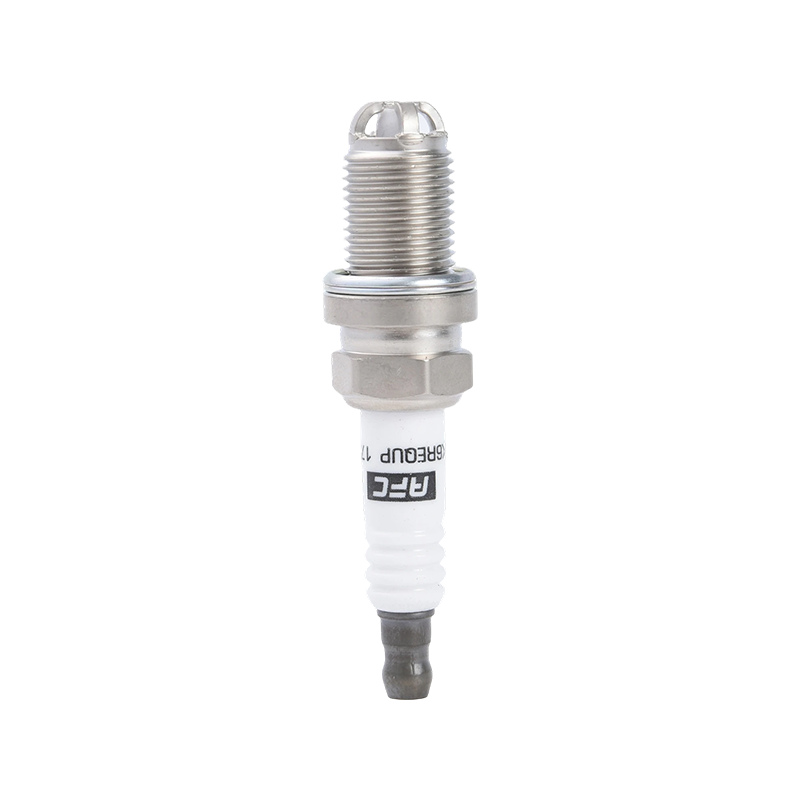
Platinum Spark Plugs for German Engines Specially engineered for the performance characteristics of German powertrains, these platinum spark plugs deliver precise compatibility with BMW, Porsche, and other German models. Designed to meet the demanding requirements of turbocharged engines for both ignition efficiency and durability, the series utilizes platinum electrode technology as its core, incorporating optimized heat ranges, gap parameters, and thread specifications tailored to mainstream German powertrains. This ensures robust spark strength and combustion stability under extreme operating conditions while balancing everyday drivability and low maintenance costs.
Leveraging the precious metal platinum, these spark plugs provide exceptional ignition performance and corrosion resistance, making them ideal for the high-temperature, high-pressure environments of German turbocharged engines. They perform reliably in daily commuting and high-load driving scenarios, particularly suiting German high-performance vehicles, turbocharged models, and frequent start-stop urban traffic conditions. The platinum electrode design minimizes electrode wear, extending the baseline service life to 40,000 kilometers. With outstanding high-temperature resistance and ignition efficiency, these platinum spark plugs represent an effective maintenance solution for German automobiles.
About Us
Ningbo Zhongxuan Electronic Technology Co., Ltd
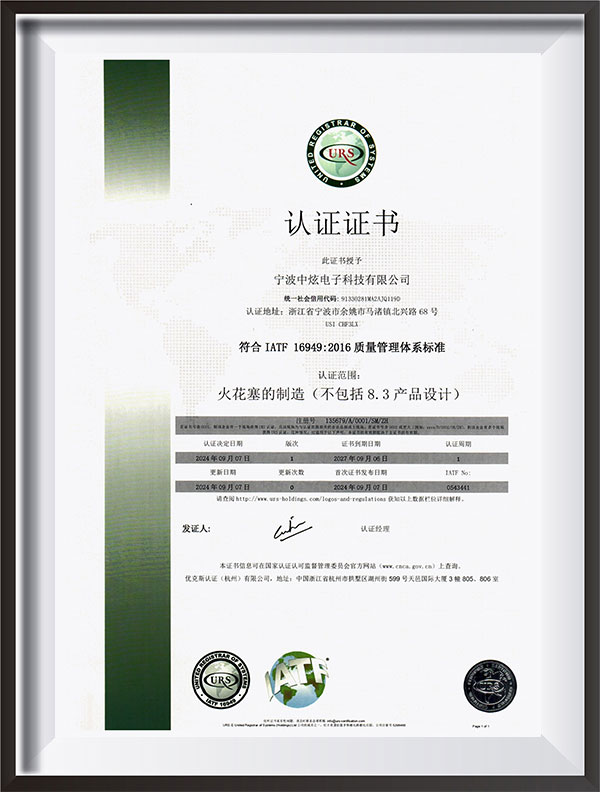
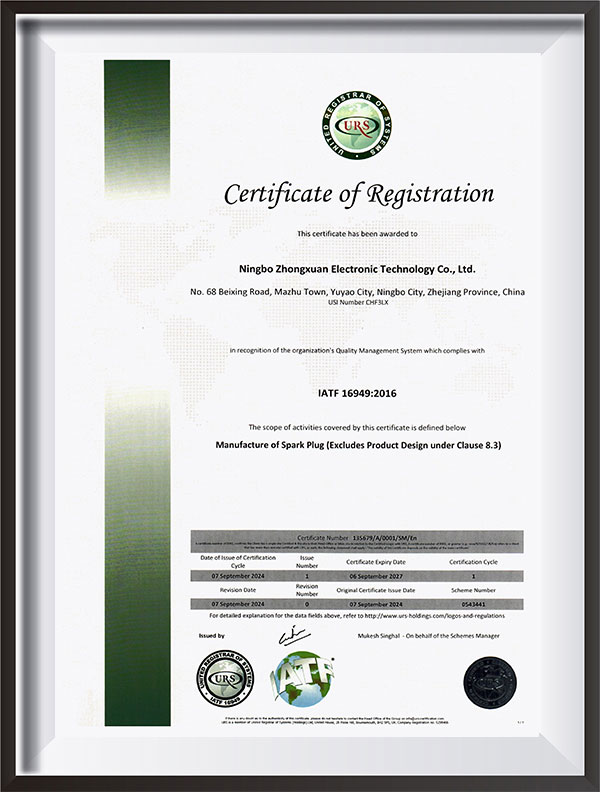
As China OEM Platinum Spark Plug For German Cars Suppliers and ODM Platinum Spark Plug For German Cars Factory, The company is a high-end automotive spark plug professional manufacturer.The existing standard workshop is more than 12000 square meters, a number of advanced complete automatic production lines, production capacity and production technology has reached the industry leading level. The enterprise has passed the lATF 16949 quality management system standard, lSO9001,and other system certification.
The company has mature Japanese cold sealing technology and galvanizing technology, nickel to ensure superior product performance and exquisite appearance.Also with many years of research and development experience in turbocharged special spark plug technology.
The production of iridium, platinum, double platinum, iridium platinum, double iridium and other precious metal car special type spark plug, over 330 types.Annual output is more than 20,000,000 pcs.The company has more than 90 R&D sales and after-sales personnel. The product quality is constantly improved after years of research and development.
At present, the company has become partner with many domestic auto parts brand chain enterprises, large auto parts dealers, and OEM customization for products with influence brand in China.At the same time, the company cooperate with the world's top three OES company, the products are exported to Germany,Poland.Russia.United States and so on.
If you are comparing a heat range 6 and a heat range 7 spark plug for the same engine, the direct answer is that the 6 is one step hotter and the 7 is one step colder. The 7 keeps the electrode tip roughly 70-100°C cooler at the same engine load, which gives a larger safety margin against pre-ignit...
A spark plug gap that is too small produces a short, weak spark that cannot ignite the air-fuel mixture reliably. In ordinary driving this shows up as a rough idle, hesitation when you press the throttle, a measurable drop in fuel economy, and often a flashing or steady check-engine light with a mi...
Selecting the heat range of a spark plug is not a performance upgrade. It is a combustion tuning decision that affects engine reliability. The heat range controls how quickly the firing tip sheds heat into the cylinder head, and the correct heat range keeps that tip between 500°C and 800°C (932°F t...
Please feel free to leave a message and we will reply to you soon.
Industry knowledge
Platinum Spark Plug For German Cars covers the ignition components engineered specifically for the high-compression, turbocharged, and direct-injection engines found across BMW, Mercedes-Benz, Audi, Volkswagen, and Porsche platforms. These engines run tighter air-fuel ratios and higher cylinder pressures than older naturally aspirated designs, which changes what is actually required from the electrode material, the gap tolerance, and the heat range of the plug itself. Rather than treating spark plugs as an interchangeable commodity part, this category groups together the specific platinum-tipped designs built to hold up under that load, and to do so consistently across long service intervals.
Why Platinum Electrode Design Matters for High-Compression German Engines
Platinum has a melting point around 1768°C, well above the nickel-alloy tips used in standard copper-core plugs. That higher tolerance matters most in turbocharged direct-injection engines, where combustion temperatures spike under boost and a softer electrode erodes faster, widening the spark gap over time and forcing the ignition system to work harder to jump it. A platinum tip resists that erosion, which is why service life ranges commonly fall between 60,000 and 100,000 kilometers for platinum-tipped designs, compared with roughly 20,000 to 30,000 kilometers for standard copper-core plugs in the same engine.
Platinum vs Standard Electrode: Relative Performance
Illustrative comparison of relative electrode characteristics, not measured units.
Typical Service Life Range by Electrode Type
Representative service life midpoints; actual mileage varies by driving conditions.
The narrower electrode tip on platinum designs also lowers the voltage needed to fire the spark, which is useful in engines already running higher coil output to manage cylinder pressure. For owners and shops sourcing replacement parts, this is the main reason a Platinum Spark Plug For German Cars is specified rather than a generic plug pulled from a parts bin sorted only by thread size.
Confirming Quality Before Committing to Bulk Orders
Spark plug performance is hard to judge from a spec sheet alone, since gap precision, insulator resistance, and thread sealing all affect how consistently a plug fires once it is installed. Buyers sourcing in volume, particularly for German vehicle platforms where tolerances are tighter, typically request samples first and run their own bench checks before signing off on a production order. NINGBO ZHONGXUAN ELECTRONIC TECHNOLOGY CO., LTD supports that step directly: samples of standard products are provided free of charge, with the buyer covering only the courier freight, while samples for customized specifications carry a sample fee that is normally credited back against the resulting order.
What Buyers Typically Check in a Sample
Spark gap tolerance against the stated specification
Insulator resistance under simulated heat cycling
Thread fit and seat type against the target engine
Heat range marking accuracy versus the physical design
Scaling From Prototype Samples to Full Production Runs
Once a sample passes inspection, the next concern for most buyers is whether the factory can actually deliver consistent volume on a predictable schedule, since an ignition component sourced for a vehicle program is not useful if supply is unreliable. NINGBO ZHONGXUAN ELECTRONIC TECHNOLOGY CO., LTD runs a fully automated production line with an annual capacity of up to 18 million pieces, and for standard products this typically allows production and shipment to be completed within 15 to 30 days of receiving a deposit. Larger or customized orders are scheduled individually, with delivery commitments held to the agreed contract terms rather than treated as a rough estimate.
Annual Production Capacity by Quarter
Even distribution of the 18 million piece annual capacity across four quarters.
Production Lead Time by Order Type
Standard orders follow the 15 to 30 day window; custom orders are scheduled per project.
Matching Heat Range and Gap Specifications to German Engine Types
Heat range describes how quickly a plug can move heat away from its tip into the cylinder head, and it is one of the more commonly mismatched specifications when a plug is sourced by thread size alone. Turbocharged, direct-injection engines common across modern German platforms tend to run hotter combustion chambers and call for a colder heat range than naturally aspirated designs, while electrode gap settings are often narrower to suit higher-energy coil ignition systems. The table below summarizes typical tendencies by engine category, though the exact specification should always be checked against the engine in question rather than the category alone.
General tendencies by engine category; actual specifications vary by model and should be confirmed against the engine.
Engine Category
Heat Range Tendency
Typical Gap (mm)
Common Seat Type
Turbocharged Inline-4 (Direct Injection)
Colder
0.7 - 0.8
Taper seat
Naturally Aspirated Inline-6
Medium
0.8 - 0.9
Gasket seat
V8 Performance Engines
Colder
0.7 - 0.8
Taper seat
V6 Turbocharged
Colder to Medium
0.75 - 0.85
Taper seat
Because these tolerances shift between engine families, most shops keep a defined cross-reference rather than relying on a single gap setting across an entire lineup, and a properly specified Platinum Spark Plug For German Cars is sourced with that fitment record in mind, not from gap setting alone.
Frequently Asked Questions
What is the main difference between platinum and standard copper-core spark plugs?
Platinum's main advantage is electrode durability and heat tolerance under sustained load. The spark itself uses the same basic mechanism, but a platinum tip resists the erosion that widens the spark gap over time, which is why platinum designs hold a stable gap and consistent ignition for substantially longer service intervals.
How long should a platinum spark plug last in a turbocharged German engine?
Service life depends on driving conditions and the specific engine, but platinum-tipped plugs commonly reach somewhere in the 60,000 to 100,000 kilometer range before replacement is needed, well beyond what standard copper-core designs typically manage in the same application.
Can samples be requested before placing a bulk order?
Yes. Standard product samples are available free of charge, with the requesting party covering courier freight; customized specifications carry a sample fee that is generally deducted from the value of the resulting production order.
What is the typical lead time once an order is placed?
For standard products, production and shipment are typically completed within 15 to 30 days of deposit confirmation. Larger or customized orders are scheduled individually based on the specific requirements.
Do platinum spark plugs need a different gap setting than copper-core plugs?
Not inherently, but the gap setting itself should always match the ignition system and engine specification rather than the electrode material. Many modern German engines with high-energy coil systems run narrower gaps in the 0.7 to 0.8 millimeter range regardless of whether the plug uses platinum, iridium, or copper-core construction.



 Español