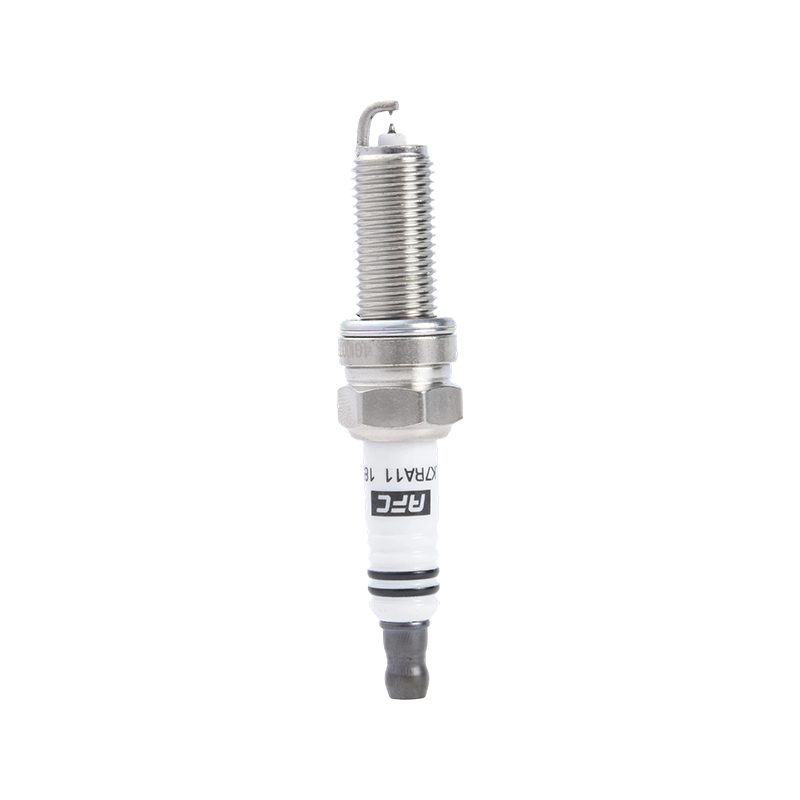
Ultra-High Performance Double Iridium Spark Plugs for Korean Engines Designed specifically for Korean powertrains, these double iridium spark plugs deliver precise compatibility with Hyundai, Kia, and other brands. They are particularly engineered to meet the demanding conditions of high-efficiency turbocharged engines in Korean vehicles. The series utilizes dual iridium electrode technology as its core innovation, featuring optimized heat ranges, gap parameters, and thread specifications tailored for mainstream Korean powertrains. This ensures exceptional spark intensity and combustion stability under extreme operating conditions while maintaining ignition efficiency in strict accordance with original factory standards.
The dual precious metal configuration—combining an iridium center electrode with an iridium side electrode—synergistically enhances ignition performance and corrosion resistance while minimizing electrode wear. This design significantly improves ignition stability and extends service life to up to 100,000 kilometers. For high-efficiency hybrid vehicles, these plugs support frequent charge-discharge cycles, making them suitable for economical family cars and adaptable to both urban and rural road conditions. Although the initial maintenance cost is higher, the unparalleled lifespan and comprehensive scenario adaptability establish these double iridium spark plugs as the ultimate maintenance solution for high-performance Korean vehicles, outperforming both single-precious-metal and iridium-platinum alternatives.
About Us
Ningbo Zhongxuan Electronic Technology Co., Ltd
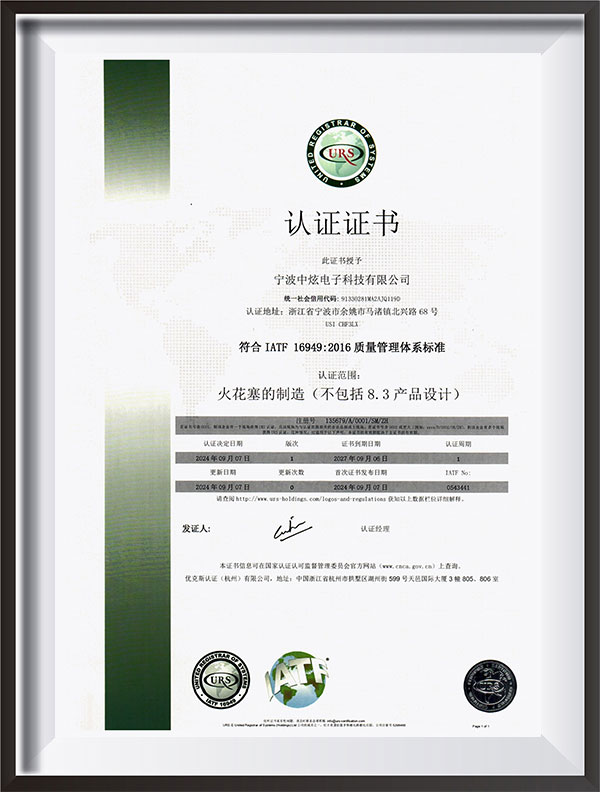
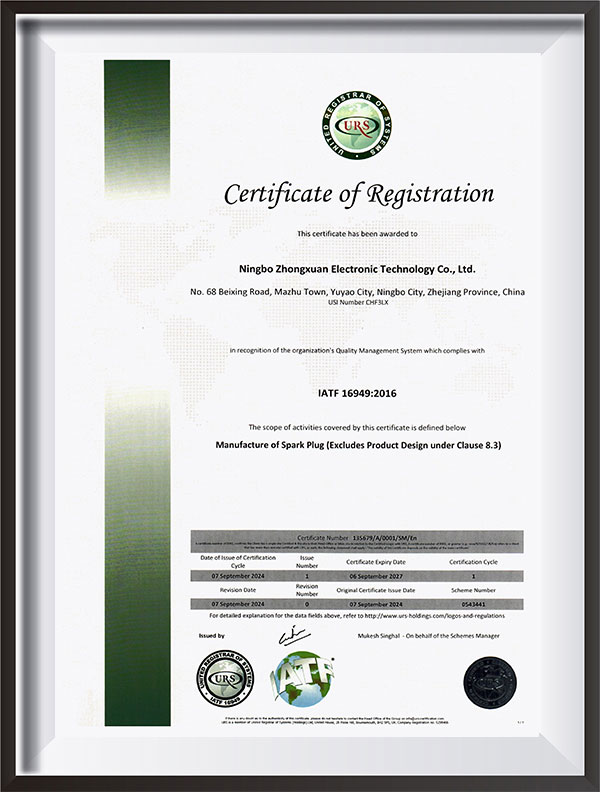
As China OEM Double Iridium Spark Plug For Korean Cars Suppliers and ODM Double Iridium Spark Plug For Korean Cars Factory, The company is a high-end automotive spark plug professional manufacturer.The existing standard workshop is more than 12000 square meters, a number of advanced complete automatic production lines, production capacity and production technology has reached the industry leading level. The enterprise has passed the lATF 16949 quality management system standard, lSO9001,and other system certification.
The company has mature Japanese cold sealing technology and galvanizing technology, nickel to ensure superior product performance and exquisite appearance.Also with many years of research and development experience in turbocharged special spark plug technology.
The production of iridium, platinum, double platinum, iridium platinum, double iridium and other precious metal car special type spark plug, over 330 types.Annual output is more than 20,000,000 pcs.The company has more than 90 R&D sales and after-sales personnel. The product quality is constantly improved after years of research and development.
At present, the company has become partner with many domestic auto parts brand chain enterprises, large auto parts dealers, and OEM customization for products with influence brand in China.At the same time, the company cooperate with the world's top three OES company, the products are exported to Germany,Poland.Russia.United States and so on.
If you are comparing a heat range 6 and a heat range 7 spark plug for the same engine, the direct answer is that the 6 is one step hotter and the 7 is one step colder. The 7 keeps the electrode tip roughly 70-100°C cooler at the same engine load, which gives a larger safety margin against pre-ignit...
A spark plug gap that is too small produces a short, weak spark that cannot ignite the air-fuel mixture reliably. In ordinary driving this shows up as a rough idle, hesitation when you press the throttle, a measurable drop in fuel economy, and often a flashing or steady check-engine light with a mi...
Selecting the heat range of a spark plug is not a performance upgrade. It is a combustion tuning decision that affects engine reliability. The heat range controls how quickly the firing tip sheds heat into the cylinder head, and the correct heat range keeps that tip between 500°C and 800°C (932°F t...
Please feel free to leave a message and we will reply to you soon.
Industry knowledge
Korean automakers have built a strong global reputation by engineering engines that demand precision ignition components. The double iridium spark plug for Korean cars is a purpose-built solution for this reality — covering popular platforms like Hyundai Sonata, Elantra, Tucson, Kia Sportage, Forte, Sorento, and Genesis models. What sets this plug apart is the use of iridium on both the center electrode and the ground electrode, delivering symmetric wear, sharper spark focus, and dramatically extended service life compared to standard or single-precious-metal designs. For distributors, fleet managers, and aftermarket buyers sourcing ignition parts for Korean-market vehicles, understanding what the double iridium design actually does — and why it matters for these specific engines — is the starting point for making smart sourcing decisions.
Why Korean Car Engines Call for Double Iridium
Korean passenger vehicles have shifted heavily toward turbocharged GDI (Gasoline Direct Injection) engines over the past decade. Engines like the 1.6T, 2.0T, and 2.5T found in Kia and Hyundai crossovers run at higher combustion pressures and temperatures than older naturally aspirated designs. In this environment, a conventional nickel plug simply wears out too fast — electrode erosion widens the gap, ignition voltage requirements climb, and misfires follow.
The double iridium design addresses this directly. Iridium has a melting point of 2,447°C and is among the hardest metals used in automotive components. By cladding both the center pin and the side electrode with iridium alloy tips, the plug maintains a tight, consistent spark gap over a much longer service interval — typically cited around 100,000 km for highway-use patterns. For comparison, a standard copper plug in the same engine usually requires replacement by 30,000–40,000 km.
Typical Service Life by Spark Plug Type (Korean Turbocharged Engines)
Double Iridium
~100,000 km
Single Iridium / Iridium-Platinum
~60,000 km
Double Platinum
~50,000 km
Nickel Copper
~30,000 km
Note: Intervals are approximate and vary by engine load, fuel quality, and driving conditions.
For vehicles running as hybrid powertrains — which are increasingly common across the Korean lineup — the situation is a bit different. Hybrids cycle the combustion engine on and off more frequently, which means cold starts happen more often. Cold starts are harder on plug tips because combustion is momentarily incomplete. Double iridium plugs handle this well precisely because both electrode surfaces resist the carbon fouling that tends to accumulate during those cold-start cycles.
The Technical Difference: Double vs. Single Precious Metal
Single Iridium
Iridium center electrode only
Nickel or platinum side electrode
Side electrode wears faster
Suitable for naturally aspirated engines
Double Iridium
Iridium on both electrodes
Symmetric wear rate
Better for GDI turbo and hybrid engines
Maintains tighter gap over full service life
The gap between the two electrodes is where combustion begins. A wider gap — caused by electrode erosion — forces the ignition coil to generate higher voltage to jump the spark. Over time this stresses the coil itself, not just the plug. Double iridium plugs keep the gap tighter for longer, which means coil load stays within the design range the car's ECU expects. For Korean GDI engines that run precise air-fuel ratios, this ignition consistency matters for fuel economy and smooth throttle response alike.
Performance Attribute Comparison (Radar Chart)
Fitment Specifics: Getting the Right Plug for Each Platform
One of the more practical challenges with Korean cars is that the engine lineup spans a wide range — from naturally aspirated 1.4L and 1.6L four-cylinders in economy sedans, all the way to 3.3T twin-turbo V6s in sport models. Each engine has a specific heat range requirement, thread pitch, and electrode gap specification. Using the wrong heat range plug — even a high-quality one — can cause pre-ignition in a hot engine or fouling in a cooler one.
Common Korean Engine Platforms and Typical Double Iridium Plug Parameters
Engine
Typical Application
Thread Size
Gap (mm)
Heat Range
1.4L / 1.6L NA
Accent, Rio, Forte
M14 x 1.25
1.0–1.1
Mid (7–8)
1.6T GDI
Tucson 1.6T, Sportage 1.6T
M14 x 1.25
0.7–0.8
Colder (6–7)
2.0T / 2.5T
Sonata N-Line, Stinger 2.0T
M14 x 1.25
0.7–0.8
Colder (6)
1.6 Hybrid
Niro Hybrid, Ioniq Hybrid
M14 x 1.25
1.0–1.1
Mid (7–8)
Gap specifications in turbocharged Korean engines tend to run tighter — often 0.7 to 0.8 mm — compared to the 1.0–1.1 mm typical of naturally aspirated versions. This is because the higher cylinder pressure in forced-induction engines makes it physically harder to jump a wide gap. Running a plug at the wrong gap — even 0.1 mm off spec — can produce rough idle, hesitation under load, or increased fuel consumption.
Sourcing Double Iridium Plugs: What Buyers and Distributors Should Know
Verify OEM Cross-Reference Numbers
Every Korean OEM plug carries a manufacturer part number that maps to a specific heat range, thread, and reach. Cross-reference tables allow aftermarket plugs to be matched exactly. A reliable supplier will provide these cross-reference numbers upfront and confirm the parameters before fulfilling a wholesale order.
Request Samples Before Committing to Batch Orders
The only way to verify electrode geometry, insulator quality, and actual tip diameter is to physically inspect a sample. At NINGBO ZHONGXUAN ELECTRONIC TECHNOLOGY CO., LTD, sample requests are handled directly — free samples are available for standard products, with the buyer covering courier costs. For customized specifications or special requirements, a sample fee may apply, and that fee is generally deductible from subsequent production orders. This kind of policy removes the guesswork from the sourcing process and lets buyers evaluate quality on their own terms before committing to volume.
Understand Payment and Trade Term Structures
For batch production, the standard arrangement involves a 30% upfront deposit, with the balance paid against the Bill of Lading. Trade terms including FOB, CIF, and CNF are confirmed at the quotation stage. The primary payment method is T/T. For long-term, high-volume partners, more flexible arrangements are available and can be discussed openly — the goal is to build sustainable supply relationships, not one-off transactions.
How NINGBO ZHONGXUAN ELECTRONIC TECHNOLOGY CO., LTD Approaches This Market
20M+ pcs/year
Annual production capacity across the full spark plug lineup
330+ types
Precious metal spark plug SKUs covering global vehicle platforms
12,000+ m²
Standard workshop area with multiple automated production lines
NINGBO ZHONGXUAN ELECTRONIC TECHNOLOGY CO., LTD has built its production capability around the full range of precious metal spark plug types — iridium, platinum, double platinum, iridium-platinum, and double iridium — with over 330 types in active production. The company operates from a facility of more than 12,000 square meters and runs multiple fully automated production lines, with an annual output exceeding 20 million pieces.
The way the company operates reflects a clear set of principles: taking initiative, following through on commitments, and dealing with both colleagues and business partners fairly and with respect. Agreements are treated as binding. The company only promises what it can actually deliver — which in practice means quoting lead times and specifications that are realistic, not optimistic. This ethos runs through every stage of the business relationship, from the first sample request to ongoing batch fulfillment.
Products are exported to Germany, Poland, Russia, the United States, and other markets. The company works with top-tier OES partners globally, which means the manufacturing processes and quality checks are calibrated to meet international supply chain expectations — not just domestic ones.
Key Export Regions for Korean-Fitment Spark Plugs
Relative demand volume by export region for Korean-fitment double iridium spark plugs (illustrative based on Korean vehicle market penetration data).
Installation and Maintenance Realities in Korean Engines
One detail that often gets overlooked: Korean engine bays have become increasingly compact as models grew in feature content without growing in size. This makes spark plug access tighter in some configurations. For turbocharged four-cylinders in crossovers like the Tucson or Sportage, the plugs are typically accessible without removing major components — but the torque spec matters. Over-tightening a plug in an aluminum head (which most modern Korean engines use) risks thread damage that turns a simple maintenance job into a costly repair.
Typical torque specs for M14 x 1.25 plugs in Korean engines run between 20–25 Nm for tapered-seat plugs. Many double iridium plugs come with nickel-plated threads, which the manufacturer designs to resist galling and corrosion — these do not require anti-seize compound. Adding anti-seize to a pre-treated thread actually changes the effective clamping force and can lead to over-torque situations.
For hybrid powertrains in particular, plugs that are left in longer than recommended tend to carbon-foul at the tip rather than wear at the electrode. This is a product of the frequent cold starts mentioned earlier. Double iridium's ceramic insulator geometry — when properly matched to the heat range — helps burn off these deposits, but it's not a substitute for following the replacement schedule.
Frequently Asked Questions
Q: What makes a double iridium plug different from an iridium-platinum plug for Korean cars?
An iridium-platinum plug uses iridium on the center electrode and platinum on the ground electrode — or the reverse. A true double iridium plug uses iridium alloy on both electrodes. Since the side electrode in iridium-platinum designs uses platinum (which is softer than iridium), it wears at a different rate than the center, causing asymmetric gap growth. Double iridium keeps both sides wearing at nearly the same rate, which helps maintain a consistent gap throughout the plug's service life. For high-stress GDI turbocharged Korean engines, this symmetry matters.
Q: Can I use the same double iridium plug across different Korean models?
Not reliably. While many Korean engines share the same thread size (M14 x 1.25), the heat range, reach, and gap specification differ between naturally aspirated and turbocharged variants, and between hybrid and non-hybrid platforms. Using a plug with the wrong heat range — even if it physically installs — can cause fouling in a cooler-running engine or overheating in a hotter one. Always cross-reference against the specific engine code and OEM part number before specifying a plug for wholesale or retail.
Q: How can I evaluate quality before placing a large order with a Chinese manufacturer?
Requesting physical samples is the most practical method. At NINGBO ZHONGXUAN ELECTRONIC TECHNOLOGY CO., LTD, standard product samples are provided free of charge — the buyer covers courier freight. Customized or special-requirement samples may carry a fee that can be offset against subsequent production orders. Beyond the sample itself, asking for cross-reference documentation and verifying electrode dimensions under a caliper gives a clear, objective picture of what you're sourcing before committing to volume.
Q: What payment arrangements are typical for wholesale spark plug orders?
The standard arrangement is T/T payment with a 30% deposit at order confirmation and the balance settled against the Bill of Lading. Trade terms such as FOB, CIF, or CNF are agreed upon at the quotation stage. For buyers with established, high-volume purchasing history, more flexible arrangements can be discussed directly — the goal is a working relationship that functions for both parties over the long term, not a rigid structure that gets in the way of doing business efficiently.
Q: Do Korean hybrid vehicles actually benefit from double iridium plugs?
Yes, and arguably more than their non-hybrid counterparts in some ways. Hybrid combustion engines cycle on and off more frequently, which means each restart is effectively a cold start — a moment when incomplete combustion can leave carbon deposits on the plug tip. Double iridium's tight center electrode geometry (typically 0.4–0.6 mm diameter) produces a more concentrated spark, which helps fire a leaner mixture more reliably. Over a vehicle's operating life, this leads to fewer misfires, more consistent fuel trim readings, and fewer unscheduled maintenance events tied to plug fouling.



 Español