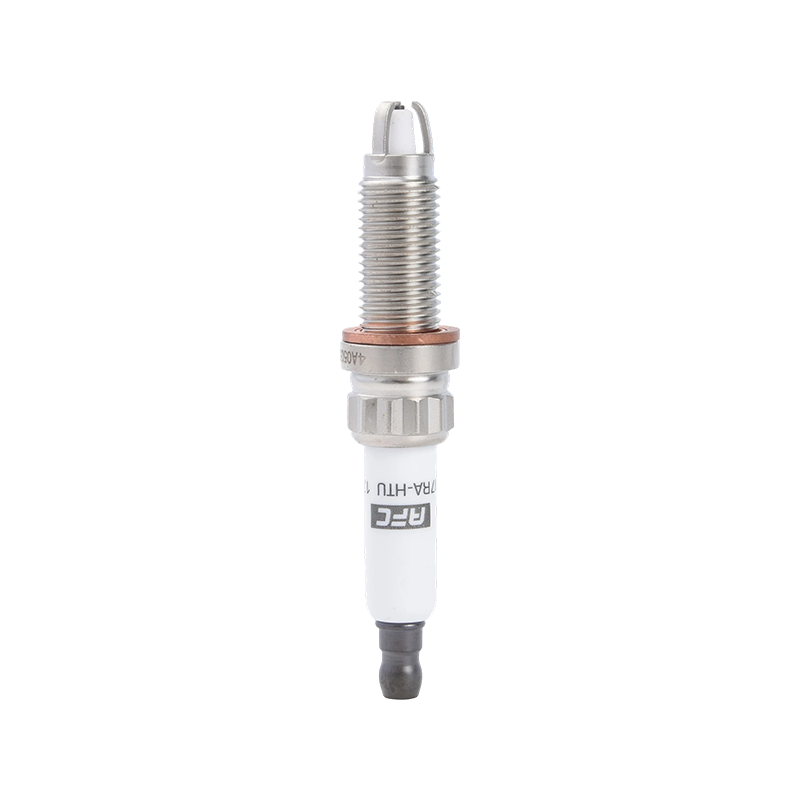
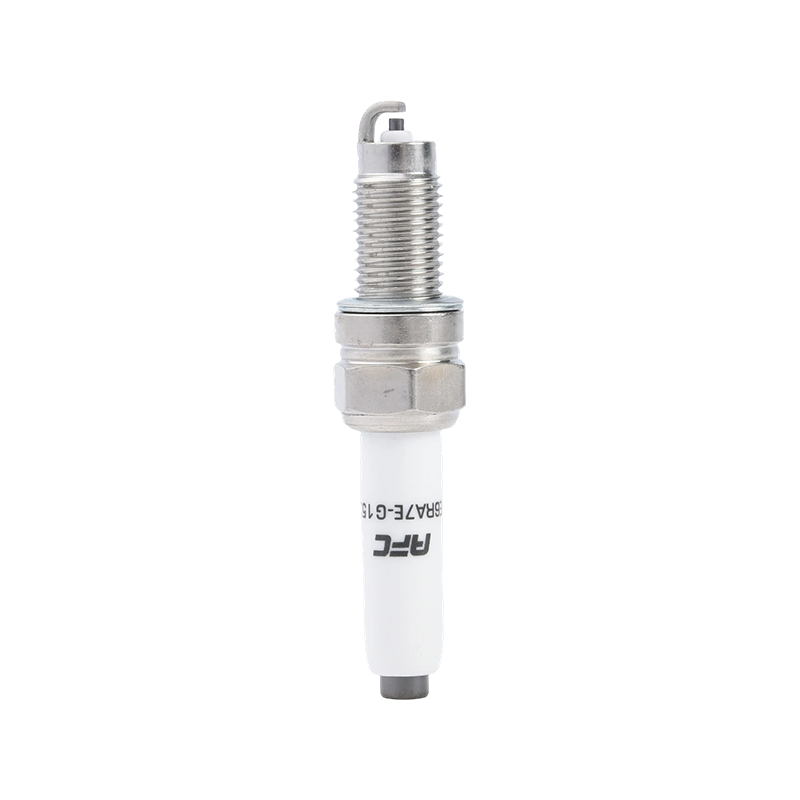
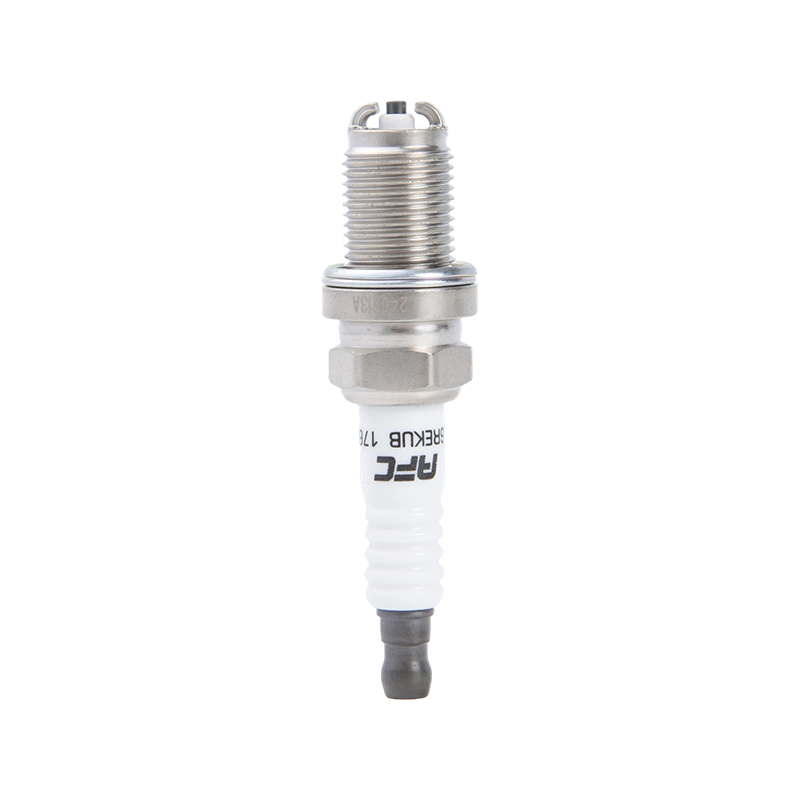
Nickel-Copper Spark Plugs for German Engines Specially engineered for the performance characteristics of German-engineered powertrains, these spark plugs precisely meet the stringent performance standards and precise ignition requirements of brands such as BMW, Volkswagen, and Audi. Utilizing nickel-copper electrode technology as its core, the series features optimized electrode structure, heat range, and gap parameters tailored to German automotive specifications, ensuring ignition stability and combustion efficiency align with original design principles.
As the preferred solution for cost-effective maintenance of German vehicles, the key advantages of nickel-copper spark plugs lie in their balanced compatibility and durability. The nickel-copper electrode offers excellent electrical conductivity and corrosion resistance, withstanding thermal stress from frequent start-stop cycles and high-load conditions typical of German engines. A rapid heat dissipation design further mitigates pre-ignition risks. Compared to precious metal spark plugs, they fulfill fundamental ignition performance requirements of German vehicles at a lower maintenance cost, making them particularly suitable for naturally aspirated or low-pressure turbo engines in daily commuting and long-distance driving scenarios.
A standout feature of these OEM-spec nickel-copper spark plugs is their strict adherence to original manufacturing standards, enabling seamless installation and long-term compatibility. Special surface treatment on the electrodes suppresses carbon deposit formation, maintaining idle smoothness and fuel economy. For owners who prioritize OEM compatibility, budget sensitivity, and operational stability, these nickel-copper spark plugs deliver a reliable and economical foundational upgrade for routine maintenance.
About Us
Ningbo Zhongxuan Electronic Technology Co., Ltd
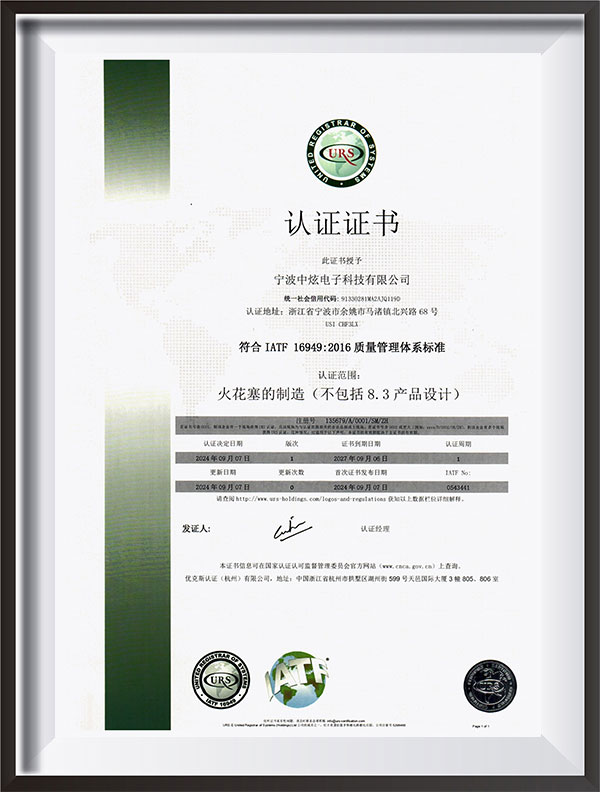
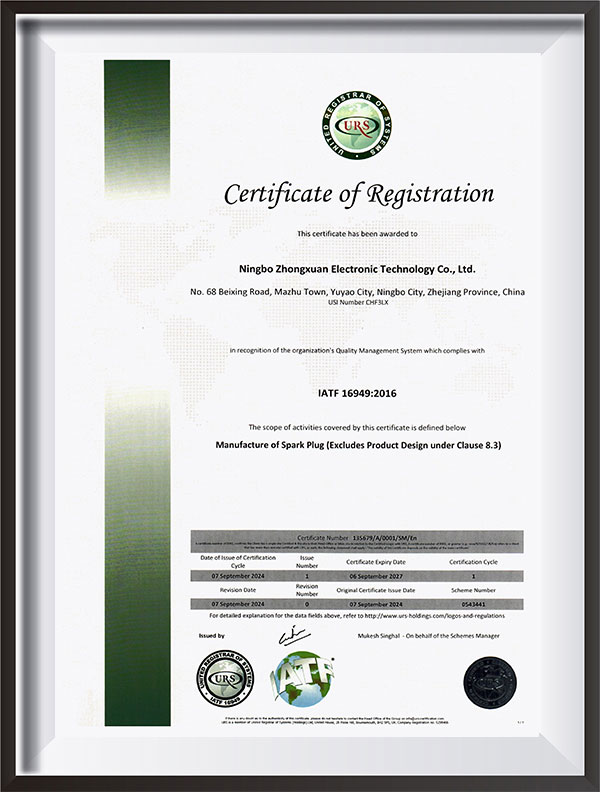
As China OEM Nickel Copper Spark Plug For German Cars Suppliers and ODM Nickel Copper Spark Plug For German Cars Factory, The company is a high-end automotive spark plug professional manufacturer.The existing standard workshop is more than 12000 square meters, a number of advanced complete automatic production lines, production capacity and production technology has reached the industry leading level. The enterprise has passed the lATF 16949 quality management system standard, lSO9001,and other system certification.
The company has mature Japanese cold sealing technology and galvanizing technology, nickel to ensure superior product performance and exquisite appearance.Also with many years of research and development experience in turbocharged special spark plug technology.
The production of iridium, platinum, double platinum, iridium platinum, double iridium and other precious metal car special type spark plug, over 330 types.Annual output is more than 20,000,000 pcs.The company has more than 90 R&D sales and after-sales personnel. The product quality is constantly improved after years of research and development.
At present, the company has become partner with many domestic auto parts brand chain enterprises, large auto parts dealers, and OEM customization for products with influence brand in China.At the same time, the company cooperate with the world's top three OES company, the products are exported to Germany,Poland.Russia.United States and so on.
If you are comparing a heat range 6 and a heat range 7 spark plug for the same engine, the direct answer is that the 6 is one step hotter and the 7 is one step colder. The 7 keeps the electrode tip roughly 70-100°C cooler at the same engine load, which gives a larger safety margin against pre-ignit...
A spark plug gap that is too small produces a short, weak spark that cannot ignite the air-fuel mixture reliably. In ordinary driving this shows up as a rough idle, hesitation when you press the throttle, a measurable drop in fuel economy, and often a flashing or steady check-engine light with a mi...
Selecting the heat range of a spark plug is not a performance upgrade. It is a combustion tuning decision that affects engine reliability. The heat range controls how quickly the firing tip sheds heat into the cylinder head, and the correct heat range keeps that tip between 500°C and 800°C (932°F t...
Please feel free to leave a message and we will reply to you soon.
Industry knowledge
A Nickel Copper Spark Plug For German Car is built around one job: turning a precise electrical spark into a stable, repeatable ignition event inside engines that were designed with tight tolerances and high compression ratios. The category covers plugs for the major German marques and their performance-tuned variants, where the copper core inside the center electrode pulls heat away from the firing tip faster than a solid nickel-alloy pin could on its own, while the nickel-coated shell resists the corrosive byproducts of combustion. This combination matters because German engineering tends to favor smaller displacement, higher boost, and narrower heat ranges, so the plug has to keep working at the exact temperature window the engine was tuned for, shot after shot, without drifting.
Why Copper Core Construction Matters for Heat Management
Inside the center electrode, a copper core sits surrounded by a nickel-alloy sheath. Copper has roughly four times the thermal conductivity of plain nickel alloy, which means heat generated at the firing tip during ignition gets pulled back toward the cylinder head instead of lingering at the tip. In turbocharged and high-revving German engines, that difference shows up directly in how consistently the spark fires across thousands of cycles per minute.
Heat Transfer Comparison Across Electrode Types
Figure: indicative thermal conductivity values used for illustration of relative heat-transfer behavior between electrode core materials.
Because the copper core sheds heat faster, the plug can be engineered with a narrower heat range without the tip running so cool that it fouls, or so hot that it triggers pre-ignition. That narrow window is exactly what most German performance engines are tuned around, which is why this construction shows up so consistently across compatibility charts for sedans, wagons, and turbocharged variants alike.
Matching Electrode Gap to Engine Behavior
Electrode gap is one of the most overlooked numbers on a spec sheet, yet it changes how the spark behaves under load. A gap that is too wide demands more voltage than the coil can comfortably deliver at high RPM; one that is too narrow produces a weak, small spark that struggles to ignite a lean or turbulent air-fuel mixture. The table below lays out general gap tendencies seen across naturally aspirated versus turbocharged German engine families.
Typical electrode gap tendencies by engine configuration, for general reference only.
Engine Type
Typical Gap Range
Ignition Demand
Naturally aspirated, low compression
0.8mm - 0.9mm
Lower
Naturally aspirated, high compression
0.7mm - 0.8mm
Moderate
Turbocharged, daily tuning
0.6mm - 0.7mm
Higher
Turbocharged, performance tuning
0.5mm - 0.6mm
High
This is exactly why a single product line cannot cover every German vehicle with one gap setting. A Nickel Copper Spark Plug For German Cars catalog typically separates SKUs by platform and engine code rather than by brand alone, since two cars from the same manufacturer can call for noticeably different gap and heat range combinations.
How Production Scale Affects Delivery Reliability
For workshops, distributors, and fleet buyers, the spark plug itself is only half the equation; the other half is whether an order actually arrives on the schedule it was promised on. NINGBO ZHONGXUAN ELECTRONIC TECHNOLOGY CO., LTD runs a complete automated production line with an annual capacity of up to 18 million pieces, which is the kind of throughput that lets standard product runs move without the bottlenecks that smaller, manual lines tend to hit during peak ordering periods.
Standard Lead Time From Deposit to Shipment
For standard products, production and shipment are typically completed within 15 to 30 days after the deposit is received. For large or customized orders, a specific schedule is worked out and provided directly, rather than applying a one-size-fits-all estimate. That distinction matters in this industry, because a bulk order of a single plug part number behaves very differently on a production line than a mixed batch of customized heat ranges and electrode configurations, and treating them the same way tends to create the delays buyers actually complain about.
Timely delivery is treated as a contractual commitment rather than a best-effort goal, with schedules strictly adhered to once they are agreed. For buyers planning around a model year changeover or a seasonal maintenance push, that predictability is often as important as the plug specification itself.
Reading Spark Plug Wear Before It Becomes a Misfire
Pulling a spark plug and reading its tip is still one of the most direct diagnostic tools available, and it tells a different story depending on what kind of fouling shows up. The list below covers the patterns most commonly seen on plugs removed from German engines during routine service intervals.
Light tan or grayish tip color generally indicates correct heat range and a healthy combustion process.
Black, sooty deposits across the tip usually point to a rich fuel mixture or excessive idling time.
A glazed, glassy coating suggests the plug briefly overheated and then cooled rapidly, often during hard acceleration followed by deceleration.
Eroded or rounded electrodes signal the plug has simply reached the end of its service interval and needs replacement.
Oily residue near the base of the threads can indicate a valve seal or piston ring issue rather than a plug defect on its own.
None of these patterns alone confirms a diagnosis, but read together with mileage and recent driving conditions, they narrow down whether the next step is a plug swap or a deeper look at the engine itself.
Balancing Conductivity, Durability, and Cost
Buyers comparing plug materials are usually weighing three things against each other: how well the plug conducts and sheds heat, how long it lasts before electrode wear becomes a problem, and what it costs relative to alternatives. Nickel copper construction tends to sit in a practical middle ground rather than maximizing any single trait.
The wider red shape reflects how the copper core gives the plug an edge specifically in heat transfer and cold-start reliability, two areas where German engines with direct injection and turbocharging tend to be the most demanding. Service life and raw cost efficiency sit closer to standard nickel options, which is part of why nickel copper has become a common default rather than a premium niche choice.
Common Questions From Workshops and Buyers
Does a copper core change how often the plug needs replacing?
Not significantly on its own. Replacement interval is driven mainly by electrode material at the firing tip and the engine's operating conditions; the copper core's job is heat management during the plug's working life, not extending the interval itself.
Can one part number fit multiple German engine codes?
Sometimes, when two engine codes share the same thread size, reach, seat type, and heat range requirement. It is common enough across shared-platform engines that cross-reference charts are standard practice rather than an exception.
What happens if a customized order is needed instead of a standard part number?
Customized or large orders are handled with a specific schedule provided directly to the buyer, separate from the 15 to 30 day window used for standard products, so the timeline reflects the actual scope of the order.
Is a wider heat range always safer for a tuned engine?
No. A heat range that runs too cold for the application can cause fouling at idle, while one that runs too hot under boost increases the risk of pre-ignition. The correct range is matched to the specific tune, not simply the widest available margin.



 Español