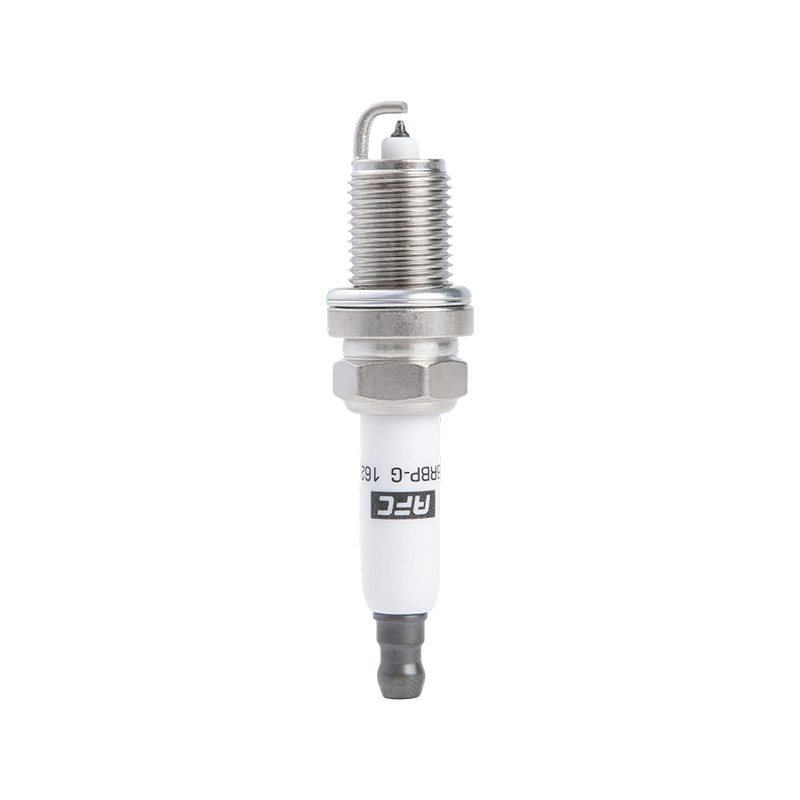
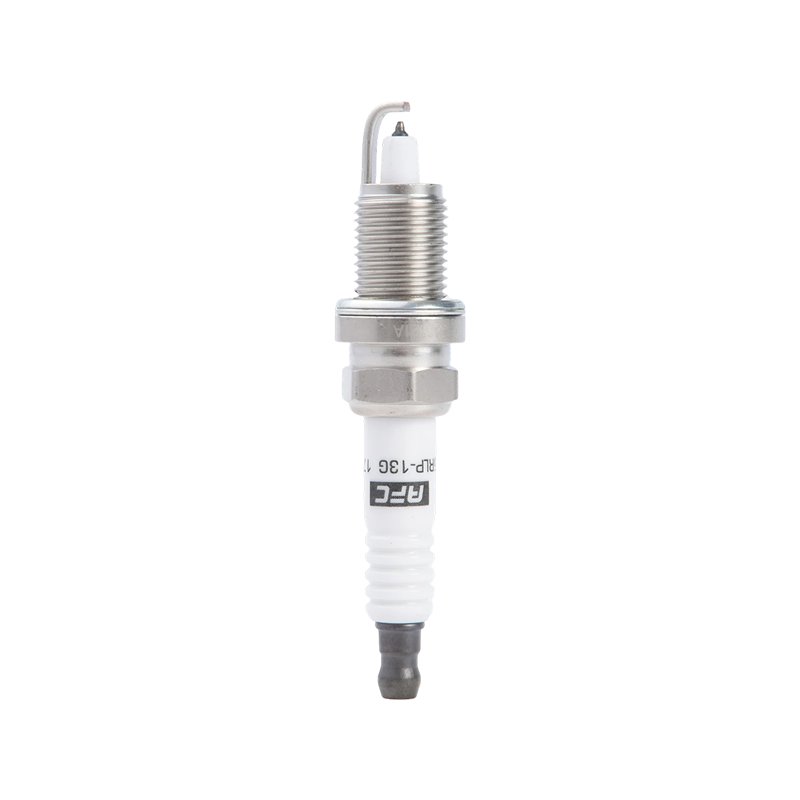
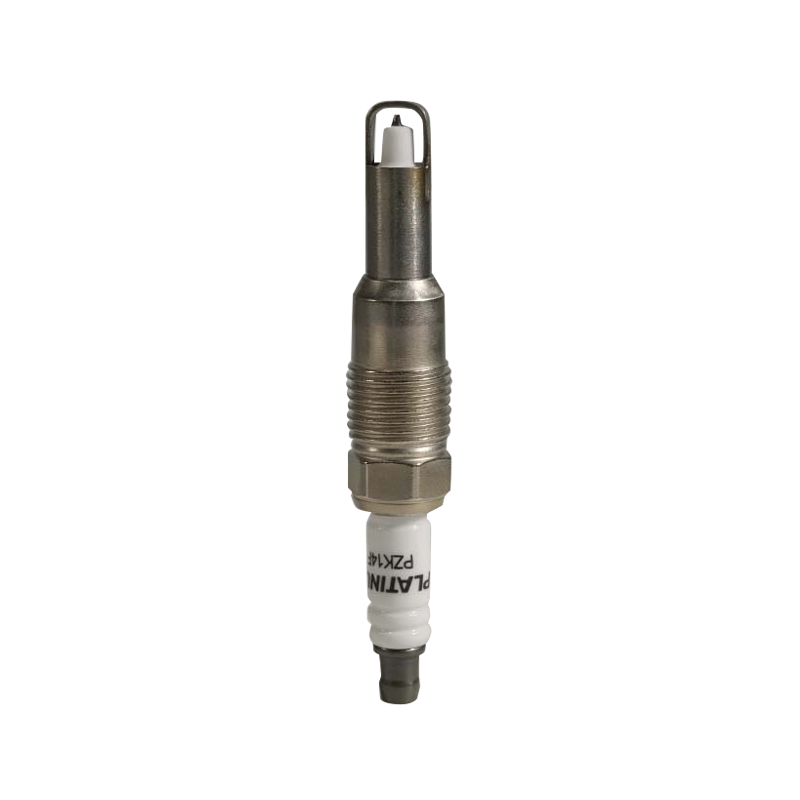
Platinum Spark Plugs for American Engines Specially engineered for the performance characteristics of American powertrains, these platinum spark plugs deliver precise compatibility with Buick, Chevrolet, and other domestic brands. The series utilizes platinum electrode technology as its core, meeting the comprehensive demands of American vehicles for high torque output, fuel efficiency, and extended service intervals while ensuring ignition stability and combustion efficiency align with original engineering specifications.
Leveraging the precious metal platinum, these spark plugs provide exceptional ignition performance and corrosion resistance. They perform reliably in both daily commuting and extreme operating conditions, particularly suiting the high-power demands of turbocharged engines. The platinum electrode design minimizes wear, extending the baseline service life to 40,000 kilometers while maintaining an ideal balance between performance and durability. With outstanding high-temperature resistance and ignition efficiency, these platinum spark plugs represent a high-efficiency maintenance solution for American vehicles.
About Us
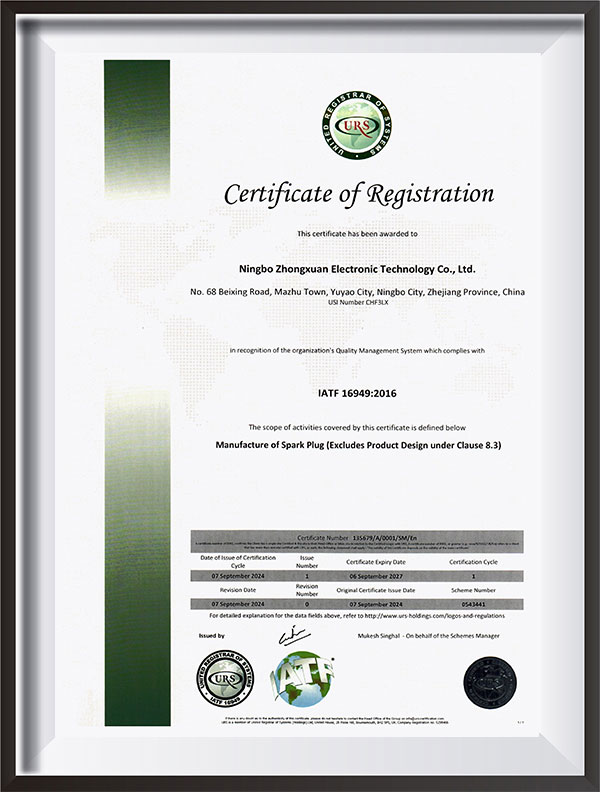
Ningbo Zhongxuan Electronic Technology Co., Ltd
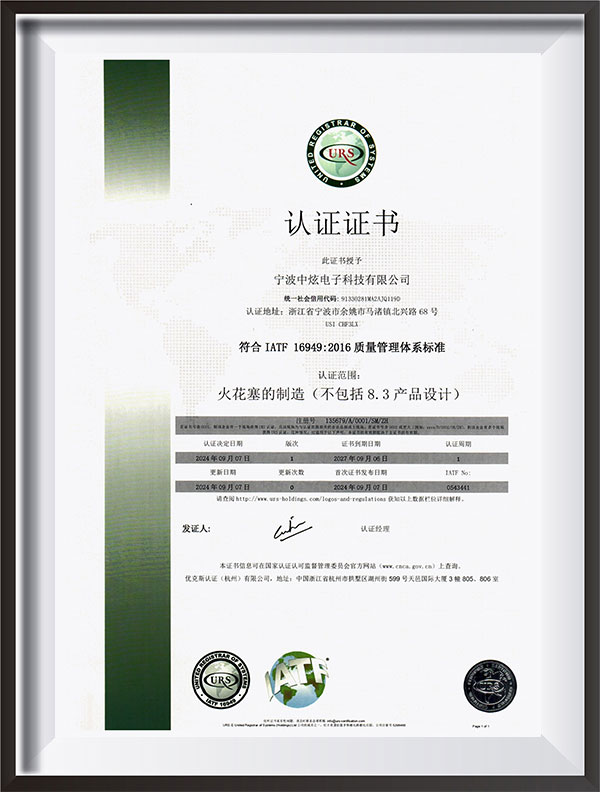
As China OEM Platinum Spark Plug For American Cars Suppliers and ODM Platinum Spark Plug For American Cars Factory, The company is a high-end automotive spark plug professional manufacturer.The existing standard workshop is more than 12000 square meters, a number of advanced complete automatic production lines, production capacity and production technology has reached the industry leading level. The enterprise has passed the lATF 16949 quality management system standard, lSO9001,and other system certification.
The company has mature Japanese cold sealing technology and galvanizing technology, nickel to ensure superior product performance and exquisite appearance.Also with many years of research and development experience in turbocharged special spark plug technology.
The production of iridium, platinum, double platinum, iridium platinum, double iridium and other precious metal car special type spark plug, over 330 types.Annual output is more than 20,000,000 pcs.The company has more than 90 R&D sales and after-sales personnel. The product quality is constantly improved after years of research and development.
At present, the company has become partner with many domestic auto parts brand chain enterprises, large auto parts dealers, and OEM customization for products with influence brand in China.At the same time, the company cooperate with the world's top three OES company, the products are exported to Germany,Poland.Russia.United States and so on.
If you are comparing a heat range 6 and a heat range 7 spark plug for the same engine, the direct answer is that the 6 is one step hotter and the 7 is one step colder. The 7 keeps the electrode tip roughly 70-100°C cooler at the same engine load, which gives a larger safety margin against pre-ignit...
A spark plug gap that is too small produces a short, weak spark that cannot ignite the air-fuel mixture reliably. In ordinary driving this shows up as a rough idle, hesitation when you press the throttle, a measurable drop in fuel economy, and often a flashing or steady check-engine light with a mi...
Selecting the heat range of a spark plug is not a performance upgrade. It is a combustion tuning decision that affects engine reliability. The heat range controls how quickly the firing tip sheds heat into the cylinder head, and the correct heat range keeps that tip between 500°C and 800°C (932°F t...
Please feel free to leave a message and we will reply to you soon.
Industry knowledge
Platinum spark plugs have become the standard choice for powering American vehicles, from full-size pickup trucks to muscle cars and heavy-duty SUVs. Unlike conventional copper plugs, a platinum spark plug for American cars delivers a finer, more focused spark at the tip, which translates directly into cleaner combustion and reduced misfires across the wide engine displacement ranges that American automakers favor. With fitments spanning V6, V8, and even V10 platforms, this category covers everything from daily commuter engines to towing-rated powertrains that demand ignition consistency under sustained load.
Why Platinum Outperforms Copper in High-Displacement American Engines
American V8 engines typically operate at higher combustion temperatures than their four-cylinder counterparts. Platinum's melting point sits at 1,768 °C, compared to copper's 1,085 °C — a gap that matters when cylinder head temperatures in a naturally aspirated 5.0L or 6.2L engine regularly push past 300 °C under load. The platinum center electrode erodes far more slowly, which is why OEM-grade platinum plugs are rated for 60,000 to 100,000 miles in most American vehicle applications, versus 20,000–30,000 miles for standard copper.
Another practical factor is voltage demand. As an electrode wears, the spark gap widens and the ignition coil must produce higher voltage to jump it. For coil-on-plug systems used across modern American trucks and performance vehicles, a worn gap increases the risk of coil failure — a repair that typically costs $150–$400 per coil at a dealership. Maintaining a tight, platinum-protected gap delays this degradation cycle significantly.
Spark Plug Service Life by Electrode Material (miles)
Data reference: NGK Technical Report, average OEM-spec service intervals for US market vehicles.
Fitment Complexity Across American Vehicle Platforms
The American vehicle market is not monolithic. A full-size pickup platform alone can span three or four different engine codes within a single model year, each requiring a distinct plug thread pitch, reach, and heat range. Getting this wrong — even by one heat range grade — can cause pre-ignition in high-compression engines or fouling in low-load urban driving cycles.
Vehicle Segment
Common Engine Types
Thread Size
Recommended Heat Range
Full-Size Pickup
5.0L V8 / 5.7L V8 / 6.2L V8
14mm × 26mm
Medium (5–6)
Muscle / Sports Car
6.2L Supercharged V8
14mm × 26mm
Cold (3–4)
SUV / Crossover
3.5L EcoBoost V6 / 5.3L V8
14mm × 19mm
Medium (5–6)
Heavy-Duty Truck
6.4L HEMI / 8.0L V10
14mm × 19mm
Medium-Cold (4–5)
Common fitment parameters for platinum spark plugs across major American vehicle segments
At NINGBO ZHONGXUAN ELECTRONIC TECHNOLOGY CO., LTD, our product line covers OEM cross-reference codes for the major American platforms listed above, and we support OEM and ODM orders so distributors can source plugs pre-matched to specific vehicle applications without managing fitment research independently.
Single Platinum vs. Double Platinum: What Changes in Practice
Single platinum plugs place the platinum disc on the center electrode only. Double platinum adds a second pad on the ground electrode as well. For distributorless ignition systems (DIS) — common on American muscle and performance vehicles since the mid-1990s — the spark actually fires in both directions across the gap during different engine cycles. A single platinum plug, when used in a DIS application, will have its ground electrode erode much faster because that electrode fires "backward" without platinum protection.
Comparative performance profile: single vs. double platinum electrodes in American DIS ignition applications
The practical upshot: for American trucks and SUVs using waste-spark DIS ignition, double platinum is the technically correct choice. For older single-coil distributor-based engines still in the fleet, single platinum delivers excellent value. Knowing which system a given vehicle runs requires accurate vehicle data — something that becomes straightforward when the supplier has structured cross-reference data per vehicle year, make, and engine.
How Distributors Source Platinum Plugs for the American Market
For importers and distributors targeting the American aftermarket, sourcing strategy matters as much as product specification. The US aftermarket for spark plugs is highly brand-sensitive — end customers often ask for a specific name. This creates three realistic sourcing paths, all of which NINGBO ZHONGXUAN ELECTRONIC TECHNOLOGY CO., LTD supports:
OEM / ODM: Manufacture under your own brand and packaging. OEM covers production only with your existing design; ODM includes our design input if you don't have established specs. This path suits distributors building a private label for regional retail chains.
Own Brand (OBM): Sell our branded products directly. If you are a distributor without the volume to justify private-label tooling costs, selling our brand is a faster route to market while still offering a finished, packaged product.
Neutral / White Box Packaging: We supply unbranded packaging that you handle according to your local market needs — useful for distributors who apply their own labels after import.
All three approaches support full packaging customization to match your market requirements. On the trade and payment side, we confirm terms per order — FOB, CIF, CNF, or otherwise — and standard batch production runs on a 30% deposit with the balance against Bill of Lading, paid by T/T. Long-term, high-volume clients can discuss more flexible arrangements.
Estimated Time-to-Market by Sourcing Model (weeks)
Indicative timelines; actual lead times depend on order volume and packaging complexity.
Frequently Asked Questions
Are platinum spark plugs compatible with all American gasoline engines?
Platinum plugs are suitable for virtually all naturally aspirated and moderately boosted gasoline engines found in American cars and trucks. The one exception is engines running very high boost pressures (above 20 PSI on forced induction setups), where iridium's superior conductivity at high temperatures provides a meaningful edge. For the vast majority of the American fleet — V6 and V8 engines in stock or mildly modified form — a correctly specified platinum spark plug for American cars is the optimal balance of performance and service life.
How do I know if my vehicle uses a waste-spark (DIS) ignition system?
DIS systems were introduced broadly across American vehicles from the early 1990s onward. If your engine has no distributor cap or rotor and uses individual ignition coils that serve pairs of cylinders, it is almost certainly a waste-spark system. Vehicles with coil-on-plug (COP) systems — where each cylinder has its own coil — are not waste-spark and can use single platinum effectively. Your vehicle's service manual or a trusted parts database will confirm the ignition architecture for your specific engine code.
What is the minimum order quantity for OEM-packaged platinum plugs?
MOQs vary depending on the cooperation model. For neutral white box packaging, MOQs are generally lower, making it accessible for smaller distributors entering a new market segment. For full OEM or ODM programs with custom branding and tooling, higher minimums apply to offset setup costs. We discuss specific quantities during the quoting phase and confirm all trade terms — including FOB, CIF, or CNF — at that stage.
Can packaging be customized for different regional markets?
Yes. All packaging materials can be customized to match your market requirements — language, regulatory markings, retail format (individual blister vs. bulk trade pack), and branding. This applies whether you're distributing under your own label or using our branded product as a licensed distributor.
What payment terms apply to repeat orders?
Standard terms are T/T with a 30% deposit at order confirmation and the balance paid against the Bill of Lading. For long-term clients with consistent high-volume orders, more flexible payment arrangements are open for discussion. We review each relationship individually rather than applying a one-size-fits-all policy.



 Español