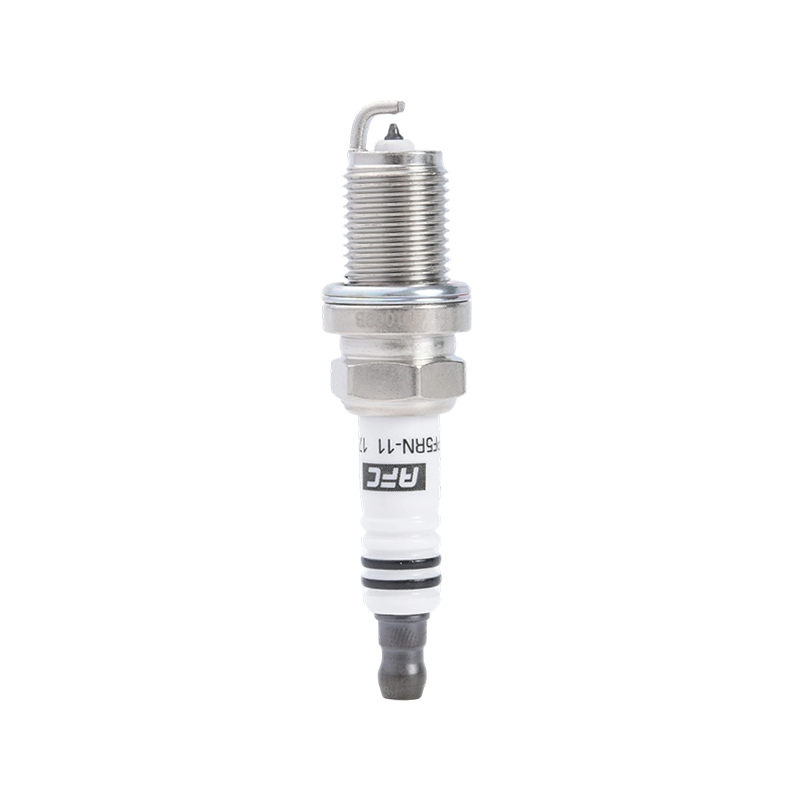
High-Performance Double Platinum Spark Plugs for Korean Engines Specially engineered for Korean powertrains, these double platinum spark plugs deliver precise compatibility with select Hyundai, Kia, and other Korean models. They are particularly optimized for the demanding operating conditions of small-displacement turbocharged engines and hybrid powertrain systems.
The series utilizes dual platinum electrode technology, where the synergistic effect of dual precious metals enhances corrosion resistance and minimizes electrode erosion. This ensures consistent ignition stability while providing exceptional wear resistance and thermal stability, meeting Korean vehicles' integrated requirements for fuel efficiency and emission compliance. The design maintains ignition efficiency in strict accordance with original factory specifications.
Featuring a dual precious metal configuration with platinum center and ground electrodes, these plugs are tailored for Korean high-compression ratio designs. They support stable operation in congested urban driving conditions, with a service life of 60,000-80,000 kilometers that significantly reduces replacement frequency. With their dual precious metal construction and perfect compatibility with Korean vehicle specifications, these spark plugs represent an ideal cost-effective, long-term maintenance solution for Korean automobile owners.
About Us
Ningbo Zhongxuan Electronic Technology Co., Ltd
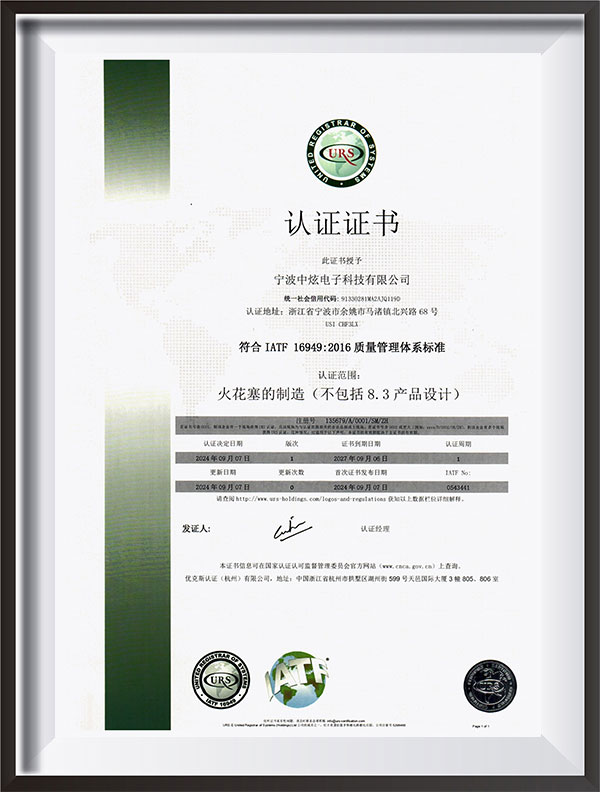
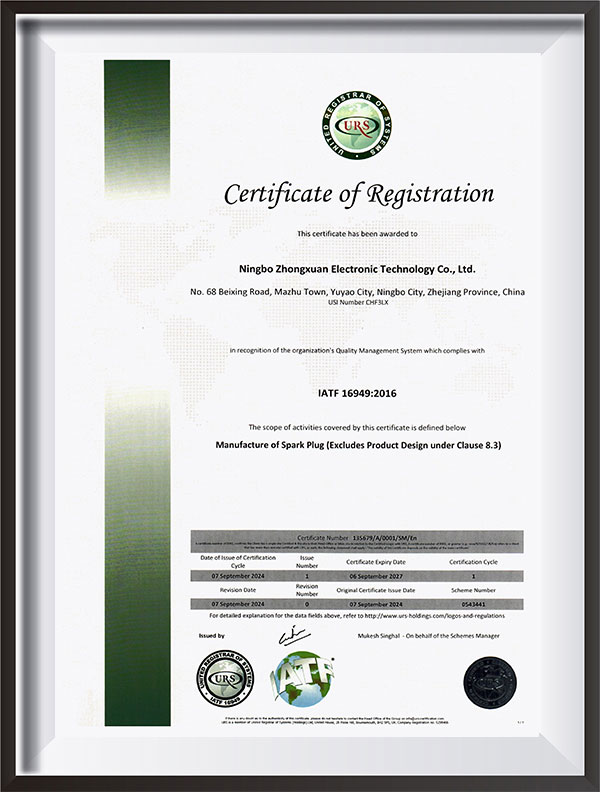
As China OEM Double Platinum Spark Plug For Korean Cars Suppliers and ODM Double Platinum Spark Plug For Korean Cars Factory, The company is a high-end automotive spark plug professional manufacturer.The existing standard workshop is more than 12000 square meters, a number of advanced complete automatic production lines, production capacity and production technology has reached the industry leading level. The enterprise has passed the lATF 16949 quality management system standard, lSO9001,and other system certification.
The company has mature Japanese cold sealing technology and galvanizing technology, nickel to ensure superior product performance and exquisite appearance.Also with many years of research and development experience in turbocharged special spark plug technology.
The production of iridium, platinum, double platinum, iridium platinum, double iridium and other precious metal car special type spark plug, over 330 types.Annual output is more than 20,000,000 pcs.The company has more than 90 R&D sales and after-sales personnel. The product quality is constantly improved after years of research and development.
At present, the company has become partner with many domestic auto parts brand chain enterprises, large auto parts dealers, and OEM customization for products with influence brand in China.At the same time, the company cooperate with the world's top three OES company, the products are exported to Germany,Poland.Russia.United States and so on.
If you are comparing a heat range 6 and a heat range 7 spark plug for the same engine, the direct answer is that the 6 is one step hotter and the 7 is one step colder. The 7 keeps the electrode tip roughly 70-100°C cooler at the same engine load, which gives a larger safety margin against pre-ignit...
A spark plug gap that is too small produces a short, weak spark that cannot ignite the air-fuel mixture reliably. In ordinary driving this shows up as a rough idle, hesitation when you press the throttle, a measurable drop in fuel economy, and often a flashing or steady check-engine light with a mi...
Selecting the heat range of a spark plug is not a performance upgrade. It is a combustion tuning decision that affects engine reliability. The heat range controls how quickly the firing tip sheds heat into the cylinder head, and the correct heat range keeps that tip between 500°C and 800°C (932°F t...
Please feel free to leave a message and we will reply to you soon.
Industry knowledge
The spark plug market for Korean-made vehicles has grown considerably as models from major Korean automakers have become some of the most widely owned passenger cars worldwide. Among the available ignition options, the double platinum spark plug for Korean cars stands out for its ability to balance performance, longevity, and compatibility with the engine architectures common to Korean automotive brands. Unlike single-platinum designs, double platinum plugs place a platinum disc on both the center and ground electrode, which dramatically reduces erosion at high ignition frequencies and extends service intervals to 60,000–100,000 miles depending on driving conditions and engine type.
Why Platinum Positioning Matters in Korean Engine Designs
Korean automakers have, over the past two decades, shifted heavily toward high-compression naturally aspirated and turbocharged four-cylinder engines—configurations that demand consistent spark energy across a wide RPM range. The combustion chamber geometry in many of these engines places a premium on precise spark timing and electrode durability.
In a single-platinum plug, the platinum pad is applied only to the center electrode. When the plug fires, the spark travels alternately from center to ground and ground to center depending on polarity, meaning the unprotected ground electrode still wears. A double platinum design adds a platinum disc to the ground electrode as well, ensuring both contact surfaces resist oxidation and gap widening equally.
Relative Electrode Wear Rate by Spark Plug Type (lower = better)
Copper Core
100%
Single Platinum
~60%
Double Platinum
~28%
Iridium
~18%
Source: Industry comparative wear testing data, NGK Technical Report 2021
For Korean vehicle owners, this matters because many OEM replacement schedules now specify platinum-tipped plugs as the baseline. Using a substandard replacement can cause misfires within 20,000–30,000 miles, triggering OBD-II fault codes and reducing fuel economy by as much as 4% according to U.S. Department of Energy estimates.
Testing Protocols That Define Reliable Double Platinum Plugs
Not all double platinum spark plugs on the market are created equal. The critical differentiator is the manufacturing and validation process behind each unit. At NINGBO ZHONGXUAN ELECTRONIC TECHNOLOGY CO., LTD, the laboratory strictly implements 17 international testing standards across every batch of double platinum spark plugs produced for Korean car applications. This scope of testing covers areas such as voltage breakdown resistance, insulator integrity under thermal cycling, electrode gap consistency, and thread torque tolerance—each of which directly affects real-world ignitability and service life.
Why does rigorous testing matter at this level? Platinum sintering quality varies significantly by supplier. A platinum pad that is not metallurgically bonded to the correct depth or diameter will delaminate under repeated thermal expansion, leading to premature gap growth. Testing under controlled standards catches these failure modes before products reach end users.
Performance comparison: Double Platinum vs Single Platinum for Korean car engines
Production Capacity and Lead Times: What to Expect from a Reliable Supplier
For importers and distributors sourcing double platinum spark plugs for Korean cars, capacity and delivery reliability are often as critical as product quality. Stock-outs of high-demand SKUs can disrupt aftermarket supply chains quickly.
NINGBO ZHONGXUAN ELECTRONIC TECHNOLOGY CO., LTD operates a complete automated production line with an annual capacity of up to 18 million pieces. For standard products, production and shipment are typically completed within 15–30 days after receiving the deposit. For large-volume or customized orders, a specific schedule is provided upfront so buyers can plan their inventory cycles accordingly.
Annual Production Capacity: Standard vs Custom Orders (Million Units)
Indicative breakdown of annual 18M-unit capacity across order types
This level of output means importers don't have to worry about allocation shortfalls during peak demand periods—such as spring and fall vehicle maintenance seasons when spark plug replacement volumes typically spike.
Sampling and Order Verification in the B2B Procurement Process
Procurement professionals sourcing spark plugs at volume understandably want to validate product quality before committing to a full purchase order. In the industry, requesting physical samples before bulk ordering is a recognized best practice—and reputable manufacturers accommodate this step as part of normal business.
NINGBO ZHONGXUAN ELECTRONIC TECHNOLOGY CO., LTD encourages buyers to verify quality through samples. Free samples of standard products are available, with buyers covering the courier freight. For customized products or special requirements, a sample cost fee may apply—though this fee can typically be deducted from the subsequent order, effectively making verification cost-neutral for serious buyers.
When evaluating samples, experienced purchasers typically check: electrode gap measurement against spec, insulator surface finish and crack resistance, thread pitch accuracy, and platinum pad bonding integrity under magnification. These are the same parameters covered in the factory's 17-point test suite, so sample results will be representative of production output.
Free
Standard product samples
Deductible
Custom sample fees offset against orders
17
International standards applied in testing
Selecting the Right Double Platinum Plug: Key Parameters for Korean Car Engines
Fitment accuracy is non-negotiable with spark plugs. An incorrect heat range can cause pre-ignition; a wrong thread pitch can damage the cylinder head; a gap outside tolerance causes misfires. The table below summarizes the core parameters buyers and installers should verify when specifying double platinum plugs for popular Korean car engine families.
Parameter
Typical Range (Korean Cars)
Why It Matters
Thread Size
M14×1.25
Most common in Theta II, Nu, Kappa engines
Electrode Gap
0.8–1.1 mm
Factory spec varies by engine; match OEM gap
Heat Range
6–8 (NGK scale)
Turbocharged engines require cooler range (higher number)
Key double platinum spark plug specifications for common Korean passenger car engines
Frequently Asked Questions
Can double platinum spark plugs replace iridium plugs in Korean car engines?
Generally yes, provided the heat range and physical dimensions match. Double platinum and iridium plugs occupy overlapping performance tiers. Iridium offers a slightly finer electrode tip (0.4–0.6 mm vs 0.8–1.0 mm for platinum), which can improve ignitability at wider gaps, but for most street-driven Korean vehicles the difference in real-world fuel economy or combustion efficiency is marginal. Always cross-reference the OEM part number before substituting.
How long should a double platinum spark plug last in a Korean sedan?
Under normal highway and city mixed driving conditions, a quality double platinum plug is designed for 60,000 to 100,000 miles. Vehicles with direct-injection engines may see slightly shorter intervals due to carbon buildup. Turbocharged applications should be inspected closer to 60,000 miles as combustion temperatures are higher.
What causes premature wear on double platinum plugs?
The most common causes include: running rich air/fuel mixtures (often from faulty oxygen sensors), oil intrusion into the combustion chamber, detonation from low-octane fuel in a high-compression engine, and incorrect heat range selection. In all these cases, the symptom appears as abnormal tip coloration or physical electrode damage—neither of which relates to platinum quality alone.
Is it necessary to gap double platinum plugs before installation?
No. Most double platinum plugs are pre-gapped at the factory to OEM specifications. Regapping with conventional tools risks cracking or dislodging the platinum disc on the ground electrode. If a gap adjustment is genuinely required, use a wire-type gap gauge and apply minimal force. Many manufacturers explicitly recommend against regapping platinum or iridium tipped plugs.
How do I verify product quality when ordering from a new manufacturer?
Request samples before committing to a bulk order. A reliable supplier will offer pre-shipment samples so you can run basic gap checks, visual inspection, and if needed, third-party lab testing. As part of its standard business practice, NINGBO ZHONGXUAN ELECTRONIC TECHNOLOGY CO., LTD provides free samples of standard products (buyer pays courier) so procurement teams can validate quality against their own acceptance criteria before placing production orders.



 Español