Iridium Spark Plugs for Korean High-Performance Engines Designed specifically for high-performance Korean engines, these iridium spark plugs target the precise ignition requirements of efficient small-displacement turbocharged engines and hybrid powertrain systems. While utilizing platinum electrode technology to control costs, the series strategically reinforces the easily worn central electrode. Through optimized heat ranges, gap parameters, and thread specifications, they meet Korean vehicles' stringent demands for fuel efficiency, low emissions, and urban driving performance, ensuring ignition stability closely aligns with original factory combustion standards.
Leveraging precious metal platinum electrodes, these spark plugs deliver exceptional ignition performance and corrosion resistance, making them compatible with both conventional Korean passenger vehicles and new energy models. They balance daily commuting needs with short-distance highway driving, offering an optimal combination of performance and durability. The platinum electrode design minimizes electrode wear, extending the baseline service life to 40,000 kilometers. With precise ignition control and long-life characteristics, these spark plugs serve as an efficient maintenance solution for Korean automobiles.
About Us
Ningbo Zhongxuan Electronic Technology Co., Ltd
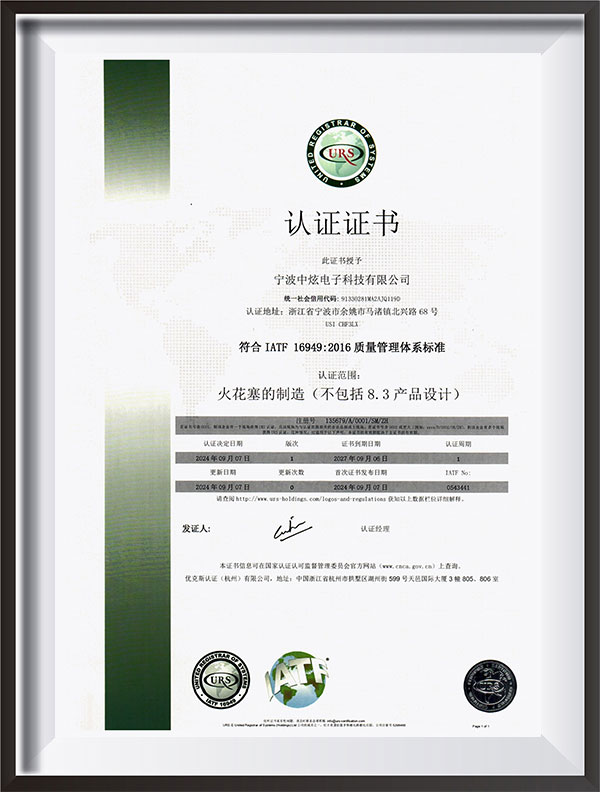
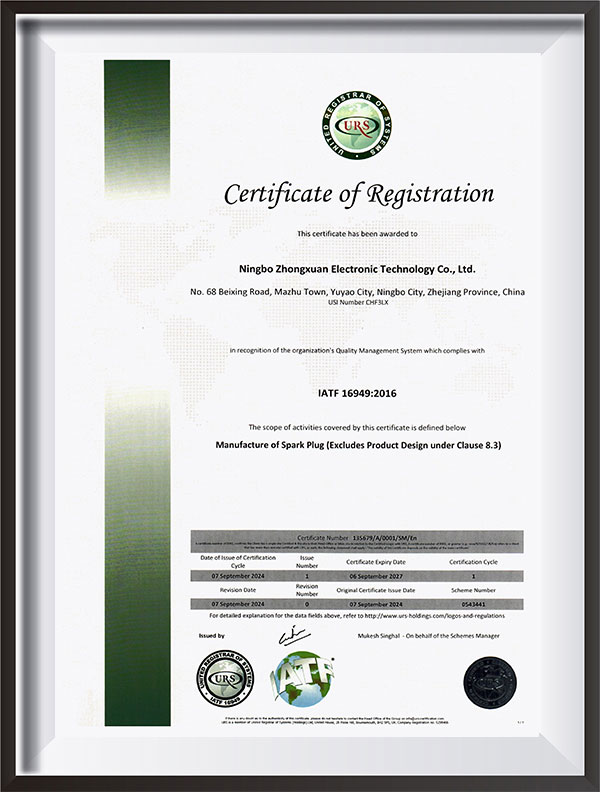
As China OEM Platinum Spark Plug For Korean Cars Suppliers and ODM Platinum Spark Plug For Korean Cars Factory, The company is a high-end automotive spark plug professional manufacturer.The existing standard workshop is more than 12000 square meters, a number of advanced complete automatic production lines, production capacity and production technology has reached the industry leading level. The enterprise has passed the lATF 16949 quality management system standard, lSO9001,and other system certification.
The company has mature Japanese cold sealing technology and galvanizing technology, nickel to ensure superior product performance and exquisite appearance.Also with many years of research and development experience in turbocharged special spark plug technology.
The production of iridium, platinum, double platinum, iridium platinum, double iridium and other precious metal car special type spark plug, over 330 types.Annual output is more than 20,000,000 pcs.The company has more than 90 R&D sales and after-sales personnel. The product quality is constantly improved after years of research and development.
At present, the company has become partner with many domestic auto parts brand chain enterprises, large auto parts dealers, and OEM customization for products with influence brand in China.At the same time, the company cooperate with the world's top three OES company, the products are exported to Germany,Poland.Russia.United States and so on.
Iridium spark plugs are a practical upgrade, but not because they add horsepower. They deliver a longer service life, more stable firing, and a smaller center electrode that needs less voltage to produce a spark. If the plug matches the engine code, heat rating and gap, an iridium set will usually ...
If you are comparing a heat range 6 and a heat range 7 spark plug for the same engine, the direct answer is that the 6 is one step hotter and the 7 is one step colder. The 7 keeps the electrode tip roughly 70-100°C cooler at the same engine load, which gives a larger safety margin against pre-ignit...
A spark plug gap that is too small produces a short, weak spark that cannot ignite the air-fuel mixture reliably. In ordinary driving this shows up as a rough idle, hesitation when you press the throttle, a measurable drop in fuel economy, and often a flashing or steady check-engine light with a mi...
Please feel free to leave a message and we will reply to you soon.
Industry knowledge
Platinum spark plugs designed specifically for Korean cars have become a critical component in the maintenance and performance optimization of vehicles from brands widely manufactured and sold across Asia and global markets. Unlike conventional copper-core plugs, platinum-tipped spark plugs deliver sustained ignition consistency, reduced electrode wear, and extended service intervals — qualities that align closely with the engineering expectations of modern Korean engine platforms. Whether fitted to compact sedans, crossover SUVs, or turbocharged engines, platinum spark plug for Korean cars serves as both a performance upgrade and a long-term maintenance solution.
Why Platinum Matters for Korean Engine Designs
Korean automakers have steadily moved toward tighter combustion chamber tolerances and higher compression ratios over the past decade. Engines in this category often require spark plugs that can maintain a precise electrode gap over 60,000 to 100,000 km — a range that standard copper plugs simply cannot sustain without performance degradation.
Platinum's melting point sits at approximately 1,768°C, versus copper's 1,085°C. In high-load operating conditions, this difference is not trivial. The platinum center electrode resists erosion under repeated thermal cycling, keeping the spark gap within spec for far longer. For turbocharged Korean engines, where combustion temperatures run consistently higher, this thermal stability translates directly into fewer misfires and more complete fuel combustion.
Electrode Wear Rate by Plug Material (relative units per 10,000 km)
Reference: comparative electrode erosion data from spark plug materials studies; lower is better.
This extended durability also has a practical implication for fleet buyers and importers: fewer replacement cycles per vehicle over its lifetime, which reduces total cost of ownership — a metric that procurement teams consistently prioritize when sourcing aftermarket parts at scale.
How Compatibility Is Confirmed — And Why It Matters More Than People Think
One of the most common sourcing errors in the spark plug industry is mismatched fitment. Korean vehicle lines often share platform architectures across multiple models and years, but engine displacement, ignition system type, and thread pitch can differ between production runs. Installing an incompatible plug leads to rough idle, hard starting, or in extreme cases, pre-ignition damage.
At NINGBO ZHONGXUAN ELECTRONIC TECHNOLOGY CO., LTD, compatibility verification is built into the sourcing process. Buyers can confirm model fitment through any of the following methods:
Reference the vehicle's user manual for OEM plug specifications
Provide the model number and code printed on the old spark plug
Share the vehicle brand, model name, engine displacement, and production year — the technical team will cross-reference against the compatibility database to identify the right specification
This approach works because the team maintains an extensive vehicle-to-spark-plug mapping database — one that covers a wide range of Korean car models across production years, including variants with both naturally aspirated and turbocharged engine configurations.
User Manual
OEM specs listed by engine code
Old Plug Code
Direct cross-reference by part number
Vehicle Details
Brand + model + displacement + year
Platinum vs. Double Platinum: Choosing the Right Spec for Korean Cars
There are two configurations commonly used in the Korean car aftermarket: single platinum (platinum center electrode, copper ground electrode) and double platinum (platinum on both electrodes). The selection depends on the vehicle's ignition system type.
Feature
Single Platinum
Double Platinum
Center Electrode
Platinum
Platinum
Ground Electrode
Copper/Nickel
Platinum
Best For
Conventional ignition systems
Waste spark / distributorless systems
Typical Service Life
60,000 – 80,000 km
80,000 – 100,000 km
Comparison of single vs. double platinum spark plug configurations for Korean car applications
Many Korean vehicles produced after 2010 use distributorless ignition systems (DIS) or coil-on-plug (COP) layouts, where the spark fires from both directions. In these cases, double platinum provides measurably longer plug life because both electrodes degrade at a comparable rate rather than one wearing ahead of the other.
Shipping Practicalities: Getting Spark Plugs from Ningbo to Your Market
For international buyers, logistics reliability is just as important as product quality. NINGBO ZHONGXUAN ELECTRONIC TECHNOLOGY CO., LTD is located in Ningbo — only 35 kilometers from Ningbo Port, one of the busiest container ports in the world by throughput. Sea freight is the primary export channel, offering competitive rates and well-established routing to major automotive aftermarket markets in Southeast Asia, the Middle East, Eastern Europe, and beyond.
When timelines are tight — for instance, covering a stockout ahead of a seasonal maintenance peak — air freight is a viable alternative. The proximity to both Ningbo Airport and Shanghai International Airport means air shipments can be arranged and dispatched quickly, without the lead time uncertainty that affects suppliers located further inland.
For high-volume orders, sea freight from Ningbo Port typically connects to destination ports in the Korean aftermarket supply chain within 10–20 days depending on routing — a timeline most distributors can plan around with standard inventory buffers.
Heat Range and Its Role in Korean Car Ignition Performance
Heat range is one of the most frequently misunderstood variables in spark plug selection. It refers to how quickly a plug transfers heat away from its firing tip to the cylinder head — not how hot the plug gets under load. A plug that runs too cold will foul with carbon deposits; one that runs too hot risks pre-ignition.
For Korean passenger cars operating in varied climates — from the cold winters common in northern markets to hot and humid conditions in Southeast Asian export markets — the correct heat range ensures the plug reaches its self-cleaning temperature (approximately 450°C) during normal driving without overheating under sustained high-speed conditions.
Plug Tip Temperature vs. Engine Load (%)
Illustrative thermal curve for a correctly rated platinum plug in a Korean passenger car engine.
Common Questions About Platinum Spark Plugs for Korean Cars
How do I know if platinum plugs are compatible with my specific Korean car model?
The most reliable starting point is your vehicle manual, which lists the OEM spark plug specification. Alternatively, the model number on your existing plug can be used for a direct cross-reference. If neither is available, providing the vehicle brand, model, engine size, and year allows a technical team with a proper fitment database to identify the correct specification — which is exactly how the process works when sourcing through NINGBO ZHONGXUAN ELECTRONIC TECHNOLOGY CO., LTD.
Can platinum plugs improve fuel economy in Korean engines?
A well-maintained spark gap supported by a platinum electrode produces a more consistent spark, which helps ensure complete combustion. In engines where worn plugs have been causing misfires, switching to platinum can recover measurable fuel efficiency — though the gain is largely about restoring performance to spec rather than exceeding factory levels.
What is the typical service interval for platinum spark plugs in Korean cars?
Most platinum plugs in Korean passenger car applications are rated for 60,000 to 100,000 km depending on plug type and driving conditions. Double platinum variants typically reach the higher end of that range. These intervals are significantly longer than standard copper plugs, which generally require replacement around 30,000 km.
Is sea freight a reliable option for bulk spark plug orders?
For most importers ordering in volume, sea freight from Ningbo is both cost-effective and dependable. Spark plugs are non-hazardous, compact, and high-density goods — well-suited to container shipping. Given the port's scale and frequency of departures, lead times are predictable. For urgent restocking needs, air freight from Ningbo or Shanghai provides a faster alternative without requiring a separate logistics arrangement.
Do I need to gap platinum spark plugs before installation?
Most platinum spark plugs come pre-gapped to a standard specification. However, since gap requirements vary between Korean engine families, it's worth verifying the gap against the vehicle's service specification before installation. Adjusting a platinum electrode requires care — aggressive gapping tools can chip the platinum tip, which is more brittle than copper.
Performance Attribute Comparison: Plug Types for Korean Car Aftermarket
Performance Radar: Copper vs Platinum vs Double Platinum
Relative performance comparison for Korean car aftermarket spark plug types; illustrative based on industry benchmarks.
For buyers sourcing platinum spark plug for Korean cars at scale, understanding these trade-offs makes it easier to match the right product to the right vehicle application — and to communicate that value clearly to end-market customers.



 Español