

 Español
Home / News / Industry News / What Happens if the Spark Plug Gap Is Too Small? Symptoms, Causes and Fixes
Industry News
Content
A spark plug gap that is too small produces a short, weak spark that cannot ignite the air-fuel mixture reliably. In ordinary driving this shows up as a rough idle, hesitation when you press the throttle, a measurable drop in fuel economy, and often a flashing or steady check-engine light with a misfire code such as P0301 or P0302. In severe cold-start situations, the engine may crank normally but take several seconds longer to fire because the tiny flame kernel cannot light the rich, poorly vaporized mixture.
Here is the short answer before the theory: the gap must match the value that the engine manufacturer specified. If the gap is closed even 0.1 mm below specification, the ignition system arcs at a lower voltage, but the spark becomes shorter and the flame kernel smaller. Modern high-tumble combustion chambers can literally blow that small kernel out, so the cylinder misses, unburned fuel reaches the exhaust, and within a few hundred kilometres the combustion chamber starts to carbon-foul. The sections below explain exactly why this happens, how to recognize it, and what to do about it without causing further damage.
The spark plug gap is the distance between the centre electrode and the ground electrode. In a production gasoline engine, that distance usually sits somewhere between 0.6 mm and 1.1 mm (0.024–0.043 in). It is not a random setting. The gap determines how much voltage the ignition coil must produce before the air between the electrodes breaks down and an arc forms. The coil system, the cylinder compression, and the fuel mixture are all tuned around that specific distance.
Compression is the part most drivers forget. A modern engine with a 10:1 compression ratio generates pressures around 15–20 bar in the cylinder just before the spark event. Dense, compressed air is harder to ionize than air at atmospheric pressure, which is why the ignition system operates in the 10–15 kV range under load. If you reduce the gap, the voltage requirement drops. A lower requirement sounds harmless, but the real trade-off is a smaller flame kernel: the tiny volume of ionized gas that starts the fire spreads more slowly, and under high turbulence it may be extinguished altogether.
Two real part numbers make this concrete. The Toyota ignition part 90919-01240, used on RAV4 and Lexus applications, is commonly set at 0.8 mm in OEM service documentation. The Nissan plug 22401JA01B for the VQ25DE engine is typically spaced around 1.0–1.1 mm. If you install either plug with a 0.7 mm gap and call it “close enough,” you will not feel a problem at idle, because idle combustion is relatively gentle. The problem appears the moment cylinder pressure rises, load increases, and the small flame kernel cannot keep up.
| Engine type | Typical factory gap | Result when gap is 0.1 mm too small |
|---|---|---|
| 1.0–1.6 L turbocharged petrol engines (Ford EcoBoost family, VW EA111/EA211) | 0.8–1.0 mm | Hesitation off idle; misfire between 2500 and 4000 rpm under hard throttle |
| 2.0–3.5 L naturally aspirated engines (Toyota RAV4, Nissan VQ25DE, Hyundai/Kia family) | 0.8–1.1 mm | Rough cold idle; intermittent P0301/P0302; stumble when the engine is cold |
| High-compression direct-injection engines (roughly 11:1 to 13:1) | 0.6–0.9 mm | Slight idle roughness; noticeably higher hydrocarbon emissions during warm-up |
| Boosted performance engines running more than 1.0 bar of boost | 0.5–0.7 mm (deliberately reduced) | Rich misfire, black soot on electrodes, and a sudden loss of top-end power |
A healthy ignition event starts with a coil that charges, a voltage that climbs until the gap breaks down, and a spark that creates a flame kernel roughly 1 mm in diameter in the first fraction of a millisecond. When the gap is too small, each of those steps changes:
The key takeaway is that a smaller gap does not make a stronger spark. It makes an earlier, shorter, easier spark. That distinction explains every symptom listed below.
If you are wondering whether the plugs you just installed are gapped too tightly, compare what you feel and see with this list. Any two or three items on the list make a strong case for checking the gap.
A gap that is too small and a gap that is too wide are not mirror images. They fail in different ways and at different times. The table below compares them side by side so you can diagnose which error you are dealing with before pulling the plugs.
| Parameter | Gap too small | Gap too wide |
|---|---|---|
| Required ignition voltage | Lower than normal | Higher than normal |
| Spark length and flame kernel | Shorter spark, smaller kernel | Longer spark, larger kernel until the coil cannot supply enough voltage |
| Typical misfire condition | Cold start, low rpm, load changes, and high-rpm boost on turbo engines | High rpm, wide-open throttle, or when coil output is weak from age |
| Deposit pattern on the plug | Black sooty deposits from incomplete combustion | Tan or grey insulator with accelerated electrode wear |
| Fuel economy | Drops by 5–10% in most real-world cases | Drops, especially under sustained highway load |
| Emissions | Higher hydrocarbons and carbon monoxide | Higher hydrocarbons and nitrogen oxides if misfire or late burning occurs |
| Coil stress | Low during normal firing; sharply higher once carbon fouling builds up | High from the start; a common cause of early coil failure |
| Recommended correction | Open the gap back to the printed specification | Close the gap to spec or replace the plug if the electrode is worn |
A slightly small gap can go unnoticed for weeks if you mostly drive at steady highway speeds. But the damage accumulates quietly. Here is what happens when the problem is left uncorrected:
Most drivers assume a new plug is ready to install. That assumption is behind a large share of gap-related problems. A plug can leave the factory slightly out of spec, or the gap can change during shipping and handling. If you have just installed new plugs and the engine idles worse than before, one of these causes is usually responsible:
The practical rule: always measure a new plug before installation, even if the box says “pre-gapped.” This single habit prevents most of the symptoms described in this article.
Use a wire-type gap gauge rather than only a flat feeler blade. A wire gauge fits the curved shape of the electrodes, while a flat blade reads too small on a worn plug. If the specification is 0.8 mm, the 0.8 mm wire should slide through with a slight drag. If the 0.8 mm wire will not fit at all, the gap is below spec; if the 0.7 mm wire also fits loosely, the gap is above spec. Check at three points across the ground electrode because a worn ground strap can be wider at the edges than in the middle.
Use a spark plug socket with a rubber insert or a magnetic socket so the plug does not tilt when it goes into the well. Start the threads by hand, then torque to the range recommended for the plug thread size: roughly 18–22 N·m for M12 plugs and 25–30 N·m for M14 plugs. A torque wrench matters because an under-tightened plug overheats and an over-tightened plug distorts the shell, which can alter the gap after installation. If you want to see how the gap interacts with the heat range and the colour of a used plug, this industry guide on reading a spark plug chart explains the relationship between heat-range, gap, and plug appearance in detail.
Before you adjust anything, confirm the exact specification for your plug code. The correct value is usually printed on the emissions label or listed in the service manual. This guide on reading a spark plug chart covers heat-range and gap selection and will prevent most gapping mistakes.
The best way to avoid a too-small gap is to choose a plug whose OEM-number fit is verified before packaging and whose electrode material resists erosion. Fine-wire iridium plugs with a centre electrode of 0.4–0.6 mm require less voltage and hold their gap much longer than conventional nickel-copper plugs. A nickel-copper electrode can erode by several hundredths of a millimetre over 20,000–30,000 km, which is why the gap gradually grows, not shrinks, with age. A plug that starts at the correct gap and resists erosion will not become “too small” during normal service. When you search by engine and original part number, the application catalog tells you exactly which plug family fits your engine and what the original reference number is.
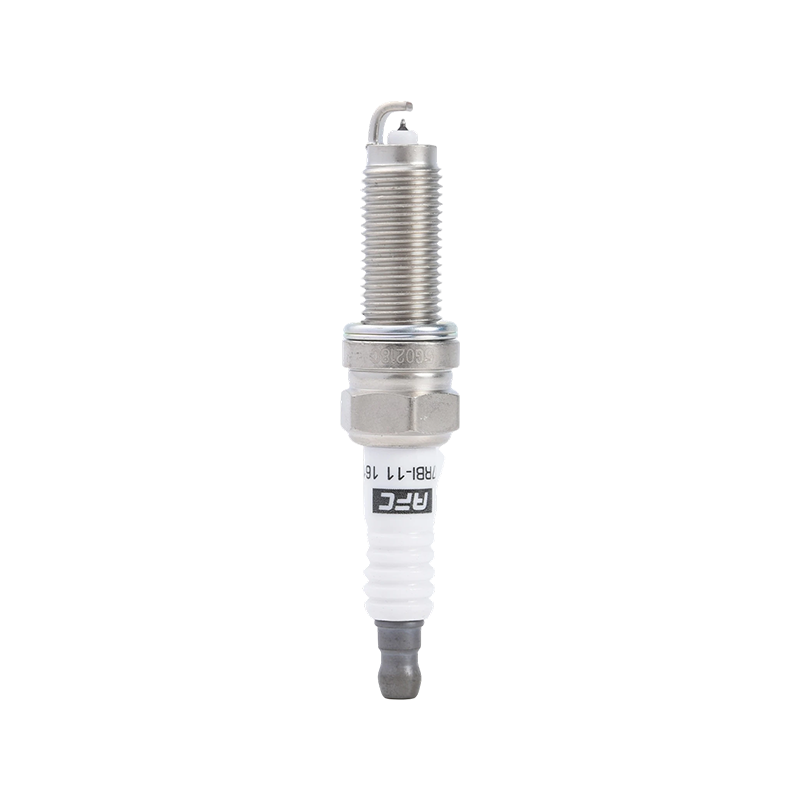
 Iridium Platinum Spark Plug for Toyota RAV4 with 0.8mm GapThis plug matches the 90919-01240 OEM reference for the Toyota RAV4, with an iridium center and platinum side electrode that resist erosion and maintain the verified 0.8 mm gap over long service life.View Product →
For example, if you drive a Toyota RAV4 with the 90919-01240 ignition part, an iridium platinum plug with a pre-verified 0.8 mm gap will stay within that spec for tens of thousands of kilometres. On Nissan's VQ25DE engine, the 22401JA01B reference is commonly paired with a double iridium plug; the fine electrodes keep the same 1.0–1.1 mm working gap under the higher cylinder pressures of a 2.5 L V6.
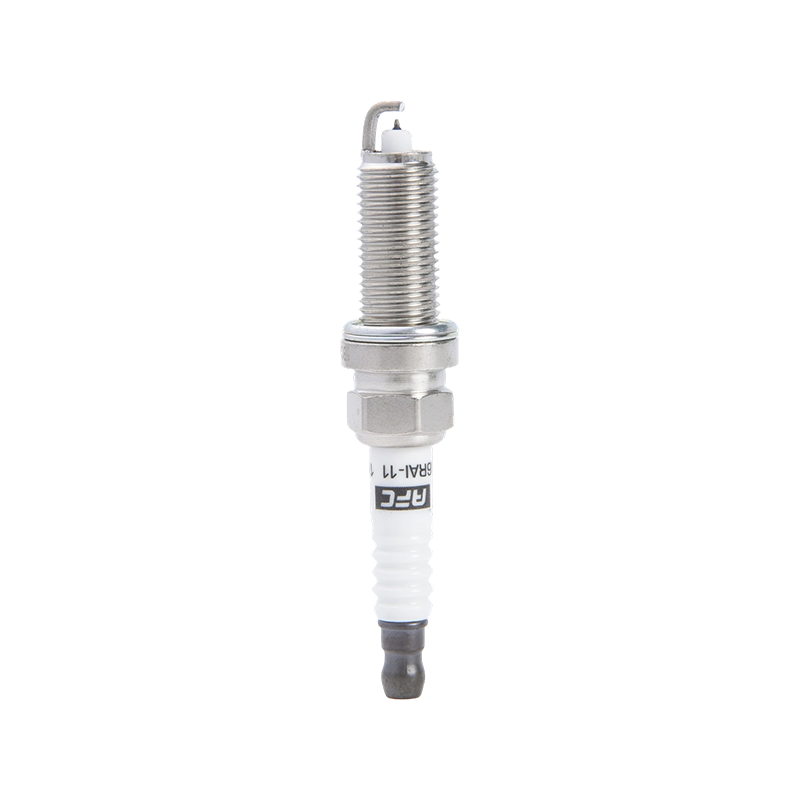
 Double Iridium Spark Plug for Nissan VQ25DE with 1.0-1.1mm GapDesigned for the Nissan VQ25DE, this double iridium plug pairs with the 22401JA01B reference, offering fine electrodes that hold the 1.0–1.1 mm working gap under high cylinder pressure and reduce wear.View Product →
European engines benefit from the same approach. The VW EA111 family, used in Polo, Golf, Passat, and Audi models, is a small-displacement platform that is sensitive to gap errors because of its high specific output. A double platinum plug with a stable gap prevents the cold-idle roughness and low-speed hesitation that a slightly closed gap produces on these engines.
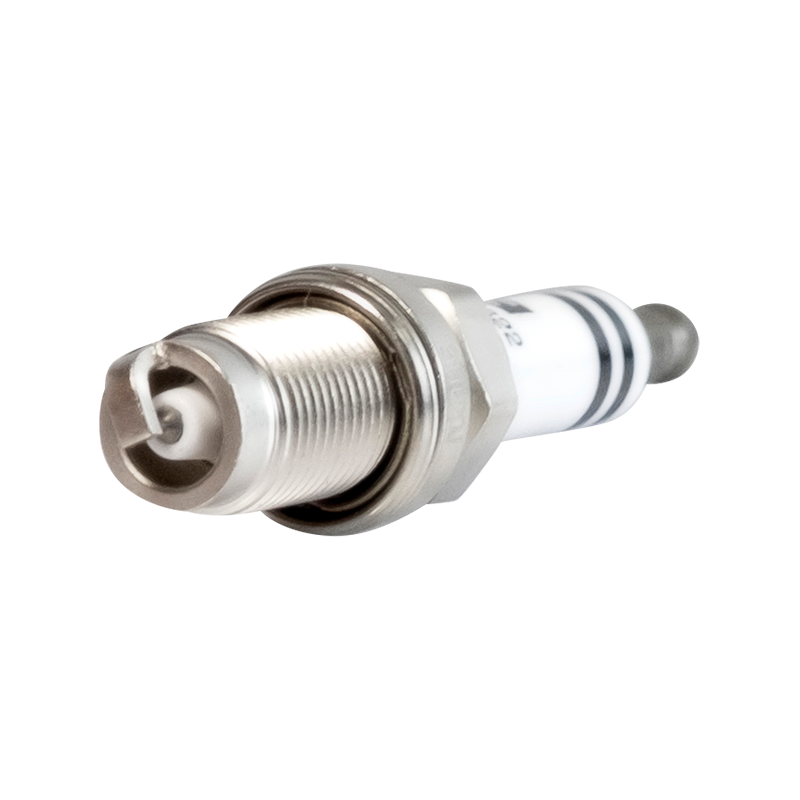 Double Platinum Spark Plug for VW EA111 1.4T and Audi A1 A3For VW EA111 1.4T engines in Polo, Golf, Passat, and Audi models, this double platinum plug provides stable gap retention and reliable ignition, preventing cold-idle roughness and hesitation common in these engines.View Product →
Whenever you need to double-check an OEM number before installing, cross-reference your part on the AFC spark plug catalog — every product page lists the original part numbers it replaces, so you can verify the correct plug family and its intended application before you put a wrench on anything.
Q: Can a too-small gap prevent the engine from starting?
Yes, especially in cold weather and on direct-injection engines. A cold engine needs a large, energetic flame kernel to ignite a rich, poorly vaporized mixture. A short, weak spark from a closed gap often cannot do it, so the starter turns the engine for four or five seconds before the engine catches. If the gap is extremely small, the engine may not start at all until the chamber warms up or the excess fuel clears.
Q: Does a smaller gap give a stronger spark?
No. A smaller gap makes the spark easier to create at a lower voltage, but the spark is physically shorter and the flame kernel is smaller. The ignition system is not trying to make an easy spark; it is trying to ignite the whole mixture quickly. A strong spark means a large, stable kernel with enough energy to survive turbulence — that requires the correct gap.
Q: What gap is considered too small?
There is no universal number because the spec varies by engine. On most passenger vehicles, the factory spec is between 0.8 mm and 1.0 mm. If your engine specifies 1.0 mm and you measure 0.7 mm, that is 0.3 mm below spec, and you will almost certainly feel the difference. A 0.1 mm deviation can already cause cold-start roughness on engines that run lean idle mixtures.
Q: Will a too-small gap turn on the check-engine light?
It can. When the misfire rate exceeds the detection threshold, the ECU stores a cylinder-specific code such as P0301, P0302, P0303, or P0304, and a generic P0300 for random misfire. A flashing check-engine light means the misfire is severe enough to damage the catalytic converter; you should stop driving and fix the gap or replace the plug immediately.
Q: Should I gap iridium and double iridium plugs the same way as copper plugs?
The measurement method is the same, but the adjustment technique must be more careful. Iridium and double iridium centre electrodes are thin and brittle. If the gap is already within spec, do not touch it. If adjustment is needed, use a wire gauge and bend only the ground electrode — never lever against the centre electrode, because a cracked iridium tip will cause a permanent misfire and the plug must be replaced.
Q: Can a too-small gap develop by itself over time?
Normally no. Electrode erosion widens the gap over time, so a plug that starts at the correct spec will gradually open, not close. A too-small gap is almost always the result of a manufacturing tolerance, a drop, an incorrect adjustment, or an installation issue. This is why measuring the gap before installation is the single most effective prevention step.