

 Español
Industry News
Content
- 1 What Anti-Seize Compound Actually Does to a Spark Plug Thread
- 2 When Anti-Seize Helps and When It Actually Hurts
- 3 Step-by-Step: Applying Anti-Seize to Spark Plug Threads Correctly
- 4 Torque Adjustment Reference for Common Spark Plug Sizes
- 5 Common Mistakes That Cause Fouling or Thread Damage
- 6 A Brief History: Why Anti-Seize Became Standard Shop Advice
- 7 Anti-Seize Compared to Dielectric Grease and No Compound at All
- 8 Aluminum Heads, Steel Heads, and Why the Metal Pairing Matters
- 9 Anti-Seize Practices Across Different Engine Types
- 10 Choosing the Right Anti-Seize Product for Spark Plug Work
- 11 Storage, Shelf Life, and Safe Handling
- 12 How to Tell If Your Old Spark Plug Threads Need Anti-Seize on the Next Install
- 13 Professional Shop Standards Versus Common DIY Habits
- 14 Anti-Seize, Fouling, and Misfire Codes: What Actually Connects Them
- 15 Key Terms Glossary
- 16 Frequently Asked Questions
Do You Need Anti-Seize on Spark Plugs? The Short Answer
Most modern spark plugs do not need anti-seize compound, because the majority of plugs sold today already carry a factory-applied trivalent zinc or nickel plating that resists corrosion and thread galling on its own. Anti-seize becomes useful in three specific situations: installing plugs into an aluminum cylinder head, working on an engine that runs hot for long stretches (turbocharged or towing applications), or removing plugs that have sat untouched for two years or more. Outside of those cases, adding anti-seize to a plated plug can actually reduce the clamping force at the seat and lead to a plug that backs itself out under vibration.
If you do decide to use it, the rule that matters most is this: cut your torque spec by roughly 10 to 20 percent whenever anti-seize is on the threads, because the lubricant lowers friction and lets the fastener reach higher clamping load at a lower turning force. Skipping that adjustment is the single most common reason anti-seize gets blamed for a cracked spark plug housing or a stripped aluminum thread.
What Anti-Seize Compound Actually Does to a Spark Plug Thread
Anti-seize is a metal-particle paste, usually built from copper, aluminum, nickel, or graphite suspended in a grease carrier. When it is worked into a threaded joint, the metal particles fill the microscopic gaps between the male and female threads and create a barrier that keeps oxygen, moisture, and combustion byproducts from bonding the two metal surfaces together. Over months of heat cycling, an untreated steel-to-aluminum thread pair can develop a corrosion layer strong enough to shear the spark plug hex or, worse, pull the threads straight out of the cylinder head when the plug is finally removed.
The compound does two separate jobs at once. First, it acts as a release agent, meaning the next person who removes the plug will feel a smooth, even resistance instead of the sudden crack-and-grab of corroded threads. Second, it acts as a lubricant during installation, which changes the relationship between torque and clamping force. A dry thread might need 20 lb-ft to reach proper seating tension, while the same thread coated in copper anti-seize could reach that same tension at 16 to 18 lb-ft. This is why torque charts that assume dry threads become inaccurate the moment anti-seize is introduced.
| Carrier Metal | Typical Friction Reduction | Best Suited For |
|---|---|---|
| Copper | 10 to 15 percent | General automotive spark plugs, exhaust bolts |
| Nickel | 12 to 18 percent | High-heat turbo and diesel applications |
| Aluminum | 8 to 12 percent | Aluminum cylinder heads, marine engines |
| Graphite (metal-free) | 5 to 10 percent | Small engines, lawn equipment, low-torque plugs |
When Anti-Seize Helps and When It Actually Hurts
Situations Where Anti-Seize Is Worth Using
- Aluminum cylinder heads on engines older than a few model years, where oxidation between steel plug threads and aluminum bore is a known failure point
- Turbocharged, supercharged, or heavy towing engines that run sustained high underhood temperatures
- Plugs that will stay installed for three years or longer before the next scheduled change
- Motorcycle and small-engine applications where the spark plug boss is thin aluminum and prone to thread damage
- Marine and coastal-climate vehicles exposed to salt air, which accelerates galvanic corrosion between dissimilar metals
Situations Where You Should Skip It
- Any plug marked by the manufacturer as pre-plated or pre-coated, since a second layer of lubricant on top of factory plating over-lubricates the joint
- Iridium and platinum fine-wire plugs installed in late-model engines, where OEM service manuals frequently state anti-seize is not required
- Any joint where you cannot adjust the torque spec downward, because full dry torque on a lubricated thread risks stretching or cracking the plug shell
- Engines under warranty coverage where the service documentation explicitly calls for dry installation
Step-by-Step: Applying Anti-Seize to Spark Plug Threads Correctly
- Let the engine cool completely. Working on a warm cylinder head changes torque feedback and increases the risk of thread damage on aluminum bores.
- Clean the spark plug well with compressed air or a small brush before removal, so debris does not fall into the cylinder when the plug comes out.
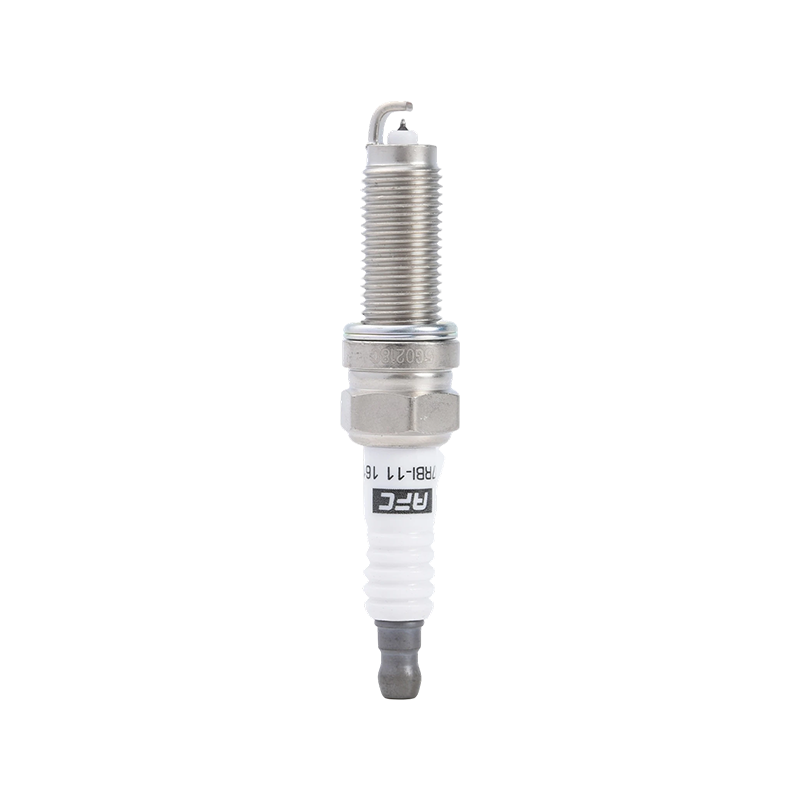
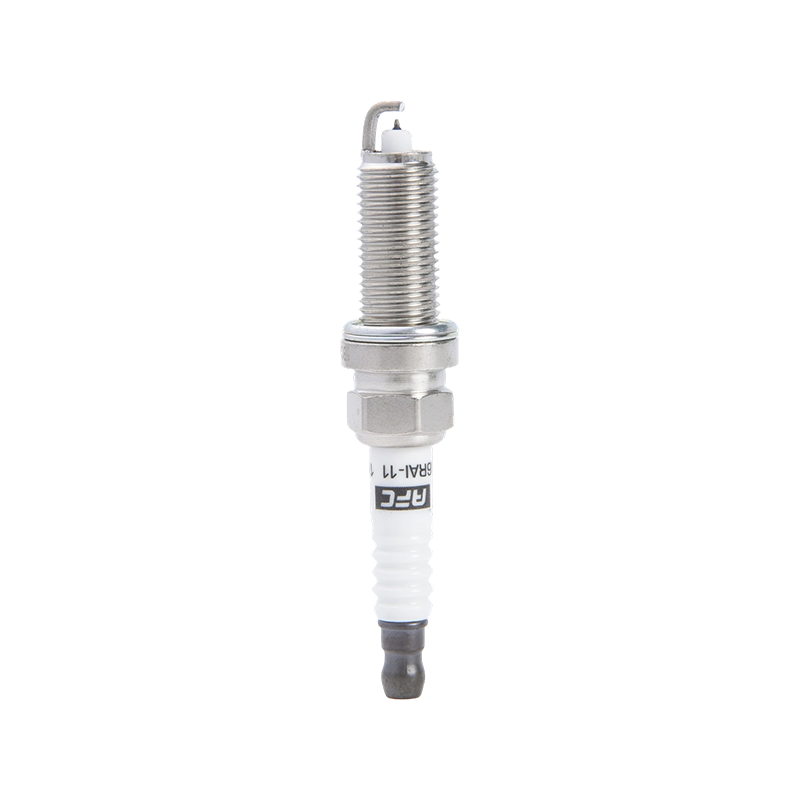
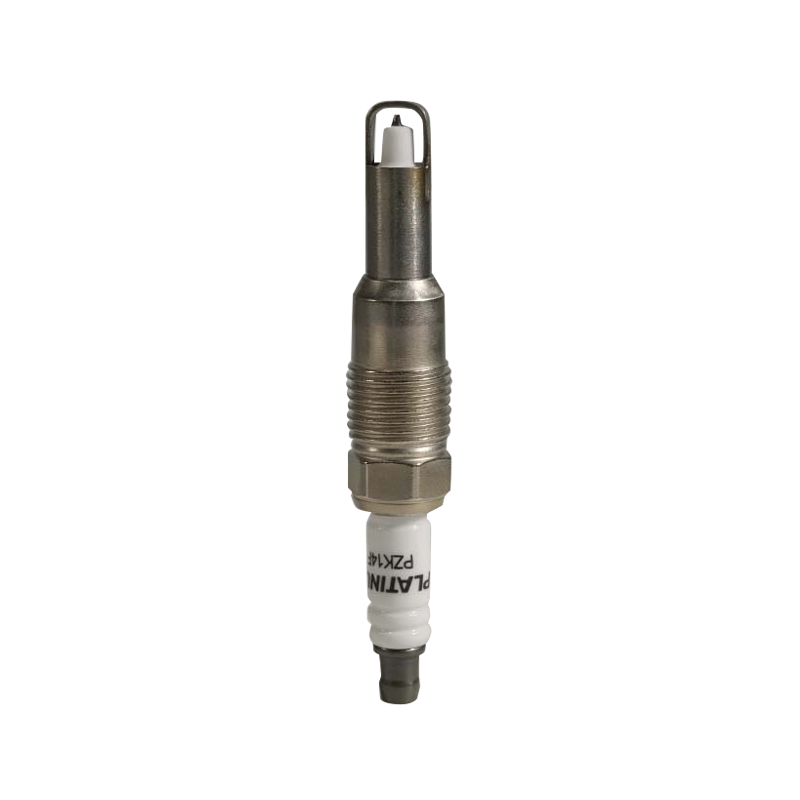
- Inspect the new plug's threads. If they already show a gold, silver, or dark gray plated finish, anti-seize is optional at best and unnecessary in most cases.
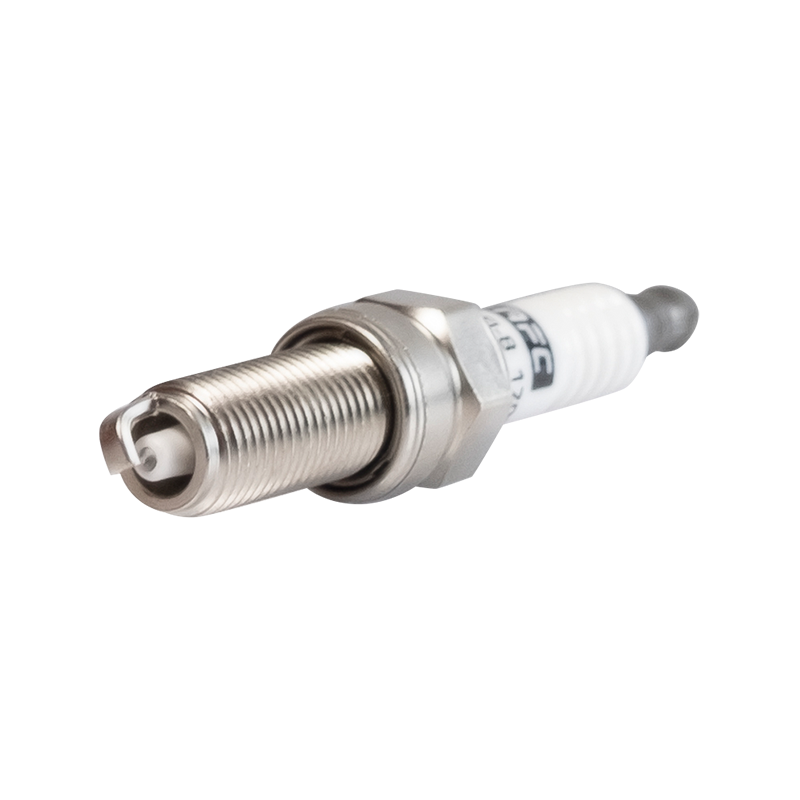
- Apply a thin film to the bottom two threads only, using a small brush or your fingertip. A common mistake is coating the entire thread length, which pushes excess compound toward the electrode and can foul the gap.
- Thread the plug in by hand first, turning it several full rotations before any tool touches it, to confirm it is not cross-threading into the aluminum bore.
- Torque to the adjusted, lubricated-thread spec, not the dry spec printed on the box. Use a calibrated torque wrench rather than a feel-based final tightening.
- Wipe away any anti-seize that squeezed out around the plug seat before reinstalling the ignition coil or spark plug boot.
Torque Adjustment Reference for Common Spark Plug Sizes
Spark plug torque specs vary by thread diameter, seat type (gasket versus tapered seat), and cylinder head material. The table below gives commonly published dry-thread ranges alongside the adjusted range once anti-seize is on the threads. Always confirm against the specific engine manufacturer's service manual, since individual models can fall outside these general bands.
| Thread Size | Dry Torque (lb-ft) | With Anti-Seize (lb-ft) |
|---|---|---|
| 10mm | 9 to 11 | 7 to 9 |
| 12mm | 13 to 15 | 11 to 13 |
| 14mm (gasket seat) | 18 to 22 | 15 to 18 |
| 14mm (tapered seat) | 7 to 15 | 6 to 12 |
| 18mm | 22 to 30 | 18 to 25 |
Common Mistakes That Cause Fouling or Thread Damage
Over-Applying the Compound
A heavy glob of anti-seize on the full thread length gets forced downward as the plug seats, and some of it lands on the ground electrode. Once that residue burns, it leaves a conductive ash that can cause a weak spark or a persistent misfire code.
Using Dry Torque Specs Anyway
Torquing a lubricated thread to the dry spec routinely overshoots the intended clamping load by 15 percent or more, which is enough to crack a plug's ceramic insulator or distort the seat on an aluminum head.
Mixing Metal Types Carelessly
Some technicians assume any anti-seize works anywhere. Nickel-based compounds are formulated for higher heat tolerance, while copper types are better suited to moderate temperatures. Using the wrong type on a high-EGT turbo engine can mean the compound breaks down early.
Coating Plated Plugs Unnecessarily
Adding anti-seize on top of factory zinc or trivalent plating doubles up on lubrication that was never accounted for in the printed torque spec, which is the most frequent cause of an over-tightened, cracked plug shell reported by service techs.
A Brief History: Why Anti-Seize Became Standard Shop Advice
The practice of coating spark plug threads with anti-seize compound did not originate with plug manufacturers. It grew out of general industrial maintenance, where copper and nickel pastes had been used for decades on exhaust manifold studs, brake caliper bolts, and any threaded joint expected to see heat cycling and eventual disassembly. As automakers shifted cylinder heads from cast iron to aluminum through the 1970s and 1980s to cut weight and improve heat dissipation, mechanics who were used to iron-head engines started running into a new problem: steel spark plugs seizing into aluminum bores hard enough to strip the threads on removal.
Cast Iron Era
Steel-to-iron thread pairs rarely galled badly enough to cause thread damage on removal, so anti-seize was mostly optional and used mainly on high-mileage or neglected engines.
Aluminum Head Transition
As aluminum heads became common, technicians began routinely coating spark plug threads with copper anti-seize as blanket protection against the higher galvanic corrosion risk between steel and aluminum.
Plated Plug Generation
Spark plug manufacturers responded by pre-plating threads with zinc, nickel, or trivalent chromium coatings at the factory, which handled the corrosion problem without relying on the installer to add anything.
Current Guidance
Most OEM service literature for late-model engines now treats anti-seize as optional or unnecessary on the original plug, while independent shops still apply it selectively based on head material, mileage, and expected service interval.
Understanding that history matters because a lot of advice circulating online was written for an older generation of unplated plugs and rougher factory head machining. Applying that same blanket rule to a modern iridium plug with trivalent plating is treating a solved problem as if it were still unsolved.
Anti-Seize Compared to Dielectric Grease and No Compound at All
These three products get confused constantly because they all come in a small tube and get used near the spark plug, but they solve completely different problems.
| Product | Where It Goes | Primary Job |
|---|---|---|
| Anti-seize compound | Threaded shell of the plug | Prevents thread corrosion and galling, eases future removal |
| Dielectric grease | Boot or coil connector, never the threads | Seals out moisture and prevents the rubber boot from bonding to the ceramic insulator |
| Bare, plated threads | Factory finish, no additive | Adequate corrosion resistance for standard service intervals in steel or coated aluminum heads |
A frequent service mistake is applying dielectric grease to the threads instead of the boot, or applying anti-seize inside the boot instead of on the threads. Neither substitution does the intended job, and dielectric grease inside the thread can actually promote fouling since it is not designed to handle combustion-chamber heat.
Aluminum Heads, Steel Heads, and Why the Metal Pairing Matters
Spark plug shells are almost always steel, but the cylinder head threads they screw into can be either cast iron, steel, or aluminum depending on the engine family. When two dissimilar metals sit in contact for an extended period, especially in the presence of heat and moisture, a galvanic reaction can slowly weld the surfaces together at a microscopic level. This is far more pronounced with aluminum heads than with iron or steel heads, which is the entire reason anti-seize became a common recommendation for aluminum-block, aluminum-head engines starting in the late twentieth century as manufacturers moved away from cast iron.
Modern OEM engineering has largely addressed this by pre-plating spark plug threads at the factory, which is why current OEM service literature for many aluminum-head engines now states that additional anti-seize is not required and not recommended for the original-equipment plug. The advice to always use anti-seize on aluminum heads is a holdover from an earlier plug generation and does not automatically apply to a plug pulled fresh from a modern manufacturer's box.
Anti-Seize Practices Across Different Engine Types
Spark plug service is not identical across a car, a motorcycle, a chainsaw, and a marine outboard, even though the underlying thread principles are the same. Head material, expected heat load, and how often the plug gets serviced all shift the calculation on whether anti-seize belongs in the job.
Motorcycles and Powersports
Motorcycle cylinder heads are almost always aluminum, and the spark plug boss is often thinner than a car's, which makes stripped threads a real financial concern. A light coat of anti-seize is common practice here, particularly on air-cooled engines that see wide temperature swings between highway riding and idling in traffic.
Small Engines and Lawn Equipment
Lawn mowers, generators, and trimmers typically use lower torque specs and simpler single-cylinder aluminum heads. A thin graphite or general-purpose anti-seize is usually adequate, and over-application is a bigger risk than under-application because these small combustion chambers foul easily.
Diesel and Heavy-Duty Trucks
Diesel engines that use glow plugs rather than spark plugs still follow similar thread-protection logic, and gasoline heavy-duty trucks running high sustained loads benefit from a nickel-based anti-seize rated for higher continuous temperatures near the combustion chamber.
Marine Engines
Salt air dramatically accelerates galvanic corrosion between steel plug threads and aluminum heads, making marine engines one of the clearest cases where anti-seize earns its keep regardless of what plating the plug already carries.
Racing and High-Performance Builds
Plugs in a race engine often get pulled and re-gapped or replaced far more frequently than a street engine, so ease of removal matters more than long-term corrosion protection. A light, consistent anti-seize application paired with careful torque control keeps re-gapping fast without risking a stripped bore mid-season.
Standard Passenger Vehicles
Most late-model passenger cars ship with plated plugs and factory guidance that skips anti-seize entirely. The exception is a vehicle already showing corrosion history on the old plug, or one heading into a long, hot towing season.
Choosing the Right Anti-Seize Product for Spark Plug Work
Not every anti-seize on a parts store shelf is formulated the same way, and the packaging format affects how easy it is to apply a thin, controlled layer instead of an excessive glob.
| Format | Application Control | Best Use Case |
|---|---|---|
| Brush-top jar | High, built-in applicator limits over-application | Home garage and light shop use |
| Squeeze tube | Moderate, easy to dispense too much if squeezed hard | General automotive use, dab onto a finger first |
| Stick or paddle-pack | High, solid stick transfers a thin film by rubbing | Field service and mobile mechanics |
| Aerosol spray | Low for precise spark plug work | Large flat joints, not recommended for plug threads |
For spark plug threads specifically, a brush-top jar or a stick applicator gives the most control over film thickness. Aerosol formats are built for broad flat surfaces and make it hard to keep the compound confined to the bottom two threads.
Storage, Shelf Life, and Safe Handling
Anti-seize compound is a petroleum-and-metal-particle product, and like any grease-based product it has a practical shelf life that depends on how it is stored. An unopened container kept in a stable, moderate-temperature environment can typically remain usable for several years, but an opened tube left in a hot glovebox or a garage that swings through summer heat can separate or dry out within a season or two.
Handling Reminders
- Wipe the applicator or brush clean after each use so grit does not get worked back into the container
- Keep the lid tightly sealed between uses, since air exposure is the main driver of the compound drying out
- Store away from direct sunlight and away from engine bay heat sources
- Wash hands after handling, since some copper and nickel formulations carry standard workshop-chemical handling advisories printed on the label
- Discard any container where the compound has hardened, cracked, or separated into a layer of oil sitting on top of solid particles that will not remix by stirring
How to Tell If Your Old Spark Plug Threads Need Anti-Seize on the Next Install
Rather than guessing, look at the plug you just removed. If the threads came out clean, with an even matte or shiny finish and no white or gray powdery buildup, the joint has been managing corrosion fine on its own and the replacement plug likely does not need additional anti-seize either. If the old plug shows chalky white deposits, if it required noticeably more force to break loose than to install, or if the head is aluminum and the vehicle is more than seven or eight years old, a thin application on the new plug is a reasonable precaution.
| What You See on Removal | Recommended Action |
|---|---|
| Clean, even threads, plug came out smoothly | No anti-seize needed on the new plug |
| Chalky white or gray corrosion visible | Thin anti-seize application, adjusted torque |
| Plug required unusually high force to break loose | Anti-seize recommended, inspect head threads for damage |
| Aluminum head, vehicle over seven years old | Anti-seize as a precaution, even if threads looked fine |
Professional Shop Standards Versus Common DIY Habits
Independent repair shops and dealership service departments tend to follow the specific engine manufacturer's current service bulletin, which increasingly means skipping anti-seize on plated plugs entirely and reserving it for known problem engines or documented aluminum-thread wear. DIY installers, by contrast, often rely on advice passed down from an older relative or an early-2000s forum post that predates the plated-plug era.
| Practice | Typical Shop Approach | Common DIY Habit |
|---|---|---|
| Anti-seize on plated plugs | Skipped unless the service bulletin says otherwise | Applied out of habit regardless of plating |
| Torque method | Calibrated torque wrench with adjusted lubricated spec | Tightened by feel, sometimes to the dry spec printed on the box |
| Application amount | Thin film on bottom threads only, excess wiped away | Full thread coating, sometimes including the seat |
| Reference source | Current manufacturer service documentation | General advice from prior vehicles or older engine generations |
None of this means DIY work is automatically wrong. It simply means the single biggest gap between shop-level results and DIY results on this particular task is not skill, it is which torque number and which plating assumption gets used going in.
Anti-Seize, Fouling, and Misfire Codes: What Actually Connects Them
When a spark plug related misfire code shows up shortly after a plug change, anti-seize is sometimes blamed even when the real cause lies elsewhere. It is worth separating what anti-seize can and cannot cause.
Anti-seize applied only to the bottom two threads and wiped clean of excess has no path to the firing end of the plug and will not by itself trigger a misfire code. Problems arise specifically when compound is over-applied across the full thread length, when it drips down the plug body before installation, or when a heavy load of it is pushed toward the electrode as the plug seats. In those cases, the compound can carbonize on the hot ceramic insulator or ground electrode and create a weak conductive path that either causes a rough idle or trips a random or cylinder-specific misfire code depending on the engine's ignition monitoring strategy.
If a misfire code appears after a plug change where anti-seize was used, the most direct troubleshooting step is to pull the plug in question and visually inspect the firing end. Any anti-seize residue near the electrode confirms over-application and the fix is a fresh plug installed with a properly controlled, thin film kept away from the tip.
Key Terms Glossary
- Anti-seize compound
- A metal-particle paste applied to threaded fasteners to prevent galling, corrosion bonding, and difficult future removal.
- Galling
- A form of wear where two metal surfaces under friction and pressure bond together at a microscopic level, often making a fastener extremely difficult or impossible to remove without damage.
- Trivalent plating
- A modern chromium-based plating process used on many spark plug threads that replaced older, more environmentally hazardous plating chemistries while offering comparable or better corrosion resistance.
- Dry torque spec
- A torque value published assuming clean, unlubricated threads. It does not apply directly once anti-seize or another lubricant is introduced to the joint.
- Galvanic corrosion
- Accelerated corrosion that occurs when two dissimilar metals, such as steel and aluminum, are in contact in the presence of moisture, acting like a small battery that eats away at the more reactive metal.
- Tapered seat plug
- A spark plug design that seals directly against a matching taper machined into the cylinder head, without a separate crush gasket, typically requiring a lower torque value than gasket-seat plugs.
Frequently Asked Questions
Will anti-seize on spark plug threads cause a misfire?
Only if it is over-applied and migrates toward the electrode, or if excess compound drips into the cylinder before the plug is seated. A thin film on the bottom two threads, wiped clean of any overflow, will not reach the firing end and will not affect spark quality.
Do iridium and platinum spark plugs need anti-seize?
Generally no. Most fine-wire iridium and platinum plugs are factory plated specifically so installers do not need to add anything to the threads, and many manufacturers explicitly advise against it in their installation instructions.
Can I use regular anti-seize paste meant for exhaust bolts on spark plugs?
A general-purpose copper anti-seize is usually fine for spark plug threads in moderate-heat applications. For turbocharged or diesel engines, a nickel-based formula is better suited to the higher sustained temperatures near the combustion chamber.
What happens if I torque a lubricated spark plug to the dry spec by mistake?
You risk over-clamping the joint, which can crack the plug's ceramic insulator, distort the gasket seat, or in aluminum heads, stretch the threads enough to cause a future leak or stripped bore. If this happens, back the plug out, inspect the seat and insulator for cracking, and re-torque at the adjusted spec.
How much anti-seize should I actually apply?
A thin, even film across the bottom two threads only is enough. If you can see wet compound after threading the plug in by hand, you applied too much.
Does anti-seize expire or dry out over time?
Yes. An opened tube left uncapped or stored in a hot garage can dry out or separate within a year or two. If the compound has hardened, developed a crust, or separated into oil and solid particles that will not remix, discard it rather than applying it to a critical joint.
Is it safe to reuse anti-seize residue already on the old spark plug hole threads?
Residue left in the cylinder head threads from a previous service is generally fine to leave in place. Clean out any loose debris with a nylon thread chaser or compressed air before installing the new plug, but there is no need to strip the hole down to bare metal.
Does anti-seize affect the spark plug gap?
No. The gap is set at the electrode before installation and has nothing to do with the threads. As long as anti-seize stays confined to the bottom two threads and does not migrate to the firing end, it has no effect on the gap or spark quality.
Should anti-seize be used on a brand-new engine during initial break-in?
Most new engines ship with plated plugs from the factory, and the manufacturer's break-in documentation typically does not call for additional anti-seize. Following the factory service schedule rather than a generic habit is the safer choice during this period.
Can anti-seize cause a spark plug to loosen over time?
Only if the torque was not adjusted downward to account for the lubrication. A plug torqued to the correct lubricated-thread spec will hold clamping load just as reliably as a dry-installed plug; the loosening risk comes specifically from under-torquing relative to what the lubricated joint needs.
Is copper anti-seize electrically conductive in a way that matters near a spark plug?
Copper anti-seize does conduct electricity, which is exactly why it must stay off the ceramic insulator and away from the electrode. Confined to the metal threads, where the shell itself is already a grounded conductor, it introduces no electrical issue.
What is the difference between anti-seize and thread lubricant sold specifically for spark plugs?
Some spark plug manufacturers sell a lighter-bodied thread lubricant formulated specifically for their plugs, with a more precisely documented torque adjustment than generic anti-seize. Where available, that manufacturer-specific product removes the guesswork of estimating a percentage reduction from the dry spec.