

 Español
Home / News / Industry News / Spark Plug Gaping: How to Gap Plugs Correctly - Tools, Specs, and Tips
Industry News
Content
A 2018 turbocharged 2.0L SUV arrived at the workshop with a rough idle and a stored P0302 misfire code. The spark plugs had about 18,000 miles on them and looked visually normal, but a wire-loop gap gauge read 0.043 in (1.09 mm) against a factory specification of 0.035 in (0.89 mm). The widened gap demanded more voltage than the ignition coil could deliver under compression, so the engine dropped a cylinder at idle. The fix was not a new coil and not a fuel injector; it was a fresh set of plugs set to the correct gap.
Put the conclusion first: the spark plug gap is the most measurable, most practical ignition setting you can verify before installation. Whether you call it spark plug gapping or the common search phrase spark plug gaping, the procedure is identical - measure the distance between the center electrode and the ground electrode, compare it with the vehicle maker's specification, adjust it only if needed, and re-check it before installation. A correct gap gives reliable cold starts, a smooth idle, clean part-throttle response, and full-load performance. An incorrect gap, even by 0.004-0.006 in (0.10-0.15 mm), can create misfires, wasted fuel, stressed ignition coils, and expensive catalytic converter damage.
The spark plug gap is the open distance between the tip of the center electrode and the upper edge of the ground electrode, measured when the plug is cold and out of the engine. It is normally expressed in thousandths of an inch, for example 0.028-0.060 in, or in millimeters, 0.7-1.5 mm. This small air gap is where the entire ignition event happens, and its width directly determines how much voltage the ignition system must produce to fire the plug.
The ignition coil builds voltage until the air-fuel mixture in the gap ionizes and becomes conductive. A wider gap creates a longer arc path, so the required voltage climbs. Published ignition test data from coil and spark plug manufacturers shows that each additional 0.004 in (0.10 mm) of gap raises the required firing voltage by roughly 1,000-1,500 volts on a typical 10:1 compression engine. A narrower gap lowers the required voltage, but it also produces a thinner, weaker spark kernel and slowing the combustion process.
In short, the gap is the link between the ignition system's supply and the combustion event. Keep it inside the original equipment tolerance and the engine behaves; move it outside and you will feel the result at idle, under load, and at the fuel pump.
Short answer: most new spark plugs are pre-gapped at the factory, and many will land inside the tolerance for your specific vehicle without any adjustment. But "pre-gapped" does not mean "verified for your engine." A practical workshop rule is to check every plug before installation and adjust only when it sits outside the OE range. The check takes less than 30 seconds and costs nothing; skipping it can cost hours of diagnosis later.
Manufacturers set gaps during production with automated equipment, but they set them to a nominal value that covers a family of engines, not the exact specification of one vehicle. The same plug part can be listed for two cars with different gap requirements, because the gap range printed on the box may be wider than either car's specified window. When you trust the box instead of the vehicle's specification, you are guessing inside a range rather than matching the calibration.
Handling is another reason to verify. Spark plugs are shipped in boxes and usually survive rough transit, but a hard drop can close the ground electrode by 0.003 in (0.08 mm) or more. In our own incoming-quality checks on factory-sealed boxes, it is not unusual to find one plug in a set that reads outside the package tolerance by 0.003-0.007 in (0.08-0.18 mm). The same tolerance applies to current production plugs, including those supplied for 2024-2026 model year vehicles.
Always verify. Never assume a new plug is correct, and never adjust a plug that is already within the OE tolerance.
The only valid gap number is the one published for your exact engine, not for a similar engine and not from a generic chart. Four sources are reliable:
After you confirm the specification, write it on the service record so you do not have to look it up again. If you need to read a gap chart or understand how heat range and gap relate, see this guide to reading heat range and gap charts.
| Engine family | Typical gap (in) | Typical gap (mm) | Notes |
|---|---|---|---|
| Pre-2000 naturally aspirated engines | 0.030-0.045 | 0.76-1.14 | Copper plugs; check each cylinder |
| Modern naturally aspirated engines | 0.039-0.051 | 0.98-1.30 | Fine-wire iridium or platinum types |
| Modern turbocharged and supercharged engines | 0.025-0.035 | 0.64-0.90 | Narrower gap prevents misfire under boost |
| CNG or LPG converted engines | 0.018-0.025 | 0.46-0.64 | Follow the conversion kit documentation |
Notice the pattern: boosted engines run a narrower gap because cylinder pressure raises the voltage demand. A wide gap on a forced-induction engine will misfire the moment you come on boost. If you keep the factory OE plug number for your car, the gap printed on that plug is already tailored for that application. That is also why a supplier that lists plugs by OE number, rather than only by thread size and heat range, makes the job easier and safer.
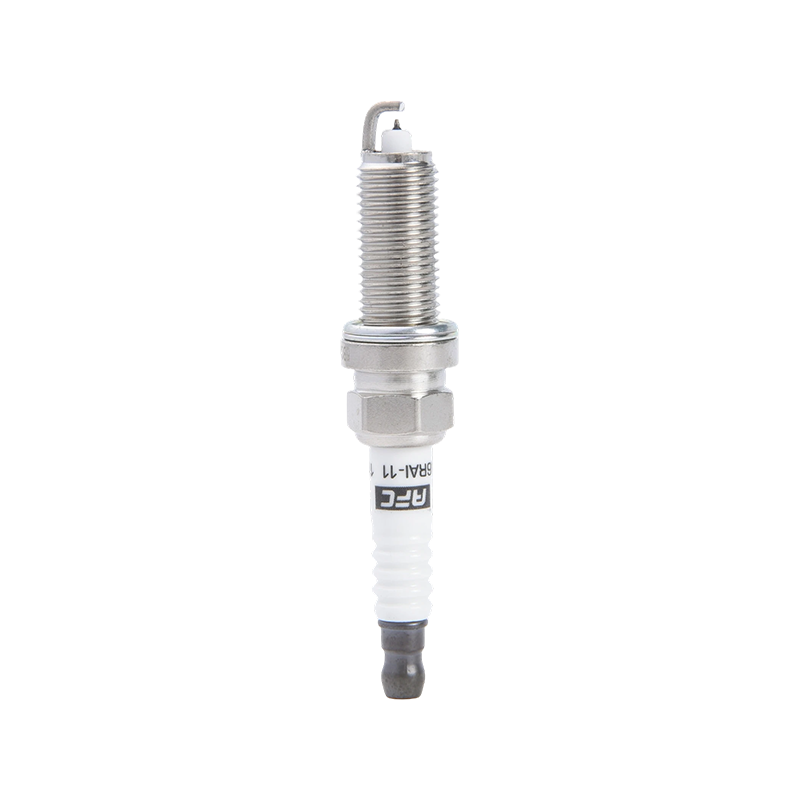
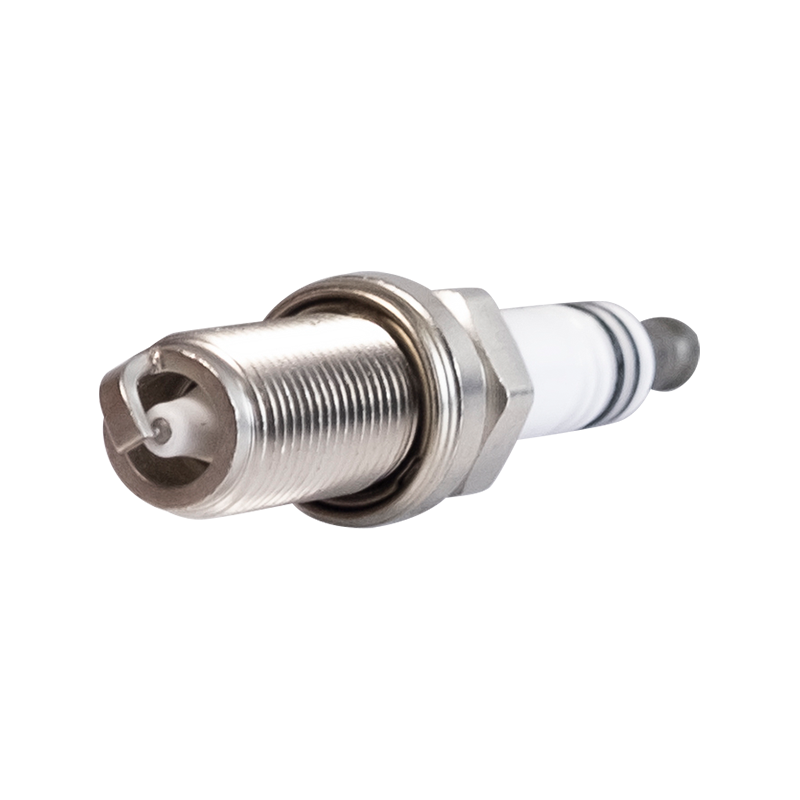 1773 DILF7RK9G Dual Iridium Spark Plug for Toyota 8AR-FTS EnginesThis dual-iridium plug is pre-gapped at 0.035 inch and matched to OE 90919-01276, making it a reliable choice for boosted engines where gap accuracy matters most.View Product →
You can gap a plug with anything that bends metal, but you cannot measure it accurately with anything except a precision gauge. Workshop experience shows that most gap-related comebacks trace back to using the wrong measuring tool for the electrode shape.
| Tool | Best for | Caution |
|---|---|---|
| Coin-style gap tool | Quick field checks on copper plugs | Not precise for fine-wire or used plugs; the flat ramp can skim the electrode |
| Flat feeler gauge | New plugs with a flat, unworn ground electrode | Under-reads on used plugs because the ground electrode wears at an angle |
| Wire-loop gauge | The most accurate on used and tapered electrodes; reads the true gap | Must select the correct wire before the tool touches the electrode |
| Digital caliper | Verification of critical specs after adjustment | Needs a steady hand; can over-measure on crowned electrode edges |
A wire-loop gauge is the standard choice for professional work because the wire measures the actual point of minimum distance, exactly what the spark sees. A flat feeler blade can slip against a worn or oval-shaped ground electrode and report a number that is 0.004-0.005 in (0.10-0.13 mm) tighter than reality. Precision gauge makers rate wire-loop sets to an accuracy of plus or minus 0.001 in (0.025 mm), which is enough to validate any OE gap tolerance.
Do this on a clean, stable bench. Work with the plug cold; never gap a warm plug because the electrode metals expand differently and you can strain the weld.
That is the whole procedure. The difference between a beginner and an experienced fitter is patience: a professional makes two or three tiny adjustments of 0.001-0.002 in (0.03-0.05 mm) and re-checks, instead of bending the electrode significantly and trying to bend it back. Once the electrode is bent back, the metal at the weld has already lost part of its original strength.
Here is the professional's quick triage: narrow gaps cause rough idle and fouling; wide gaps cause misfire under load; uneven gaps cause shakes and P0300-series diagnostic trouble codes. The table below summarizes what you will observe and where to look.
| Condition | Typical symptom | What is happening |
|---|---|---|
| Gap too narrow | Rough idle, higher fuel consumption, carbon-fouled electrodes, weak acceleration | The spark kernel is small and quenched; combustion is slow and incomplete |
| Gap too wide | Misfire under load, hesitation, P0300-P0308 codes, hard cold start | The coil cannot reach the voltage needed to ionize the longer air gap at high cylinder pressure |
| Gap worn open over time | Gradual power loss, worsening fuel economy, intermittent misfire | Electrode erosion enlarges the gap and pushes the required voltage above the coil's reserve |
| Gap closed by accidental contact | Engine runs on fewer cylinders, strong misfire, raw fuel smell | The ground electrode is bent toward the center or touching it, so the spark shorts or fires too early |
Run an engine long enough with the wrong gap and the damage extends beyond the plug. A misfire feeds unburned fuel into the catalytic converter, raising its temperature and shortening its life. The ignition coil also works harder while it tries to fire the bad gap; coils that fail prematurely are frequently found next to plugs that were never gapped correctly.
Fine-wire plugs work differently from conventional copper plugs. The center electrode on a modern iridium or platinum plug measures 0.4-0.6 mm (0.016-0.024 in), roughly a third of the diameter of a traditional nickel electrode. Because the electrode is so thin, it concentrates the spark at the tip, which lowers the required voltage and reduces quenching. That is why fine-wire plugs tolerate a wider gap than a copper plug in the same engine, and why they break if you handle them like a copper plug.
The rule for fine-wire plugs is simple: never direct any bending force toward the center electrode, never use a coin-style tool that presses on the electrode from the side, and never touch the center electrode with pliers. Adjust only the ground electrode, and move it in tiny increments. Some fine-wire plugs are marked "do not gap" - that means the factory gap is correct for the listed applications and the electrode structure is too fragile for repeated bending. If your measured gap is within the OE range for your vehicle, install the plug; if it is outside, do not force it. Pick a replacement with the correct OE number instead.
When a plug is matched to the original equipment number, the gap question becomes nearly automatic. For example, an iridium-platinum plug specified for common Japanese engines carries the OE number 90919-01210 and leaves the factory set for that application; a shop still verifies it, but the probability of a mismatch is far lower than when you use a generic plug from a display rack.
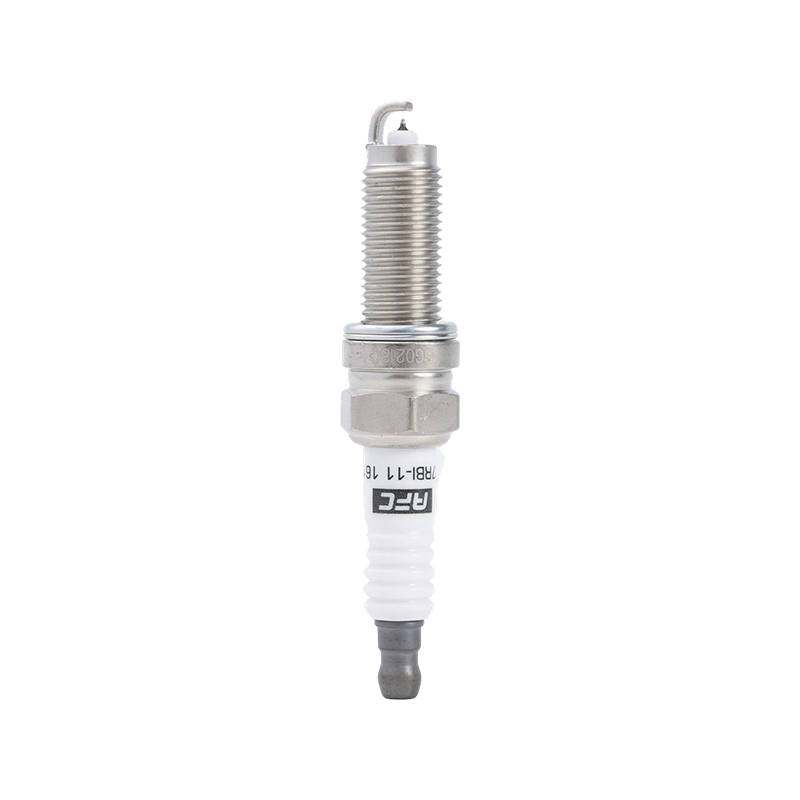
 1632 IF6RT-11 Iridium Platinum Spark Plug for Japanese Cars with OE 90919-01210Carrying the exact OE number 90919-01210, this iridium-platinum plug arrives factory-set for its application, reducing the risk of gap mismatch on Japanese engines.View Product →
If the plug does not match the OE number exactly, do not try to compensate for the wrong gap by bending the electrode further. Return it and select the right application. The gap is not a tuning knob; it is a physical setting matched to the ignition coil, the compression ratio, the fuel, and the engine management strategy.
Conclusion first: check the gap at every spark plug replacement and any time a misfire or a rough idle appears. Do not remove a healthy set of iridium plugs just to measure the gap; modern fine-wire plugs are designed to last the full service interval, and unnecessary removal adds the risk of thread damage and breakage. For copper and nickel plugs, the OE service interval is usually 20,000-30,000 miles (32,000-48,000 km); for iridium, platinum, double-platinum, and double-iridium plugs, the interval commonly ranges between 60,000 and 100,000 miles (96,000-160,000 km), depending on the vehicle and the fuel quality.
The gap grows because the spark erodes metal from the electrodes. The rate depends on the electrode material, ignition energy, fuel quality, and how much boost the engine runs. In normal service, a nickel electrode can grow by 0.003-0.006 in (0.08-0.15 mm) over a 15,000-20,000-mile (24,000-32,000 km) interval. On a fine-wire iridium plug, the same growth takes 50,000-70,000 miles, which is exactly why OE engineers specify them for long intervals. A plug that starts at 0.040 in (1.02 mm) can drift to 0.047 in (1.19 mm) and still fire on a warm engine, but it will start to misfire on the first cold, damp day.
Practical schedule: verify the gap when you install; inspect the electrodes at each oil service, roughly every 5,000-8,000 miles, if the car has a history of ignition issues; and always check the gap on any plug that has been dropped, overheated, or removed for diagnosis. For professional shops, replacing plugs as a complete set with the correct OE-matched part is usually smarter than cleaning and re-gapping old ones - the time saved usually pays for the set.
 1627 PLFE7RA8EG Double Platinum Spark Plug for VW Audi EA888 EnginesWith dual platinum electrodes and a 26.5mm thread, this plug suits VW and Audi EA888 engines; verifying its pre-set gap supports stable ignition in turbocharged use.View Product →
Not all, but every plug should be checked. Many modern plugs, especially iridium and platinum types, arrive pre-gapped for their listed applications, and a large percentage need no adjustment. The accepted practice is to measure the gap on every plug before installation and only adjust when it is outside the vehicle's OE range. The check takes seconds and prevents intermittent misfires.
The vehicle maker's specification is the only valid gap. It appears in the owner's manual, on the under-hood emission label, or in a factory service database. Never use a gap from a similar model or from a generic chart; the same engine can have different gaps for different markets, compression ratios, and emission standards. If you match the OE number on the plug, the printed gap on that plug is a solid starting point that you should still verify.
The required firing voltage rises beyond what the ignition coil can deliver at high cylinder pressure. The result is a misfire under load, hesitation during acceleration, harder cold starts, and raw fuel passing into the exhaust. If the condition continues, the catalytic converter can overheat and the ignition coil can fail early.
You can adjust the ground electrode carefully on many iridium plugs, but many fine-wire plugs are factory-set and marked as non-adjustable. If the measured gap is within the OE tolerance, leave the plug alone. If it is not, the safest choice is a plug with the correct OE part number rather than bending the electrode and risking a crack in the fine-wire center. Never apply force to the center electrode.
OE specifications are usually given as a range, such as 0.039-0.043 in (1.0-1.1 mm). A professional sets the plug to the middle of the range or to a target value from the service manual, and confirms with a gauge rated to plus or minus 0.001 in (0.025 mm). An error of 0.001 in is acceptable; 0.004 in or more can change the way the engine idles, especially on low-compression or high-boost engines.
At the normal spark plug service interval, or sooner if you see misfire codes, rough idle, or a rise in fuel consumption. Copper and nickel plugs are typically checked at 20,000-30,000 miles; fine-wire iridium and platinum plugs at 60,000-100,000 miles. A plug that has been dropped or removed for any reason should be checked immediately before going back into the engine.
Spark plug gapping is not a ritual from the carburetor era; it remains a measurable, necessary step on modern engines, including direct-injection turbocharged units. The key facts fit on one hand: confirm the specification from the vehicle, measure with a wire-loop gauge, adjust only the ground electrode, stay inside the OE range, and never bend fine-wire electrodes. Those five rules eliminate most gap-related misfires.
When you choose replacement plugs, pick parts that match your engine's OE number so the gap, heat range, and reach are already correct for the cylinder head. A supplier that lists plugs by country of manufacture, engine family, and OE code simplifies that choice. If you are stocking sets for the shop, start from the full product range on the manufacturer's site and keep the gap specification for each engine on the shelf next to the plug boxes.
One last practical tip: write the gap on the box after you check it. Thirty seconds of marking saves the next technician from repeating the measurement and gives the customer a verifiable record that the ignition system was set to specification. That is the difference between a plug that works and a plug that causes a comeback.